
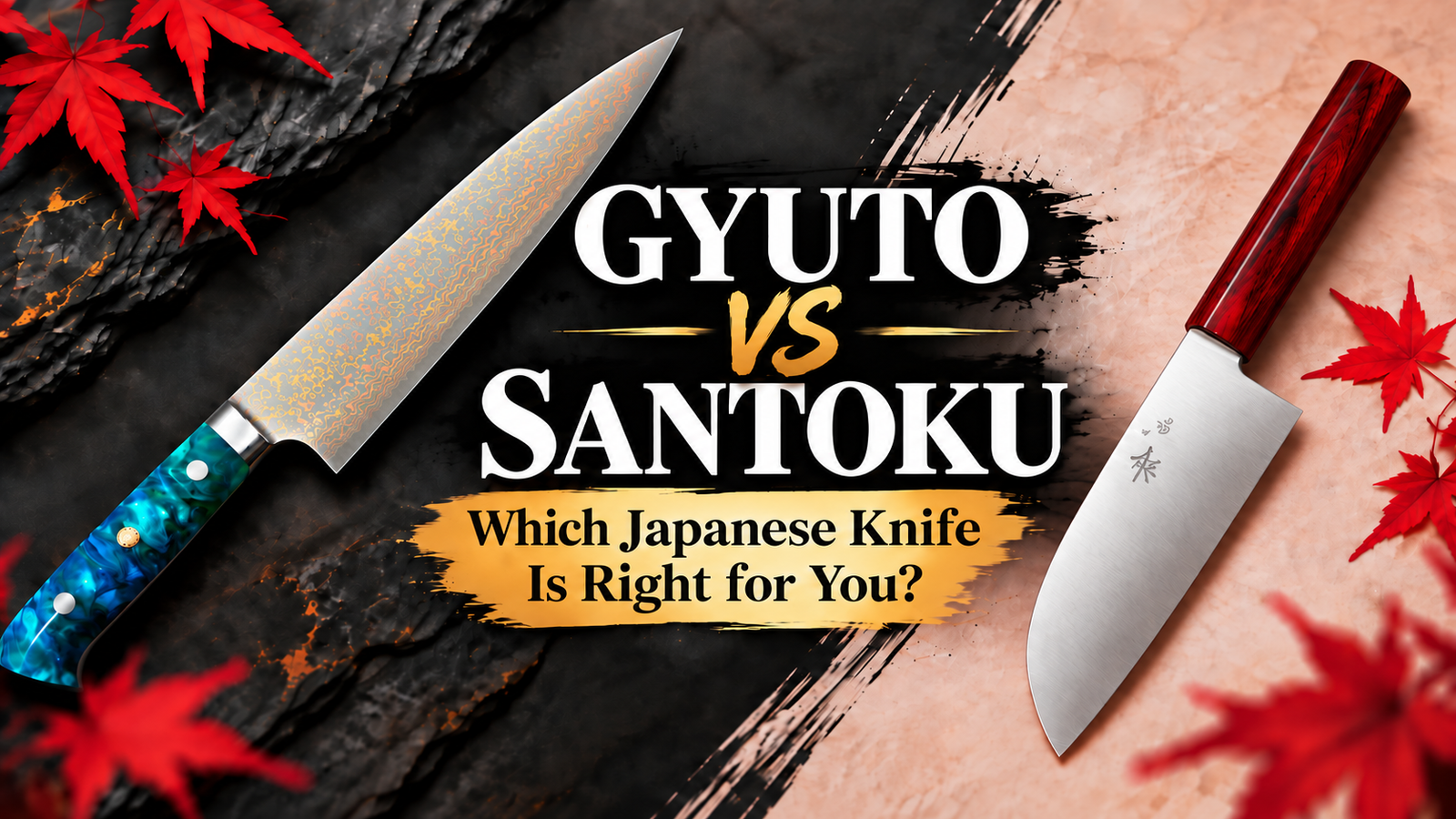
Gyuto and Santoku are both versatile Japanese all-purpose knives, but they feel different in use. A Gyuto is typically longer with more reach and a more curved edge, while a Santoku is shorter, flatter, and easier to control in compact spaces.
This comparison focuses on the differences that matter most — blade shape, cutting style, size, handling, and everyday kitchen tasks — so you can choose the better fit for the way you cook.
Table of Contents
Gyuto vs Santoku: Key Differences at a Glance
| Feature | Gyuto | Santoku |
|---|---|---|
| Typical Blade Length | 180–240mm | 165–180mm |
| Blade Shape | Longer with a more curved edge | Shorter with a flatter edge |
| Cutting Style | Rocking, slicing, and chopping | Push cutting, straight chopping, and slicing |
| Handling | More reach and cutting surface | More compact and easy to control |
| Best Choice For | Cooks who want maximum versatility | Cooks who prefer compact everyday control |
In short, choose a Gyuto if you value extra reach and a wider range of cutting motions. Choose a Santoku if you prefer a shorter, flatter blade that feels compact and easy to control.
Understanding Gyuto and Santoku
What Is a Gyuto Knife?
A Gyuto is a versatile Japanese chef’s knife with a relatively long blade, pointed tip, and more curved cutting edge. Common blade lengths range from about 180mm to 240mm, with 210mm being a popular all-purpose size.
Its extra reach and curved profile make it well suited to slicing, chopping, rocking cuts, meat, fish, vegetables, and general meal preparation.
What Is a Santoku Knife?
A Santoku is a compact Japanese all-purpose knife, usually around 165–180mm in length. It typically has a flatter cutting edge and a shorter, more manageable blade than a Gyuto.
Its compact size makes it especially comfortable for straight chopping, push cutting, slicing, and everyday preparation of vegetables, meat, and fish.
Gyuto vs Santoku: How They Differ in Use
Blade Shape
A Gyuto typically has a longer, narrower blade with a pointed tip and more curve along the cutting edge. A Santoku is usually shorter, slightly taller, and flatter through more of the edge, giving it a more compact profile.
The Gyuto’s shape provides more reach and supports longer slicing motions, while the Santoku’s flatter profile gives more direct contact with the cutting board and can feel easier to control.
Cutting Style
A Gyuto is well suited to rocking cuts, long slicing motions, chopping, and general preparation. Its curved edge allows the blade to move smoothly through a wider range of cutting techniques.
A Santoku is especially comfortable for push cutting, straight chopping, and shorter slicing motions. Neither style is inherently better — the right choice depends on how you naturally prefer to cut.
Size and Weight
Gyuto blades commonly range from about 180–240mm, with 210mm being a popular all-purpose size. Santoku knives are usually shorter, commonly around 165–180mm.
Weight varies by steel, handle, and construction, so blade length and overall balance matter more than the knife name alone. Choose a size that feels comfortable on your cutting board and gives you the level of reach and control you prefer.
Which Knife Is Better for Different Foods?
Both Gyuto and Santoku can handle most everyday ingredients. The main difference is usually not what they can cut, but which blade length and cutting motion feels more comfortable for the task.
- Meat and larger ingredients: Gyuto offers more reach for longer slicing motions and larger cuts.
- Vegetables and everyday prep: Santoku feels compact and controlled for chopping, push cutting, and smaller ingredients.
- Fish: Either can work well; choose a Gyuto for longer slicing strokes or a Santoku for compact everyday preparation.
- Herbs and general prep: Gyuto suits rocking motions, while Santoku works well for straight chopping and push cutting.
For most home cooks, ingredient type alone should not decide the choice. Cutting style, blade length, and comfort matter more.
Gyuto vs Santoku: Which Is Better for Beginners?
Both Gyuto and Santoku can be excellent first Japanese knives. A Santoku may feel easier to control because of its shorter blade, while a Gyuto offers more reach and flexibility as your cutting skills develop. For most beginners, comfort and blade size matter more than choosing one style over the other.
Related guide:
See Our Beginner Picks →
Which Should You Choose: Gyuto or Santoku?
The better choice depends on the blade length, cutting motion, and level of control you prefer. Use the quick guide below to narrow it down.
- Choose a Gyuto if you want more reach, a longer cutting surface, and flexibility for rocking, slicing, and general prep.
- Choose a Santoku if you prefer a shorter, flatter blade that feels compact, controlled, and easy to use in everyday cooking.
If you are still unsure, a 210mm Gyuto offers maximum versatility, while a 165–180mm Santoku is often the easier choice for smaller kitchens and users who prefer compact handling.
Related guides:
Read the Gyuto Guide →
Read the Santoku Guide →
Japanese Knife Buying Guide →
Frequently Asked Questions
Neither is universally better. A Gyuto offers more reach and cutting versatility, while a Santoku is shorter, flatter, and often easier to control.
A Santoku can feel easier to handle because of its shorter blade and compact shape. However, a Gyuto may feel more natural if you prefer rocking cuts or longer slicing motions.
Yes. Both can handle vegetables, meat, fish, and most everyday kitchen tasks. The main difference is how the blade shape and length affect your cutting style.
A 210mm Gyuto is a versatile starting point for many home cooks, while a 165–180mm Santoku is a practical choice if you prefer a shorter, more compact knife.
Usually not. Their roles overlap significantly, so most home cooks can choose one as their main all-purpose knife based on preferred size and cutting style.
Where to Buy Authentic Japanese Knives
When buying a Gyuto or Santoku online, choose a retailer that clearly lists the maker, steel, blade size, country of origin, shipping terms, and return policy. Transparent product information makes it easier to compare knives accurately and avoid misleading listings.
Continue Reading
Once you know which knife style suits you better, these guides can help you compare specific models and explore other Japanese knife types.
Best Gyuto Knives →
Best Santoku Knives →
Explore Japanese Knife Types →