

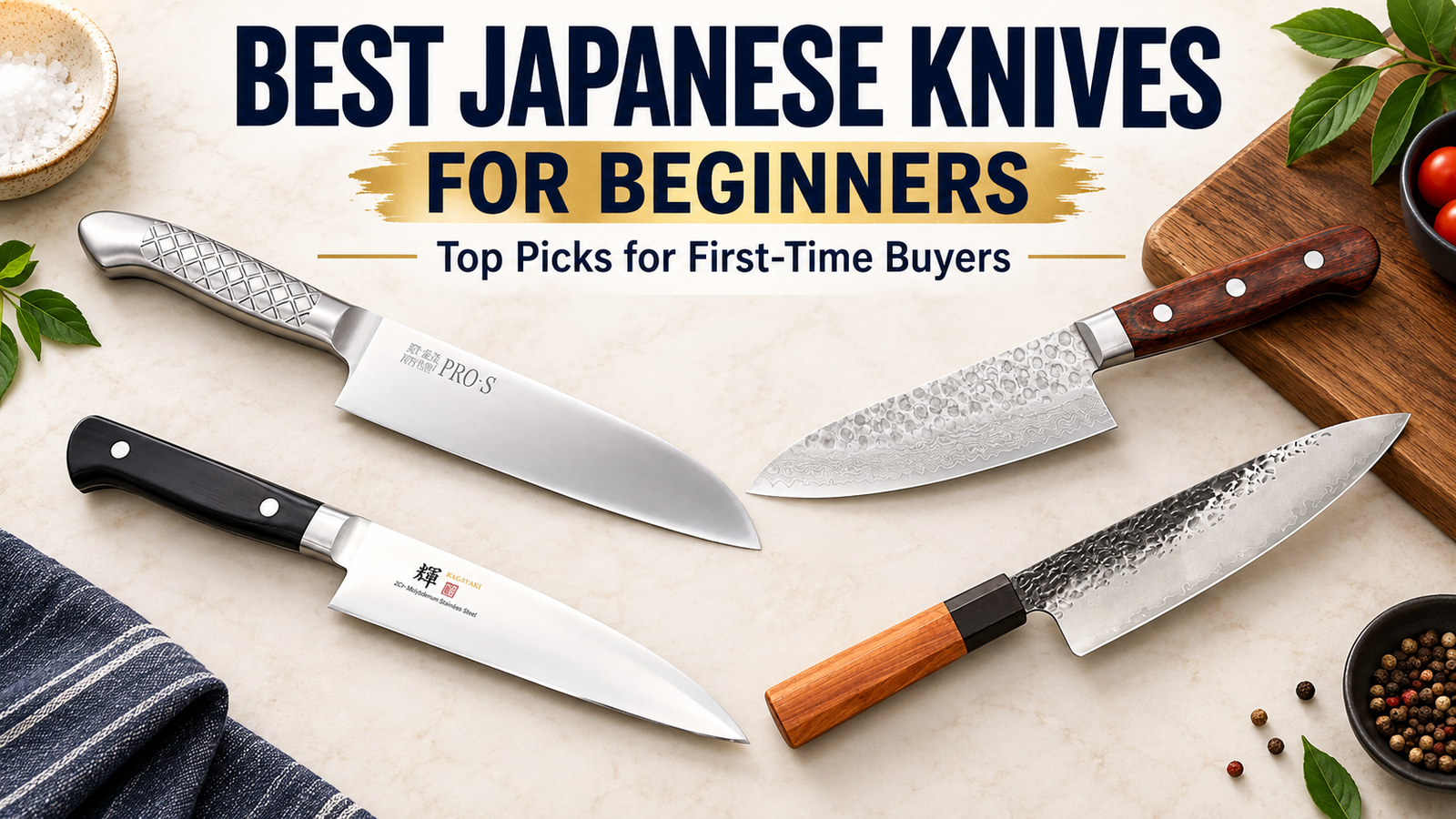
Choosing your first Japanese kitchen knife can feel overwhelming because there are so many blade shapes, steels, sizes, and price points to compare. For most first-time buyers, a versatile stainless Gyuto or Santoku is the easiest place to start, while smaller or more specialized knives can make sense depending on how you cook.
In this guide, we compare the best Japanese knives for beginners across different budgets and needs, including our picks for the best overall, Santoku, budget option, premium choice, compact knife, starter set, and compact Gyuto. Start with the comparison table below, then jump directly to the knife that best matches your priorities.
Table of Contents
Affiliate Disclosure: Sourced Japan may earn a commission when you purchase through links on this page, at no additional cost to you.
Best Japanese Knives for Beginners at a Glance
| Best For | Knife | Steel | Approx. Price |
|---|---|---|---|
| Best Overall | Kanetsugu Pro M Series Gyuto | AUS-8 Stainless | ~$90 |
| Best Santoku | Misono MV Stainless Steel Santoku | Molybdenum Stainless | ~$115 |
| Best Budget | Kanetsugu Pro S Series PS-03 Santoku | AUS-8 Stainless | ~$75 |
| Best Premium | JCK Natures Gekko Series Gyuto | VG-10 Damascus | ~$150 |
| Best Compact Knife | JCK Original Kagayaki Basic Series Petty | VG-1 Stainless | ~$80 |
| Best Starter Set | JCK Special Set “First Japanese Knife Set Type II” | VG-1 Stainless | ~$310 |
| Best Compact Gyuto | Yoshimune SC Gyuto | VG-10 Stainless | ~$205 |
Prices are approximate and may change over time. Check the individual recommendations below for current pricing, availability, and full details.
If you want the simplest starting point, begin with our Best Overall pick. If budget, compact size, or premium materials matter more, use the categories below to jump to the option that best matches your needs.
Best Overall Japanese Knife for Beginners
Kanetsugu Pro M Series Gyuto 210mm
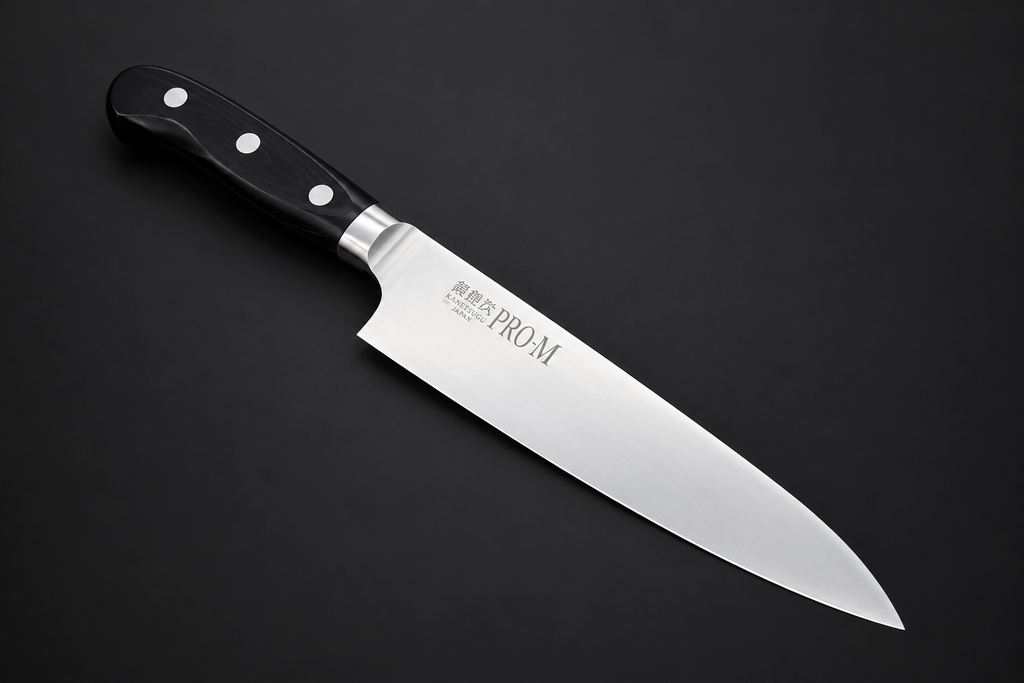
A beginner-friendly 210mm Gyuto with an easy-care AUS-8 stainless steel blade, comfortable black pakkawood handle, and versatile all-purpose profile for everyday cooking.
Blade Length: 210mm
Steel: AUS-8 Stainless
Best For: First Japanese knife and everyday all-purpose cooking
The Kanetsugu Pro M Series Gyuto 210mm is our best overall pick for beginners because it combines the versatility of a full-size Japanese chef’s knife with relatively easy-care stainless steel and a manageable price point.
Its 210mm Gyuto profile gives you enough reach for meat, fish, vegetables, herbs, and general meal prep without becoming overly specialized. The AUS-8 molybdenum vanadium stainless steel offers good corrosion resistance, toughness, and relatively straightforward sharpening, making it more forgiving for a first Japanese knife than many harder or more reactive steels.
If you want one dependable Japanese knife to handle most everyday cooking rather than starting with several specialized blades, the Pro M Gyuto offers one of the strongest balances of versatility, maintenance, and value in this guide.
Best Santoku for Beginners
Misono MV Stainless Steel Santoku 180mm
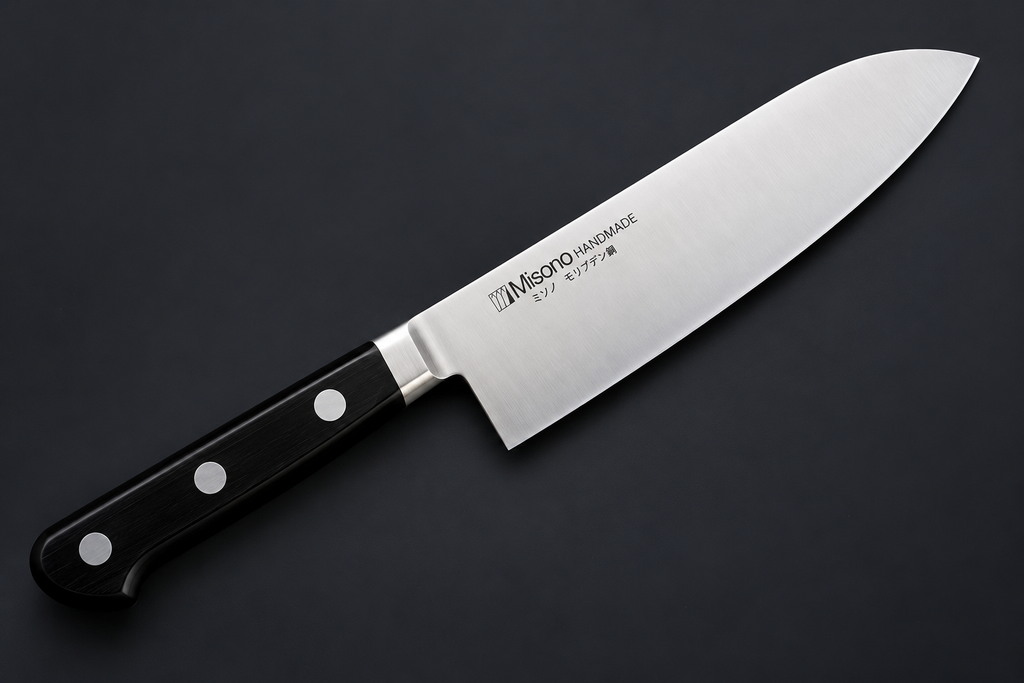
A well-balanced 180mm Santoku for beginners, combining easy-care molybdenum stainless steel with a comfortable black pakkawood handle and a versatile all-purpose blade shape.
Blade Length: 180mm
Steel: Molybdenum Stainless
Best For: Beginners and everyday all-purpose cooking
The Misono MV Stainless Steel Santoku 180mm is our top Santoku pick for beginners because it combines a compact, easy-to-control blade with relatively low-maintenance stainless steel and a familiar Western-style handle.
Its 180mm blade is well suited to everyday slicing, chopping, and general meal prep, while the molybdenum stainless steel provides good corrosion resistance and straightforward day-to-day care. For first-time buyers who find a full-size Gyuto larger than they want, this Santoku offers a more compact alternative without giving up everyday versatility.
Choose the Misono MV Santoku if you want a Japanese all-purpose knife that feels manageable from the start and is especially well suited to home cooks who prefer a shorter, more controlled blade.
Best Budget Japanese Knife for Beginners
Kanetsugu Pro S Series PS-03 Santoku 170mm
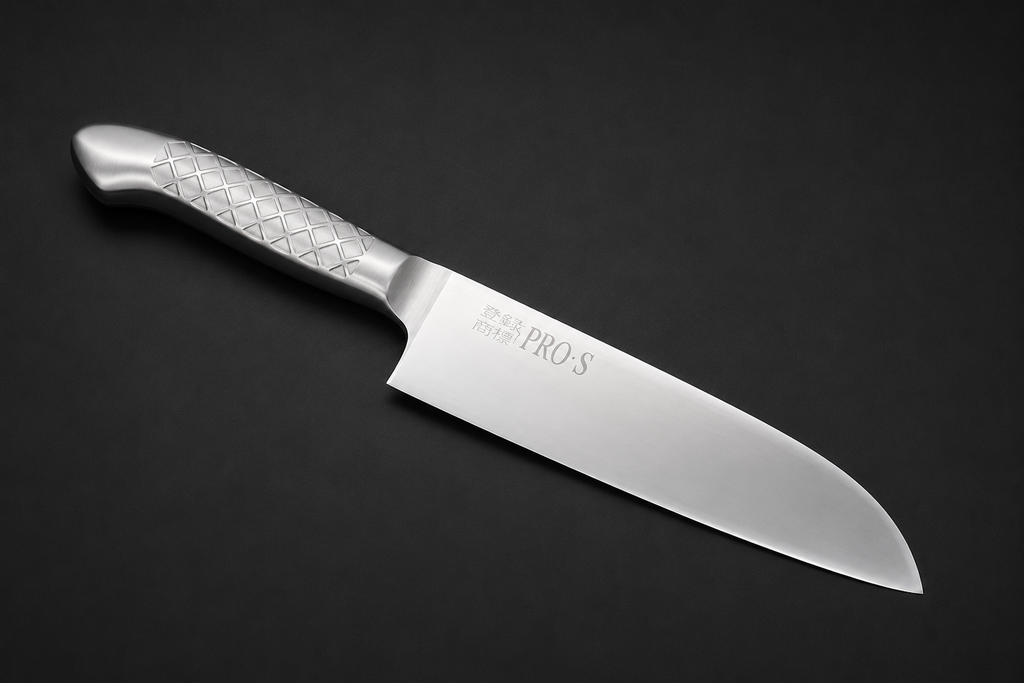
A lightweight and beginner-friendly 170mm Santoku with an easy-care AUS-8 stainless steel blade and seamless stainless-steel handle, offering versatile everyday performance at an accessible price.
Blade Length: 170mm
Steel: AUS-8 Stainless
Best For: Budget-conscious beginners and everyday all-purpose cooking
The Kanetsugu Pro S Series PS-03 Santoku 170mm is our budget pick for beginners because it offers an approachable all-purpose blade, easy-care stainless steel, and useful everyday performance at a relatively accessible price.
Its 170mm Santoku profile is compact and easy to control while still providing enough blade length for vegetables, meat, fish, and general meal prep. The AUS-8 stainless steel also offers good corrosion resistance and relatively straightforward maintenance, which makes it a practical match for first-time Japanese knife owners.
Choose the Pro S Santoku if you want an affordable first Japanese knife that is versatile enough for everyday cooking without requiring the budget or maintenance of a more premium model.
Best Premium Japanese Knife for Beginners
JCK Natures Gekko Series Gyuto 210mm
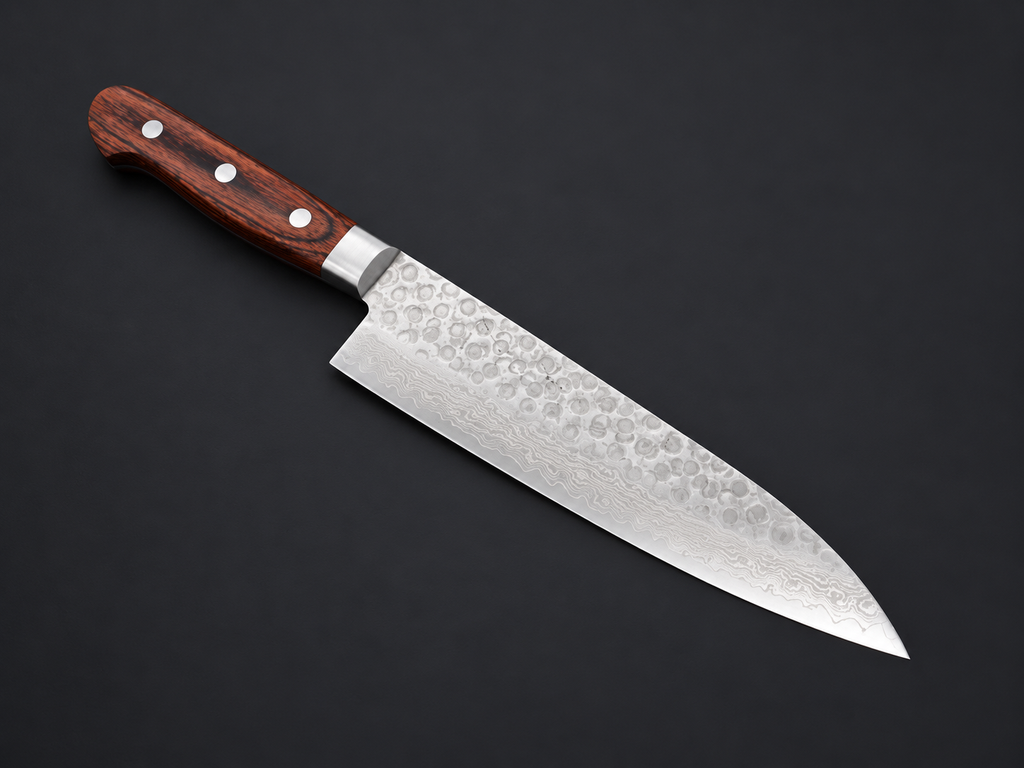
A versatile 210mm Gyuto with a hand-sharpened VG-10 stainless steel core, hammered Damascus cladding, and a full-tang mahogany handle for everyday all-purpose cooking.
Blade Length: 210mm
Steel: VG-10 Damascus
Best For: Beginners who want a premium all-purpose Gyuto
The JCK Natures Gekko Series Gyuto 210mm is our premium pick for beginners who want a more refined first Japanese knife while still keeping maintenance relatively manageable.
Its 210mm Gyuto profile works well as a primary all-purpose knife for meat, fish, vegetables, and general meal prep. The VG-10 stainless steel core offers good corrosion resistance and stronger edge retention than many entry-level stainless steels, while the Damascus cladding, full-tang construction, and mahogany handle give the knife a more premium finish and feel.
Choose the Gekko Series Gyuto if you want the versatility of a full-size Japanese chef’s knife with upgraded steel, construction, and appearance, and you are comfortable paying more for those improvements.
Best Compact Japanese Knife for Beginners
JCK Original Kagayaki Basic Series Petty 125mm
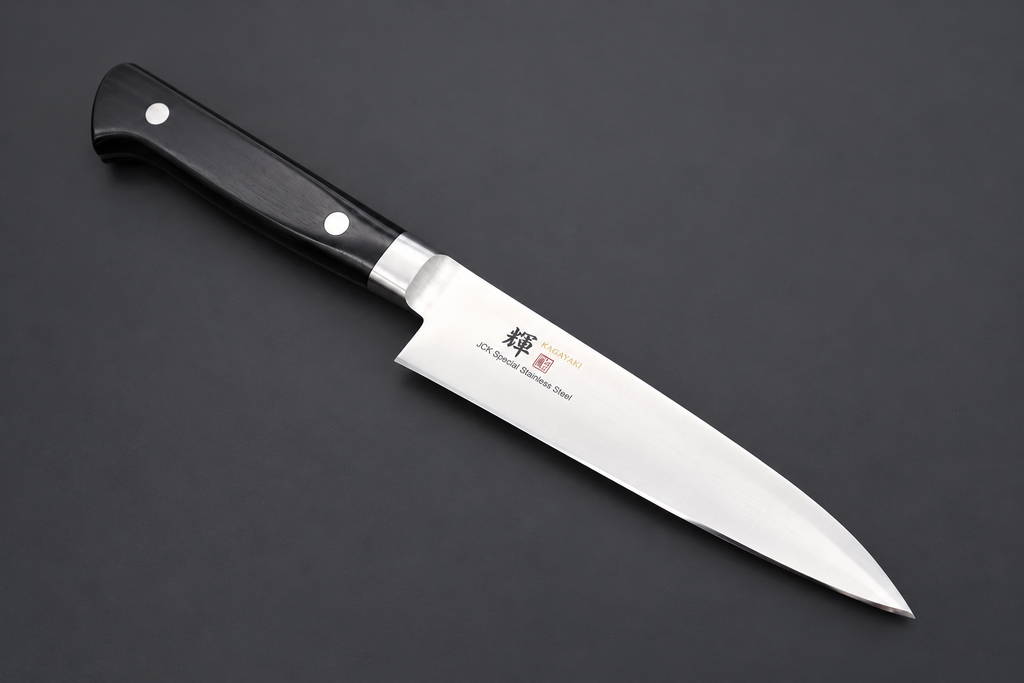
A compact and beginner-friendly Petty knife with an easy-care VG-1 stainless steel blade and comfortable black pakkawood handle, ideal for precise everyday tasks such as peeling, slicing, and small prep work.
Blade Length: 125mm
Steel: VG-1 Stainless
Best For: Beginners who want a compact knife for precise everyday prep
The JCK Original Kagayaki Basic Series Petty 125mm is our compact pick for beginners who want a small, easy-to-control Japanese knife for precise everyday prep.
Its 125mm blade is well suited to trimming meat, slicing fruit, preparing small vegetables, peeling, and other detail work where a larger Gyuto or Santoku can feel unnecessary. The VG-1 stainless steel offers good corrosion resistance and relatively simple maintenance, making it approachable for first-time Japanese knife owners.
Choose the Kagayaki Basic Petty if compact size and precision matter most to you. For most cooks, however, a Petty works best as a companion to a larger Gyuto or Santoku rather than as the only knife in the kitchen.
Best Starter Set for Beginners
JCK Special Set “First Japanese Knife Set Type II”
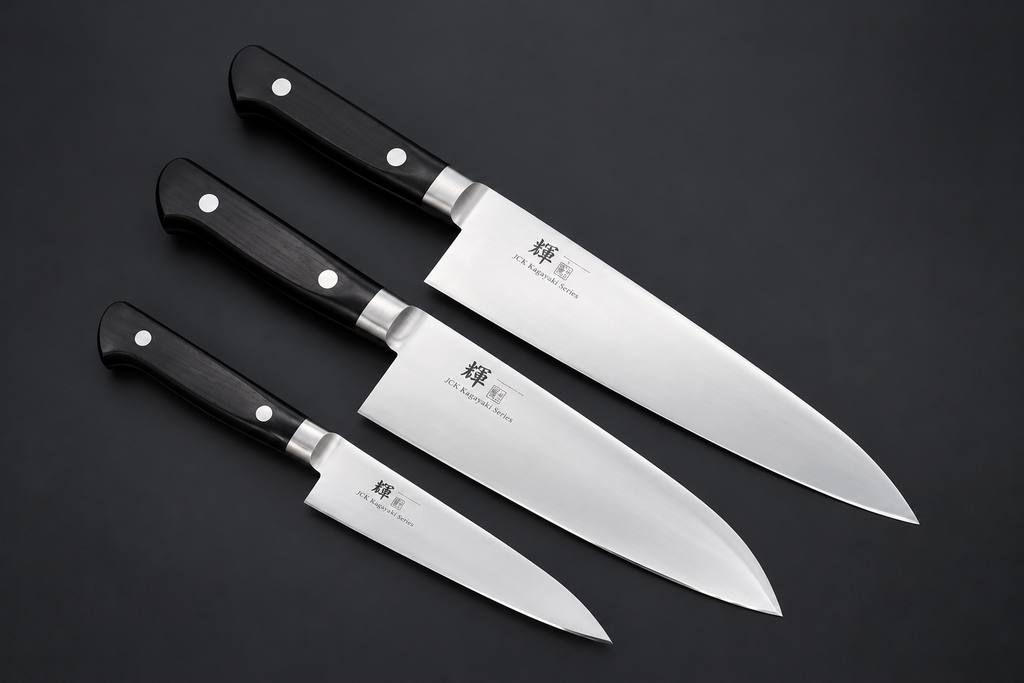
A practical three-knife starter set featuring a 125mm Petty, 180mm Santoku, and 210mm Gyuto, all made with easy-care VG-1 stainless steel and comfortable black pakkawood handles for versatile everyday cooking.
Blade Length: 125 / 180 / 210mm
Steel: VG-1 Stainless
Best For: Beginners who want a complete three-knife starter set
The JCK Special Set “First Japanese Knife Set Type II” is our starter set pick for beginners who want to build a practical Japanese knife collection in one purchase.
The set combines three useful blade types: a Petty for smaller and more precise tasks, a Santoku for compact everyday prep, and a Gyuto for larger all-purpose cutting. All three use VG-1 stainless steel, which offers good corrosion resistance and relatively manageable maintenance for first-time Japanese knife owners.
Choose this set if you already know you want more than one Japanese knife and would rather start with a coordinated collection than buy each knife separately. If you only need one primary knife, however, starting with a Gyuto or Santoku will usually be the simpler and less expensive choice.
Best Compact Gyuto for Beginners
Yoshimune SC Gyuto 190mm VG10
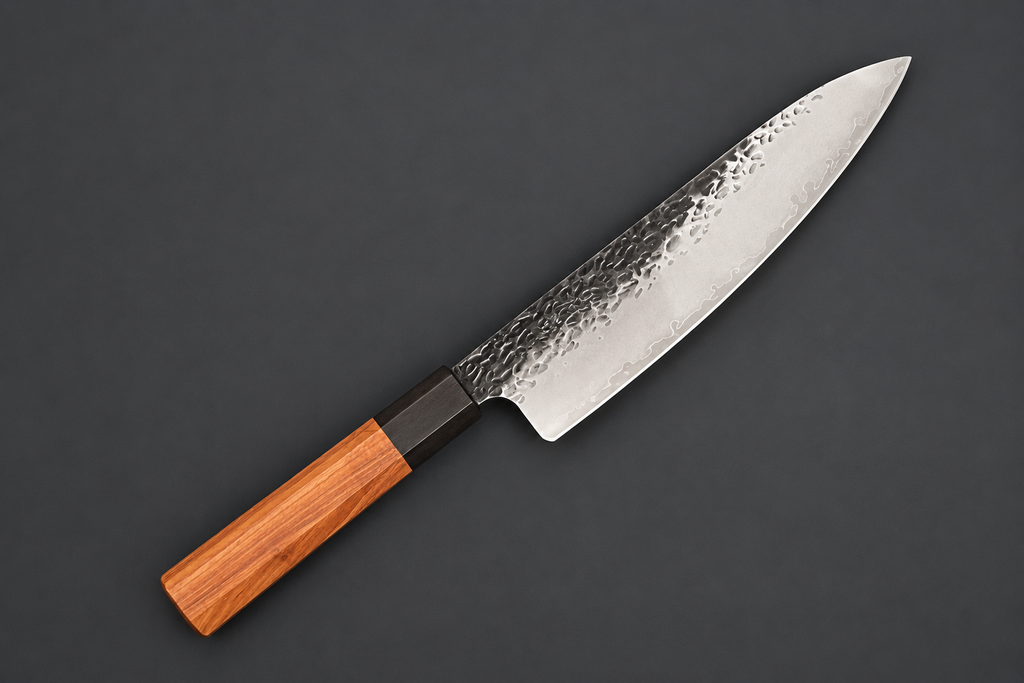
A compact and versatile 190mm Gyuto with a VG10 stainless steel core, stainless-clad construction, hammered finish, and comfortable octagonal red wood handle, offering an easy-to-manage size for beginners who want an all-purpose Japanese chef’s knife.
Blade Length: 190mm
Steel: VG10 Stainless
Best For: Beginners who want a compact all-purpose Gyuto
The Yoshimune SC Gyuto 190mm VG10 is our compact Gyuto pick for beginners who want the versatility of a Japanese chef’s knife in a slightly shorter, easier-to-control size.
Its 190mm blade sits between a compact Santoku and a typical 210mm Gyuto, making it well suited to everyday prep while offering more reach than many shorter all-purpose knives. The VG-10 stainless steel core with stainless cladding provides good corrosion resistance and solid edge retention without requiring the maintenance of fully reactive carbon steel.
Choose the Yoshimune SC Gyuto if you want a versatile all-purpose knife but prefer something more compact than a standard 210mm Gyuto. Its double-bevel edge and manageable size also make it an approachable option for first-time Japanese knife buyers.
How We Chose the Best Japanese Knives for Beginners
We evaluated these knives based on the factors that matter most to first-time Japanese knife buyers: versatility, blade size, steel, maintenance requirements, ease of sharpening, corrosion resistance, and overall value.
For beginners, we generally favor versatile Gyuto and Santoku knives in manageable sizes, along with stainless or relatively low-maintenance steels. We also included options for different budgets and needs, including a compact Petty knife, a starter set, and a smaller Gyuto.
Our selections are based on product specifications, retailer information, and editorial evaluation. Affiliate relationships do not determine which knives are included or how they are ranked.
What to Look For in Your First Japanese Knife
When choosing your first Japanese knife, focus on versatility, control, maintenance, and comfort rather than simply looking for the hardest steel, most expensive model, or most decorative finish.
For most beginners, a medium-size Gyuto or Santoku in stainless steel is the easiest place to start. The table below summarizes the main factors to compare before choosing a knife.
| Factor | What to Look For | Beginner-Friendly Choice |
|---|---|---|
| Knife Type | Versatility and intended use | Gyuto or Santoku |
| Blade Length | Control and cutting space | Medium length |
| Steel | Maintenance and edge retention | Stainless steel |
| Handle | Comfort and grip | Choose what feels natural |
| Price | Value and build quality | Reliable entry-to-mid-range |
Which Type of Japanese Knife Is Best for Beginners?
Gyuto: Best All-Purpose Choice for Beginners
A Gyuto is one of the most versatile Japanese knives and is usually the best starting point if you want one primary knife for everyday cooking.
For most beginners, a 180–210mm stainless steel Gyuto offers a practical balance of reach, control, and easy maintenance. Choose a Gyuto if you regularly prepare a mix of meat, fish, vegetables, and general meal prep.
Santoku: Best Compact Choice for Beginners
A Santoku is an excellent alternative for beginners who prefer a shorter, more compact all-purpose knife.
A 165–180mm stainless Santoku is easy to control and works well for vegetables, meat, fish, and everyday home cooking. Choose a Santoku if a full-size Gyuto feels larger than you need or if you have limited cutting-board space.
Nakiri: Best Choice for Vegetable-Focused Cooking
A Nakiri is designed primarily for vegetable preparation, with a tall rectangular blade and relatively flat edge that works well for push cutting and straight chopping.
Choose a Nakiri if vegetables make up a large part of your cooking. For most beginners, however, it is better as a specialized addition than as the only knife in the kitchen.
Petty: Best Small Utility Knife for Beginners
A Petty knife is useful for trimming, peeling, slicing fruit, preparing small vegetables, and other precise tasks where a larger knife can feel unnecessary.
A 120–150mm Petty is easy to control, but for most beginners it works best as a companion to a Gyuto or Santoku rather than as the only kitchen knife.
What Blade Length Is Best for a First Japanese Knife?
Blade length affects both control and versatility. Shorter knives are generally easier to maneuver, while longer blades provide more reach and cutting space.
For most beginners, a 180–210mm Gyuto or 165–180mm Santoku is the most practical starting range. Choose the shorter end if you prefer more control or have limited cutting-board space, and the longer end if you want more reach for larger ingredients and general meal prep.
Smaller 120–150mm Petty knives are useful for precise tasks, but they are usually better as secondary knives than as your only kitchen knife.
What Steel Is Best for Beginners?
For most beginners, stainless steel is the easiest place to start because it offers good corrosion resistance and relatively simple day-to-day maintenance.
Steels such as AUS-8, VG-1, VG-10, and similar stainless options can provide a practical balance of edge retention, toughness, and ease of ownership. Harder premium steels may hold an edge longer, but they can also be more demanding to sharpen or less forgiving if used carelessly.
Carbon steels can offer excellent sharpening response and cutting performance, but they require more attention to cleaning, drying, and rust prevention. If you want a low-maintenance first Japanese knife, stainless steel is usually the safer choice.
Read our Japanese Knife Steel Guide →
Which Handle Style Is Best for Beginners?
Japanese knives commonly use either Western-style handles or traditional Japanese-style wa handles. Neither is automatically better for beginners; comfort and balance matter more than handle type alone.
Western handles usually feel more familiar to cooks coming from standard Western kitchen knives and often provide a slightly heavier, more substantial grip. Wa handles are typically lighter and can make the knife feel more blade-forward or nimble, depending on the design.
For your first Japanese knife, choose the handle style that feels most natural in your hand. If you are buying online and cannot test the knife first, a familiar Western-style handle can be the easier starting point for many beginners.
How Much Should You Spend on Your First Japanese Knife?
For most beginners, the best value is usually in the entry-to-mid range rather than at the very cheapest or most expensive end of the market.
A well-made first Japanese knife does not need premium steel, elaborate Damascus finishes, or luxury handle materials. What matters more is reliable heat treatment, comfortable handling, suitable blade size, reasonable maintenance, and a reputable maker or retailer.
If your budget allows, prioritize a versatile Gyuto or Santoku from a trusted brand before spending extra on appearance or highly specialized steel. Once you know what blade shape, size, and balance you prefer, it becomes much easier to decide whether a more expensive second knife is worth it.
Common First Japanese Knife Buying Mistakes
One common mistake is choosing a first Japanese knife mainly for appearance, brand reputation, or steel hardness. A knife can look impressive on paper but still be uncomfortable, overly demanding to maintain, or poorly suited to the way you cook.
Another mistake is starting with a blade that is too large, too specialized, or more delicate than your cooking habits require. For most beginners, a manageable Gyuto or Santoku is a safer primary knife than a highly specialized blade.
Avoid using Japanese kitchen knives on glass or stone cutting boards, frozen foods, bones, or other very hard materials unless the knife is specifically designed for those tasks. These can quickly damage or chip a fine edge.
Finally, do not ignore maintenance. Hand-wash and dry your knife after use, avoid the dishwasher, and expect to sharpen it eventually. Choose a knife whose care requirements realistically match how much maintenance you are willing to do.
Which Japanese Knife Should a Beginner Choose?
For most beginners, a versatile Gyuto or Santoku in stainless steel is the safest place to start. If you want one primary knife for a wide range of everyday cooking, our Best Overall Kanetsugu Pro M Series Gyuto 210mm is the strongest all-around starting point in this guide.
If you prefer a shorter blade, consider the Misono MV Santoku. Choose the Kanetsugu Pro S Santoku if budget matters most, the JCK Natures Gekko Gyuto if you want a more premium option, or the Yoshimune SC Gyuto if you like the versatility of a Gyuto but prefer a more compact 190mm size.
The Kagayaki Basic Petty is better for smaller, precise tasks, while the JCK starter set makes more sense if you already know you want several knife types. If you are still unsure, start with a stainless Gyuto or Santoku in a comfortable size and prioritize versatility, manageable maintenance, and a price you are comfortable with.
Frequently Asked Questions
For most beginners, a stainless steel Gyuto or Santoku is the best place to start because both are versatile, relatively easy to maintain, and suitable for a wide range of everyday kitchen tasks.
Both are excellent choices. A Gyuto offers more reach and versatility, while a Santoku is shorter and often easier to control. Choose a Gyuto if you want one general-purpose knife for a wide range of tasks, or a Santoku if you prefer a more compact blade.
Stainless steel is usually the easiest choice for a first Japanese knife because it offers good corrosion resistance and relatively simple maintenance. AUS-8, VG-1, VG-10, and similar stainless steels are practical options for beginners.
You do not need the most expensive knife to get good performance. For most beginners, a reliable entry-to-mid-range knife from a reputable maker or retailer offers the best balance of quality, versatility, and value.
No. Most beginners can start with one versatile Gyuto or Santoku and add specialized knives later. A Petty, Nakiri, or multi-knife set makes more sense once you know which additional blade types suit your cooking.
Not necessarily. Stainless Japanese knives are relatively easy to maintain if you hand-wash and dry them after use, avoid dishwashers and very hard cutting surfaces, and sharpen them when needed. Carbon steel knives require more care to prevent rust and staining.
Where to Buy Japanese Knives for Beginners
When buying your first Japanese knife, choose a retailer that clearly lists the maker, blade steel, dimensions, country of origin, shipping terms, and return policy. Transparent product information makes it much easier to compare knives accurately and avoid misleading listings.
Beginners should also look for stores that provide enough detail about blade size, maintenance requirements, handle style, and intended use so you can judge whether a knife actually fits your needs before buying.
Sourced Japan maintains a list of trusted retailers that sell Japanese kitchen knives and offer international purchasing options.
Continue Reading
If you are still comparing Japanese knives, these guides can help you understand the main knife types, choose the right steel, and narrow down the best option for your cooking style.
Japanese Knife Buying Guide →
Explore Japanese Knife Types →
Japanese Knife Steel Guide →