
Gyuto Knife
Discover what makes the Gyuto one of Japan’s most versatile kitchen knives, how to choose the right one, and where to buy authentic Japanese models.
Best for: Everyday cooking, meat, fish, vegetables, slicing and chopping
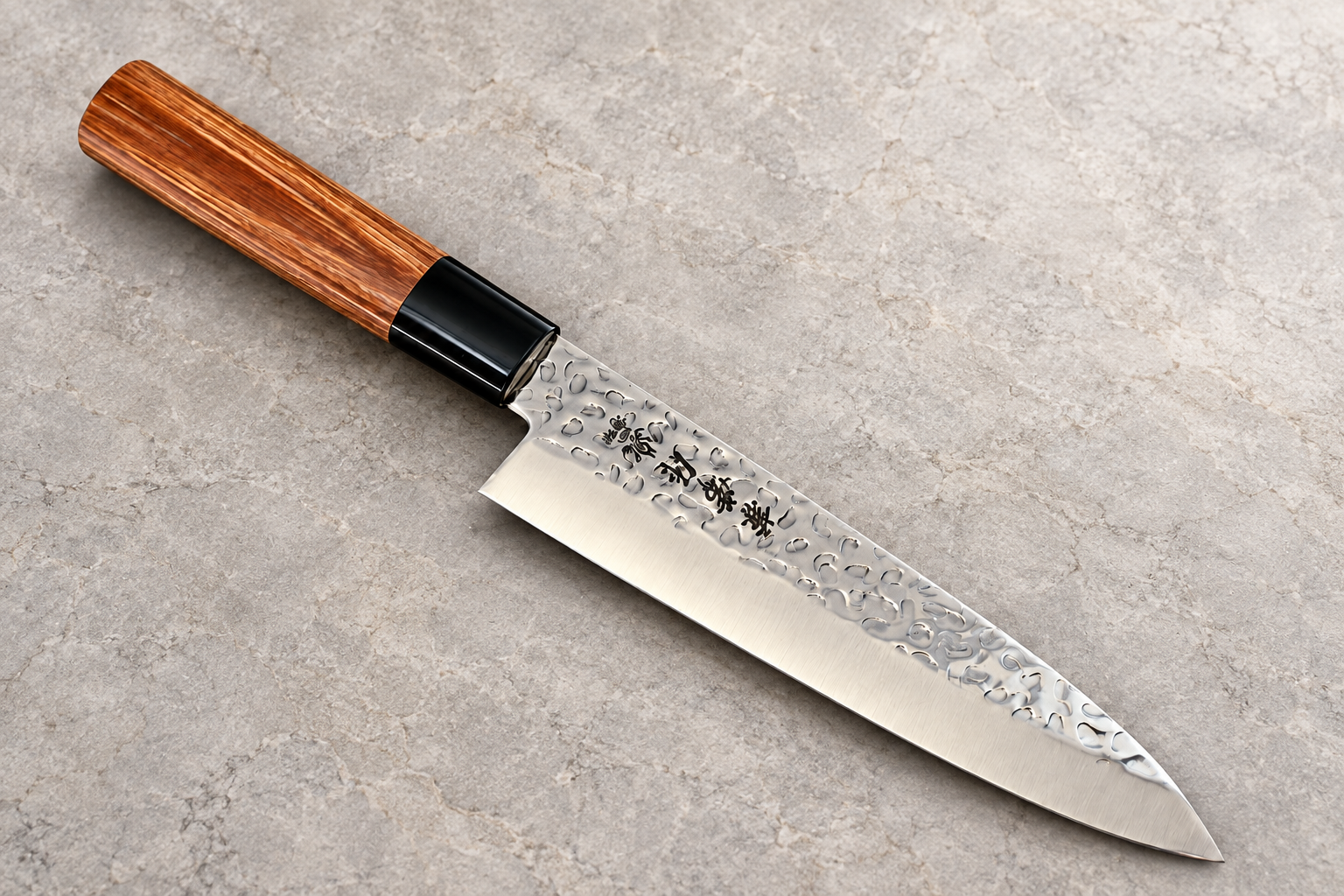
Gyuto at a Glance
BEST FOR
Everyday Cooking
POPULAR SIZE
210mm
BLADE STYLE
Double Bevel
SKILL LEVEL
Beginner Friendly
What Is a Gyuto Knife?
A Gyuto knife is a Japanese all-purpose chef’s knife designed for everyday prep. Its long, narrow blade and pointed tip make it equally useful for slicing meat, preparing fish, and chopping vegetables.
Read our Japanese Knife Buying Guide →
Long & Pointed
The longer blade provides extra cutting length, while the pointed tip helps with precise work.
Thin & Precise
Gyuto blades are often thinner than Western chef’s knives, allowing clean cuts with less resistance.
Familiar to Use
Most modern Gyuto knives use a double-bevel edge, making them approachable for cooks used to Western-style knives.
Who Should Buy a Gyuto?
A Gyuto may be right for you if you want:
EVERYDAY USE
One Knife for Everyday Cooking
A versatile choice for cooks who want one knife for meat, fish, vegetables, and general meal preparation.
PRECISION
More Precision and Control
Its thinner blade and agile profile make a Gyuto well suited to clean, precise cuts and detailed prep work.
CHEF'S KNIFE ALTERNATIVE
Chef’s Knife Alternative
A great option for cooks who like the versatility of a chef’s knife but prefer a lighter, more precise feel.
How to Choose a Gyuto
Focus on four key factors when choosing a Gyuto: blade length, steel type, handle style, and weight & balance.
01 / SIZE
Blade Length
210mm is the most versatile size for most home cooks. Choose 180mm for easier handling or 240mm for more cutting length.
02 / STEEL
Steel Type
Stainless steel is easier to maintain, while carbon steel can take a very sharp edge but requires more care.
03 / HANDLE
Handle Style
Wa handles are typically lighter, while Western-style handles offer a heavier, more familiar feel.
04 / BALANCE
Weight & Balance
Lighter Gyuto knives feel quick and precise, while heavier models can offer more stability during larger cutting tasks.
Gyuto vs Santoku: What’s the Difference?
Gyuto and Santoku are both versatile Japanese knives, but their size, blade shape, and handling feel noticeably different.
Gyuto
Typical blade length: 210–240mm
Best for: Cooks who want versatility, precision, and more cutting length.
Santoku
Typical blade length: 165–180mm
Best for: Cooks who prefer a compact, easy-to-control all-purpose knife.
Read the Santoku GuideWhere to Buy Japanese Gyuto Knives
Compare authenticity, shipping, and after-sales support before choosing where to buy your Gyuto.
AUTHENTICITY
Buy from reputable retailers that clearly identify the maker, steel, and origin of the knife.
SHIPPING
Check international shipping options, delivery costs, import duties, and destination restrictions.
SUPPORT
Look for clear return policies, customer support, and reliable after-sales service.
TRUSTED RETAILERS
Find Trusted Places to Buy
Explore our guide to reputable retailers that sell authentic Japanese knives and offer international shipping.
See Trusted RetailersGyuto Knife FAQ
Related Guides
Japanese Knife Buying Guide
Learn the key factors to consider when choosing a Japanese kitchen knife, from blade type and steel to size and everyday use.
Japanese Knives for Beginners
New to Japanese knives? Learn which knife types, sizes, and features are easiest to start with, plus what to look for before buying your first knife.
Japanese Knife Steel Guide
Understand the differences between common Japanese knife steels, including stainless and carbon options, so you can choose the right balance of sharpness, care, and durability.