
Sujihiki Knife
Discover what makes the Sujihiki a specialized Japanese slicing knife, how its long narrow blade creates clean cuts, and how to choose the right one.
Best for: Slicing boneless meat, fish, roasts, and other large proteins
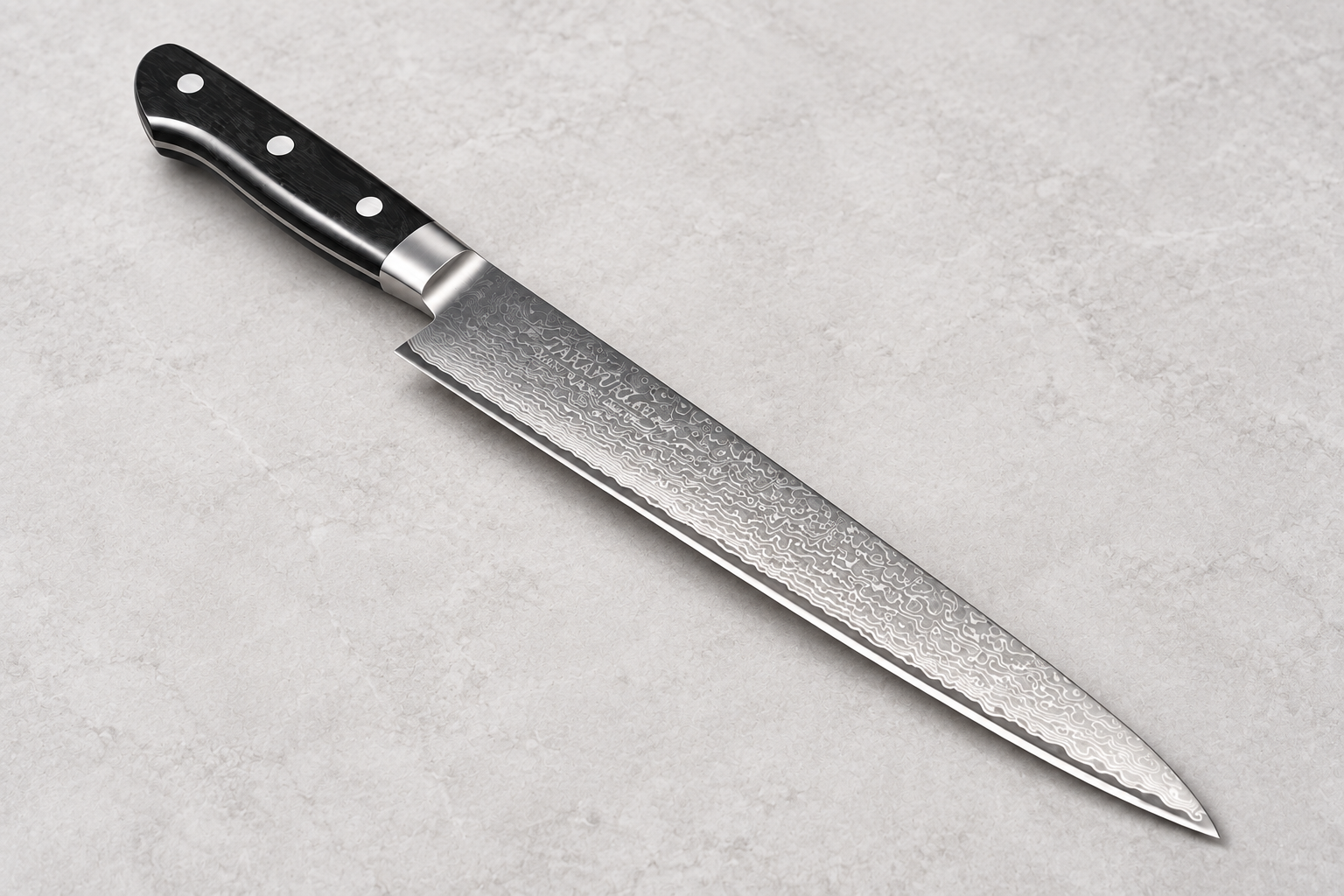
Sujihiki at a Glance
BEST FOR
Slicing Meat & Fish
POPULAR SIZE
240–300mm
BLADE STYLE
Double Bevel
SKILL LEVEL
Intermediate
What Is a Sujihiki Knife?
A Sujihiki is a long, narrow Japanese slicing knife designed to make clean, smooth cuts through boneless meat, fish, and roasts. Its slim blade and extended length allow you to slice with fewer strokes, helping preserve texture and presentation.
Read our Japanese Knife Buying Guide →
Long & Narrow Blade
The slim, extended blade is designed for smooth slicing through boneless meat, fish, and large roasts.
Clean Pull Cuts
Its long edge helps complete slices in fewer strokes, reducing sawing and helping preserve clean presentation.
Precise & Controlled
The narrow profile reduces drag while the double-bevel edge offers familiar control for accurate slicing.
Who Should Buy a Sujihiki?
A Sujihiki may be right for you if you want:
SLICING
Clean, Long Slices
Ideal for cooks who regularly slice boneless meat, fish, roasts, or other large proteins.
PRECISION
Better Presentation
The long narrow blade helps create smooth, even slices with fewer strokes and less tearing.
KITCHEN STYLE
A Specialized Slicer
Best for cooks who already have an all-purpose knife and want a dedicated blade for slicing tasks.
How to Choose a Sujihiki
Focus on four key factors when choosing a Sujihiki: blade length, steel type, blade profile, and handle & balance.
01 / SIZE
Blade Length
Most Sujihiki knives are around 240mm to 300mm. A 240mm blade is easier to control in smaller kitchens, while 270mm to 300mm gives you more length for slicing larger cuts in fewer strokes.
02 / STEEL
Steel Type
Stainless steel is easier to maintain and resists rust, while carbon steel can take a very sharp edge but requires more careful cleaning and drying.
Compare Japanese Knife Steels →
03 / PROFILE
Blade Profile
Look for a long, narrow blade with a relatively low profile. This reduces drag and helps the knife move smoothly through meat and fish during long slicing strokes.
04 / HANDLE
Handle & Balance
Wa handles are usually lighter and more blade-forward, while Western-style handles often feel heavier and more familiar. Choose a balance that feels stable during long, controlled slicing motions.
Sujihiki vs Yanagiba: What’s the Difference?
Sujihiki and Yanagiba are both long Japanese slicing knives, but they are designed for different cutting styles. A Sujihiki typically has a double-bevel edge and works well for meat, fish, and roasts, while a Yanagiba uses a traditional single-bevel design intended primarily for sushi and sashimi preparation.
Sujihiki
Typical blade length: 240–300mm
Best for: Slicing boneless meat, fish, roasts, and other large proteins.
Yanagiba
Typical blade length: 240–330mm
Best for: Sushi, sashimi, and precise raw-fish slicing.
Read the Yanagiba GuideWhere to Buy Japanese Sujihiki Knives
Compare authenticity, shipping, and after-sales support before choosing where to buy your Sujihiki knife.
AUTHENTICITY
Buy from reputable retailers that clearly identify the maker, steel, and origin of the knife.
SHIPPING
Check international shipping options, delivery costs, import duties, and destination restrictions.
SUPPORT
Look for clear return policies, customer support, and reliable after-sales service.
TRUSTED RETAILERS
Find Trusted Places to Buy
Explore our guide to reputable retailers that sell authentic Japanese knives and offer international shipping.
See Trusted RetailersSujihiki Knife FAQ
Related Guides
Yanagiba Knife Guide
Compare the Sujihiki’s versatile double-bevel design with the Yanagiba’s traditional single-bevel profile for sushi and sashimi.
Japanese Knife Buying Guide
Learn the key factors to consider when choosing a Japanese kitchen knife, from blade type and steel to size and everyday use.
Japanese Knife Steel Guide
Understand the differences between Japanese knife steels, including stainless and carbon options, so you can choose the right balance of sharpness, care, and durability.