

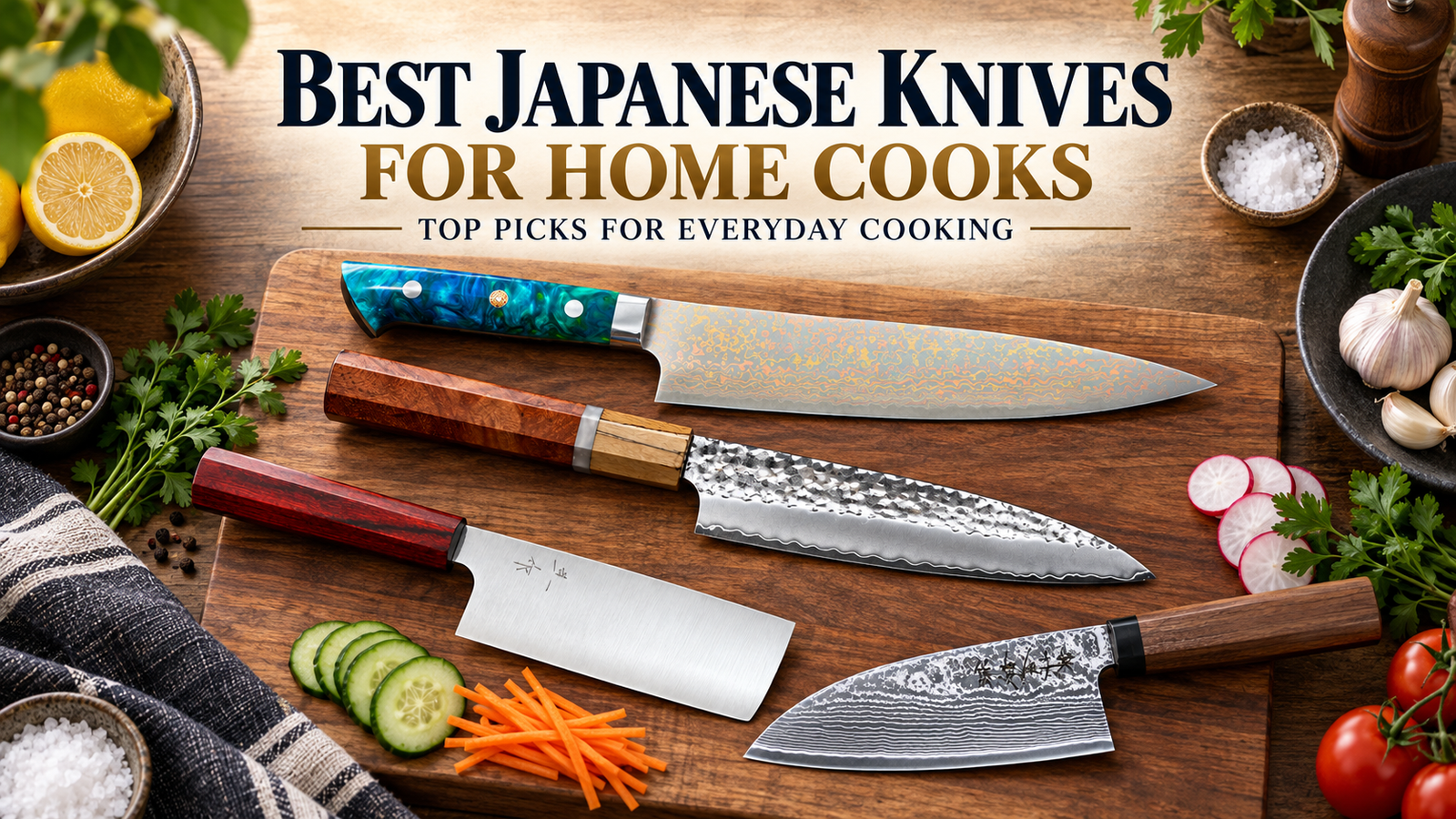
A good Japanese kitchen knife can make everyday cooking faster, more precise, and more enjoyable. For most home cooks, the best choice is a versatile knife that feels comfortable, resists rust, and is easy to maintain.
In this guide, we compare Japanese knives for different home-cooking needs, from all-purpose Gyuto and Santoku knives to vegetable-focused Nakiri, compact Petty, premium, budget, and carbon-steel options.
Whether you cook simple weeknight meals or prepare meat, fish, and vegetables from scratch, these picks will help you find a Japanese knife that fits your kitchen, cooking style, and budget.
Affiliate Disclosure: Sourced Japan may earn a commission when you purchase through links on this page, at no additional cost to you.
Table of Contents
Best Japanese Knives for Home Cooks at a Glance
| Best For | Knife | Steel | Approx. Price |
|---|---|---|---|
| Best Overall | Sakai Takayuki VG10 Nashiji WA Gyuto | VG-10 Stainless | ~$213 |
| Best Santoku | Shigeki Tanaka 33-Layer R2(SG2) Damascus Harukaze Santoku | R2 / SG2 Damascus | ~$429 |
| Best Budget | Kanetsune KC-950 Santoku | DSR-1K6 Stainless | ~$57 |
| Best for Vegetables | Kei Kobayashi R2 Special Finished CS Nakiri | R2 / SG2 | ~$342 |
| Best Compact Knife | Yu Kurosaki R2(SG2) Hammered SENKO-EI Petty | R2 / SG2 | ~$404 |
| Best Premium | Takeshi Saji VG10 Colored Damascus STW Gyuto 210mm | VG-10 Colored Damascus | ~$897 |
| Best Carbon Steel | Yoshimune Santoku | Aogami #2 | ~$147 |
Best Overall Japanese Knife for Home Cooks
Sakai Takayuki VG10 Nashiji WA Gyuto 210mm
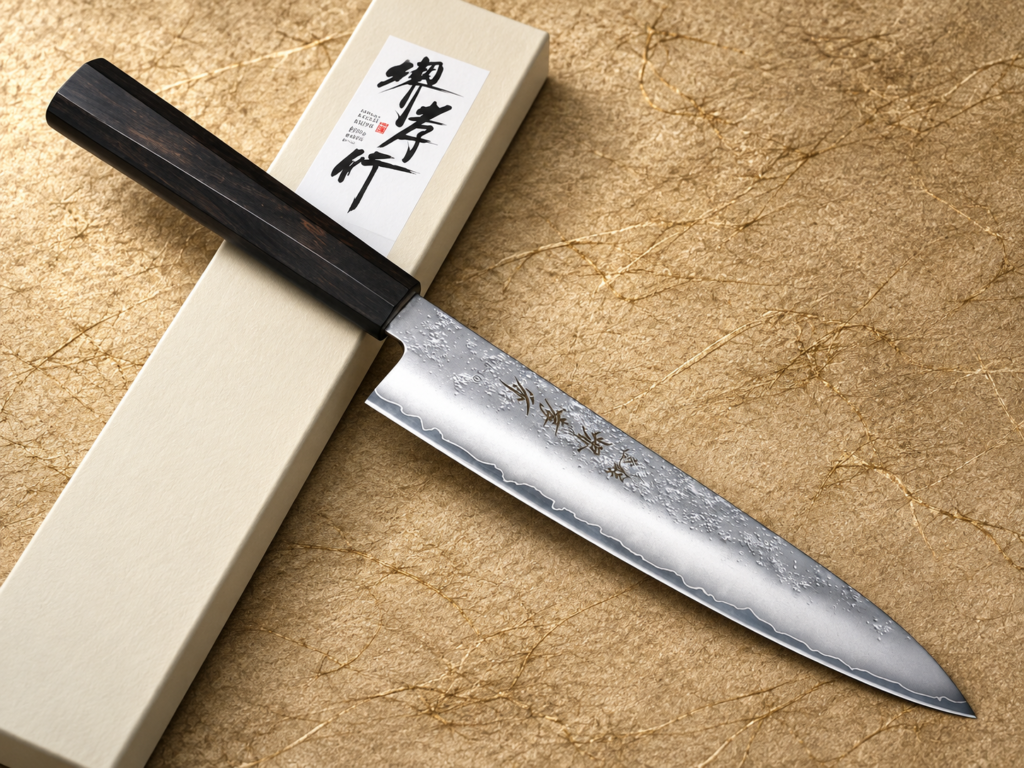
A refined 210mm Gyuto with a VG-10 stainless steel core, Nashiji finish, and full ebony handle for versatile everyday home cooking.
Blade Length: 210mm
Steel: VG-10 Stainless
Best For: Everyday all-purpose cooking
The Sakai Takayuki VG10 Nashiji WA Gyuto 210mm is our best overall pick for home cooks because it combines versatile blade geometry, easy-care stainless steel, and a lightweight Japanese-style handle in a practical everyday size.
Its 210mm Gyuto blade works well for meat, fish, vegetables, and general meal prep. The VG-10 stainless steel core is hardened to approximately 60–61 HRC, providing strong corrosion resistance and dependable edge retention, while the Nashiji finish gives the blade a refined traditional appearance.
At approximately 162g, the knife remains light and easy to control for a full-size Gyuto. The double-edged construction makes it suitable for both right- and left-handed cooks, while the full ebony handle gives it a more premium feel than a basic Western-handled entry-level knife. It is made in Japan.
Best Japanese Santoku for Home Cooks
Shigeki Tanaka 33-Layer R2(SG2) Damascus Harukaze Santoku 165mm
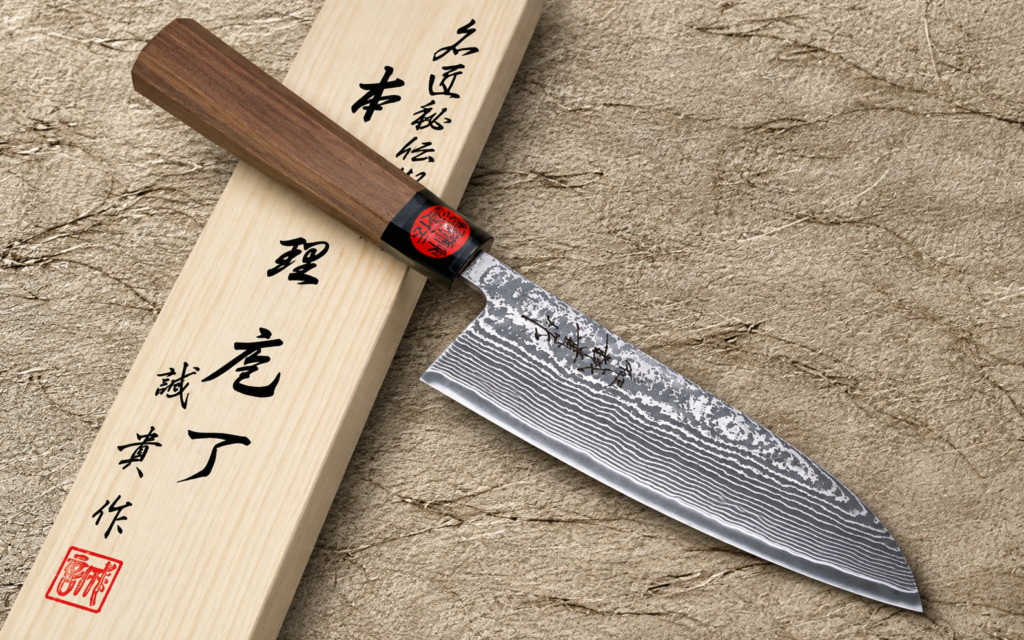
A high-performance 165mm Santoku with an R2/SG2 powder-steel core, 33-layer Damascus construction, and lightweight walnut handle for refined everyday cooking.
Blade Length: 165mm
Steel: R2 / SG2 Damascus
Best For: Refined everyday cooking
The Shigeki Tanaka 33-Layer R2(SG2) Damascus Harukaze Santoku 165mm is our Santoku pick for home cooks who want compact handling with upgraded steel and edge retention. Its 165mm blade is well suited to vegetables, boneless meat, fish, and everyday meal prep while remaining easier to control than a longer Gyuto.
The R2/SG2 powder-steel core is hardened to approximately 63–64 HRC and surrounded by 33-layer Damascus stainless steel, providing strong edge retention and corrosion resistance. At approximately 130g, the knife remains light and nimble, while the walnut handle and double-edged construction make it comfortable for regular home use by both right- and left-handed cooks. It is made in Japan.
Best Budget Japanese Knife for Home Cooks
Kanetsune KC-950 Santoku 165mm
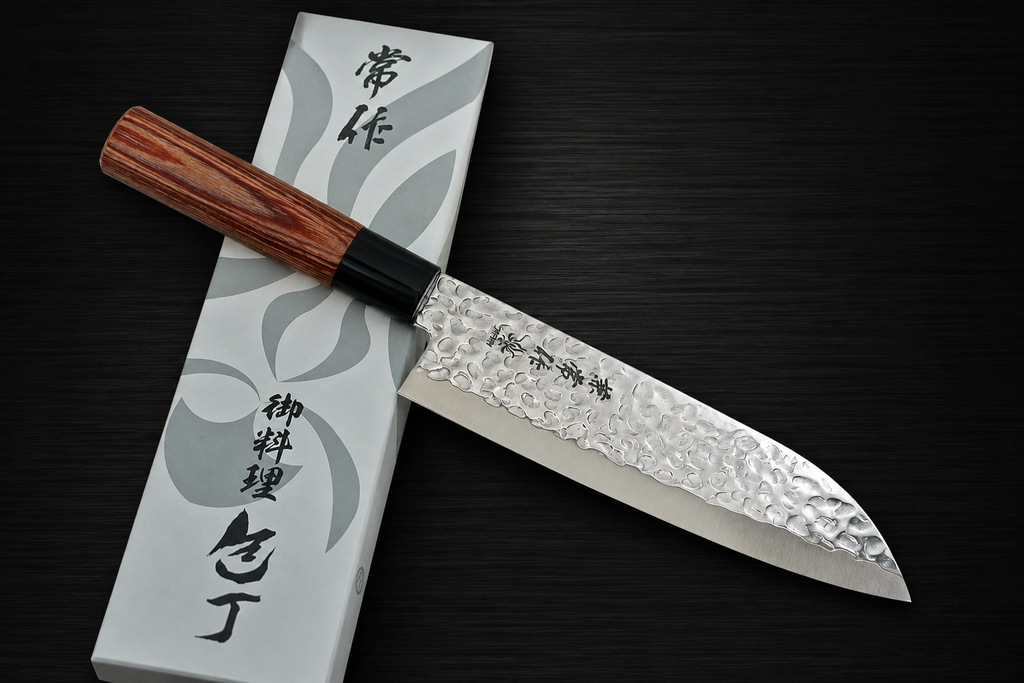
A budget-friendly 165mm Santoku for everyday home cooking, combining DSR-1K6 stainless steel, a hammered finish, and compact handling at an accessible price.
Blade Length: 165mm
Steel: DSR-1K6 Stainless
Best For: Affordable everyday home cooking
The Kanetsune KC-950 Santoku 165mm is our budget pick for home cooks because it offers a versatile all-purpose blade shape at a very accessible price.
Its 165mm Santoku profile is compact and easy to control while still being suitable for everyday tasks such as slicing meat, preparing fish, chopping vegetables, and general meal prep.
The blade uses DSR-1K6 high-carbon stainless steel, which provides corrosion resistance and practical edge retention for routine kitchen use. The hammered finish also gives the knife a more distinctive appearance than many entry-level models.
Its double-bevel edge makes it suitable for both right- and left-handed users, while the compact size works well for home cooks who prefer a shorter knife or have limited cutting-board space.
For buyers who want an affordable Japanese knife for everyday cooking, the KC-950 Santoku offers a strong combination of versatility, stainless construction, manageable size, and value.
Best Japanese Knife for Vegetables
Kei Kobayashi R2 Special Finished CS Nakiri 165mm
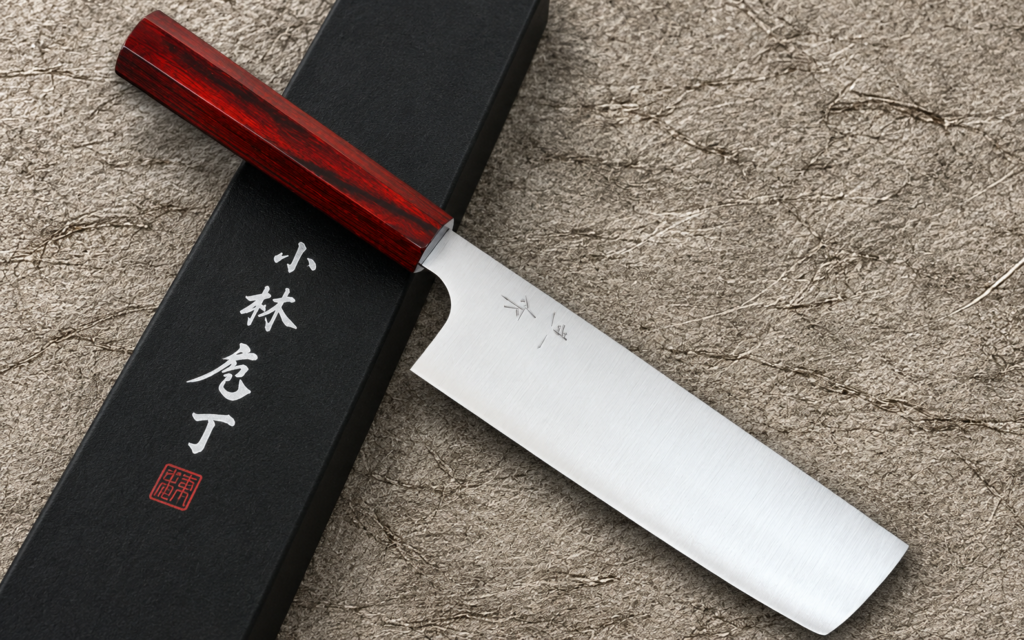
A refined 165mm Nakiri with an R2/SG2 powder-steel core, long-lasting edge retention, and a lightweight red lacquered wood handle for precise vegetable prep.
Blade Length: 165mm
Steel: R2 / SG2
Best For: Vegetable-focused prep
The Kei Kobayashi R2 Special Finished CS Nakiri 165mm is our vegetable pick for home cooks who want a dedicated knife with strong edge retention, easy-care stainless steel, and precise control. Its tall 165mm Nakiri profile is designed for chopping, slicing, and push-cutting vegetables efficiently on the cutting board.
The R2/SG2 powder-steel core is hardened to approximately 63 HRC and provides excellent rust resistance and long-lasting sharpness. At approximately 151g, the knife remains light and responsive, while the double-edged construction makes it suitable for both right- and left-handed cooks. The red lacquered wood handle and refined finish give it a distinctly premium feel without moving into the dedicated Premium category. It is made in Japan.
Best Compact Knife for Home Cooks
Yu Kurosaki R2(SG2) Hammered SENKO-EI WA KR8MP Petty 150mm
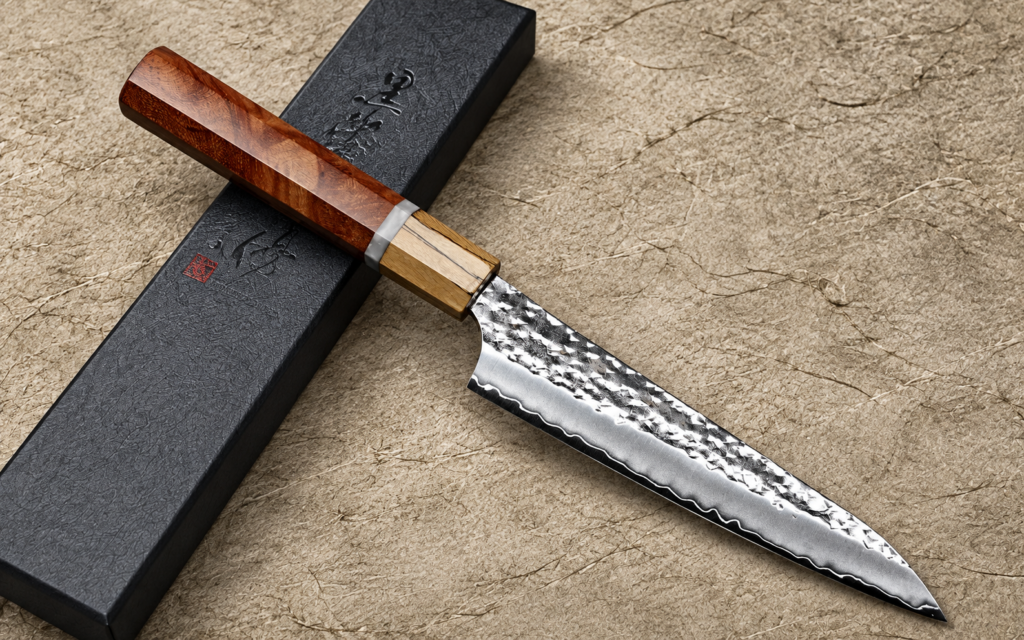
A lightweight 150mm Petty with an R2/SG2 powder-steel core, distinctive hammered finish, and premium Karin wood handle for precise everyday prep.
Blade Length: 150mm
Steel: R2 / SG2
Best For: Compact precision prep
The Yu Kurosaki R2(SG2) Hammered SENKO-EI Petty 150mm is our compact pick for home cooks who want a small, highly refined knife for detailed everyday prep. Its 150mm blade is ideal for trimming meat, slicing fruit, preparing herbs, and handling small vegetables when a full-size Gyuto or Santoku feels unnecessary.
The R2/SG2 powder-steel blade is hardened to approximately 63–64 HRC and is designed for strong corrosion resistance and long-lasting edge retention. At approximately 79g, the knife is extremely light and easy to control, while the double-edged profile makes it suitable for both right- and left-handed cooks. The Karin lump-wood handle with maple ferrule adds a premium handcrafted finish.
Best Premium Knife for Home Cooks
Takeshi Saji VG10 Colored Damascus STW Gyuto 210mm
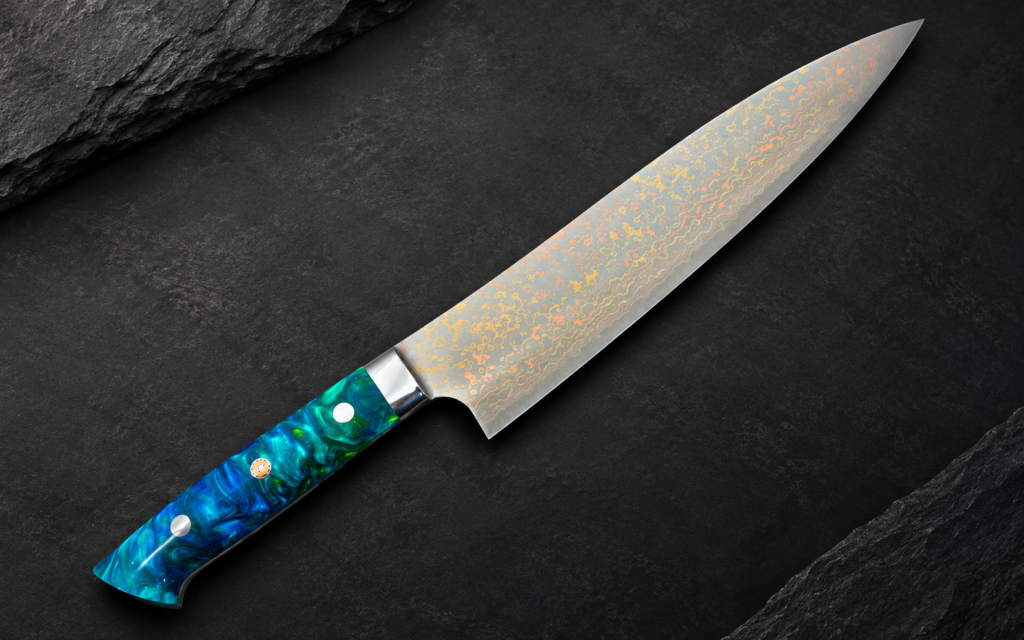
A premium 210mm Gyuto with a VG-10 core, multi-metal colored Damascus cladding, and handcrafted stabilized hybrid wood handle for refined everyday cooking.
Blade Length: 210mm
Steel: VG-10 Colored Damascus
Best For: Premium craftsmanship
The Takeshi Saji VG10 Colored Damascus STW Gyuto 210mm is our premium pick for home cooks who want a highly distinctive all-purpose knife with artisan construction and elevated materials. Its 210mm Gyuto profile remains versatile for meat, fish, vegetables, and general meal prep, while the colored Damascus finish gives it a much more distinctive presentation than a standard stainless-steel knife.
The VG-10 stainless core is surrounded by layers of stainless steel, brass, and copper and hardened to approximately 60–61 HRC. The knife weighs about 245g and uses a double-edged profile suitable for right- and left-handed cooks, while the stabilized hybrid wood handle with stainless bolster adds durability and a premium handcrafted finish. It is made in Japan.
Best Carbon Steel Knife for Home Cooks
Yoshimune Santoku 165mm Blue #2
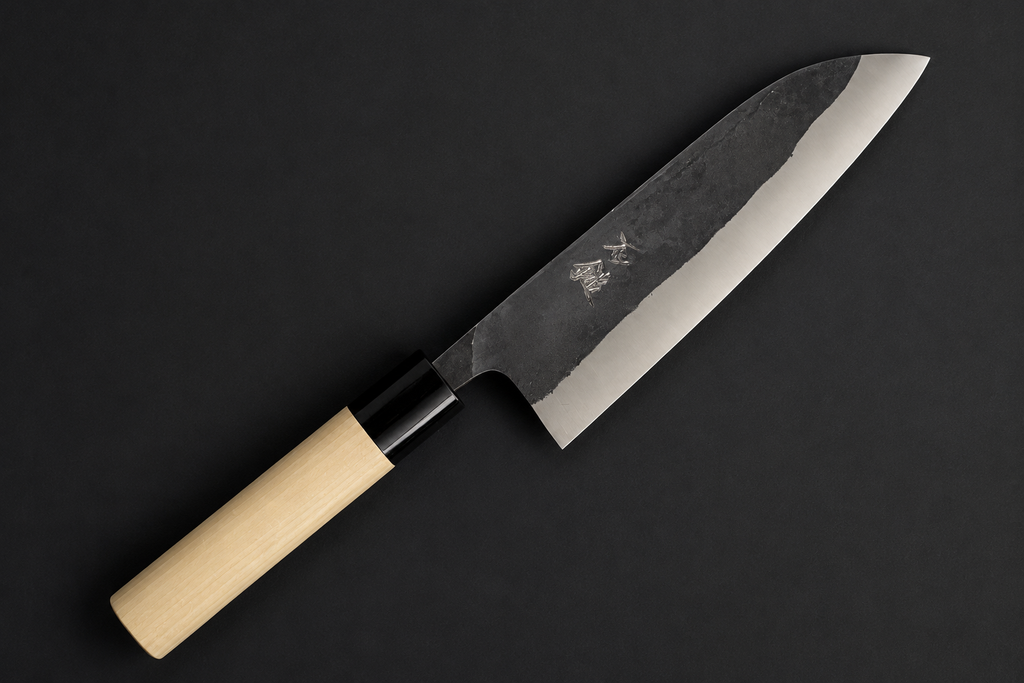
A traditional carbon-steel Santoku for home cooks who want strong edge performance, combining Aogami #2 steel with a compact 165mm blade and a lightweight magnolia handle.
Blade Length: 165mm
Steel: Aogami #2
Best For: Everyday cooking for carbon-steel enthusiasts
The Yoshimune Santoku 165mm Blue #2 is our carbon-steel pick for home cooks who want a versatile everyday knife and are comfortable with more careful maintenance.
Its 165mm Santoku profile is compact and practical for a wide range of home-kitchen tasks, including slicing meat, preparing fish, cutting vegetables, and general meal prep. The shorter blade also makes it easy to control on smaller cutting boards.
The blade uses Aogami (Blue) #2 high-carbon steel with a traditional kurouchi finish. This steel can offer strong edge retention and a responsive sharpening feel, but it is more reactive than stainless steel and should be cleaned and dried promptly after use.
Its double-bevel edge makes it suitable for both right- and left-handed users, while the magnolia handle gives the knife a more traditional Japanese feel.
For home cooks who want to explore carbon-steel performance in a versatile Santoku format, this Yoshimune offers a practical combination of manageable size, traditional construction, and everyday usability.
How We Chose the Best Japanese Knives for Home Cooks
We selected these knives based on the factors that matter most for everyday home cooking: versatility, comfort, blade size, maintenance, corrosion resistance, value, and how well each knife fits its intended role.
For primary knives, we prioritized Gyuto and Santoku models that can handle meat, fish, vegetables, and general meal prep. We also included specialized options for vegetable prep, compact tasks, premium performance, and cooks who prefer carbon steel.
Stainless and relatively low-maintenance steels received strong consideration because convenience matters in a home kitchen, while carbon steel was included for cooks willing to trade extra care for its cutting and sharpening characteristics. Price was evaluated alongside performance, materials, construction, and overall value.
How to Choose a Japanese Knife for Everyday Home Cooking
For everyday home cooking, prioritize versatility, comfortable handling, manageable maintenance, and a blade size that suits your kitchen. For most cooks, a Gyuto or Santoku is the best starting point, while Nakiri and Petty knives work well as more specialized additions.
For a broader look at blade shapes, steels, handles, sizes, and other buying factors, see our Japanese Knife Buying Guide.
Gyuto vs Santoku for Home Cooks
A Gyuto is usually the more versatile choice if you want one primary knife. Its longer blade and pointed tip work well for meat, fish, vegetables, and a wide range of cutting techniques.
A Santoku is shorter and more compact, making it easy to control in smaller kitchens and well suited to everyday vegetable, meat, and general prep. Choose based on the blade length and handling style you prefer rather than assuming one is universally better.
Related guides:
Best Japanese Gyuto Knives →
Best Japanese Santoku Knives →
What Size Japanese Knife Is Best for Home Cooking?
For most home cooks, a 180–210mm Gyuto or 165–180mm Santoku offers a practical balance of reach and control. A 210mm Gyuto provides more cutting length, while shorter Gyuto and Santoku knives can feel more manageable on smaller cutting boards.
Petty knives around 120–150mm are better suited to trimming, fruit, herbs, and precise prep than serving as a primary kitchen knife.
Which Steel Is Best for Home Cooks?
Stainless steels are usually the easiest choice for home kitchens because they offer good corrosion resistance with relatively simple maintenance. AUS-8 is practical and easy to sharpen, while VG-10 generally provides stronger edge retention and a more premium feel.
Carbon steels such as Aogami #2 can offer excellent sharpening response and edge performance, but they require prompt cleaning and drying. See our Japanese Knife Steel Guide for a more detailed steel comparison.
When Should a Home Cook Choose a Nakiri or Petty?
A Nakiri is a useful second knife if you prepare vegetables frequently. Its tall rectangular blade and relatively flat edge are designed for efficient chopping and slicing.
A Petty is better for smaller precision tasks such as trimming meat, slicing fruit, herbs, and small vegetables. For most home cooks, either works best as a companion to a versatile Gyuto or Santoku.
Frequently Asked Questions
For most home cooks, a Gyuto or Santoku is the most practical choice. A Gyuto offers more reach and versatility, while a Santoku is slightly shorter and can feel easier to control in smaller kitchens.
Not necessarily. A 210mm Gyuto is a common all-purpose size and works well for meat, fish, vegetables, and general meal prep. Home cooks who prefer a shorter blade may feel more comfortable with a 180–190mm Gyuto instead.
For most households, stainless steel is more convenient because it offers good corrosion resistance and requires less day-to-day maintenance. Carbon steel can offer excellent edge performance but needs more careful cleaning and drying.
No. One versatile Gyuto or Santoku is enough for most everyday cooking. A Nakiri or Petty can be useful later as a specialized second knife for vegetables or precise prep.
There is no fixed schedule because sharpening frequency depends on the steel, how often the knife is used, and the cutting surface. Sharpen the knife when it no longer cuts cleanly or requires noticeably more pressure during normal prep.
Hand-washing is the safer choice. Dishwashers can expose the blade and handle to heat, moisture, harsh detergents, and contact with other utensils, which can damage the edge or materials over time.
Where to Buy Japanese Knives for Home Cooks
When buying a Japanese knife online, choose a retailer that clearly lists the maker, steel, blade dimensions, country of origin, shipping terms, and other product specifications.
The knives featured in this guide are sourced from established Japanese knife retailers that offer detailed product information and international purchasing options. You can compare our recommended stores, shipping details, and specialties on the Sourced Japan Where to Buy page.
Continue Reading
Looking for a more specific Japanese knife? These guides can help you compare versatile all-purpose knives, different blade styles, and options by budget.
Best Japanese Gyuto Knives →
Best Japanese Santoku Knives →
Best Japanese Knives Under $200 →
Japanese Knife Buying Guide →