

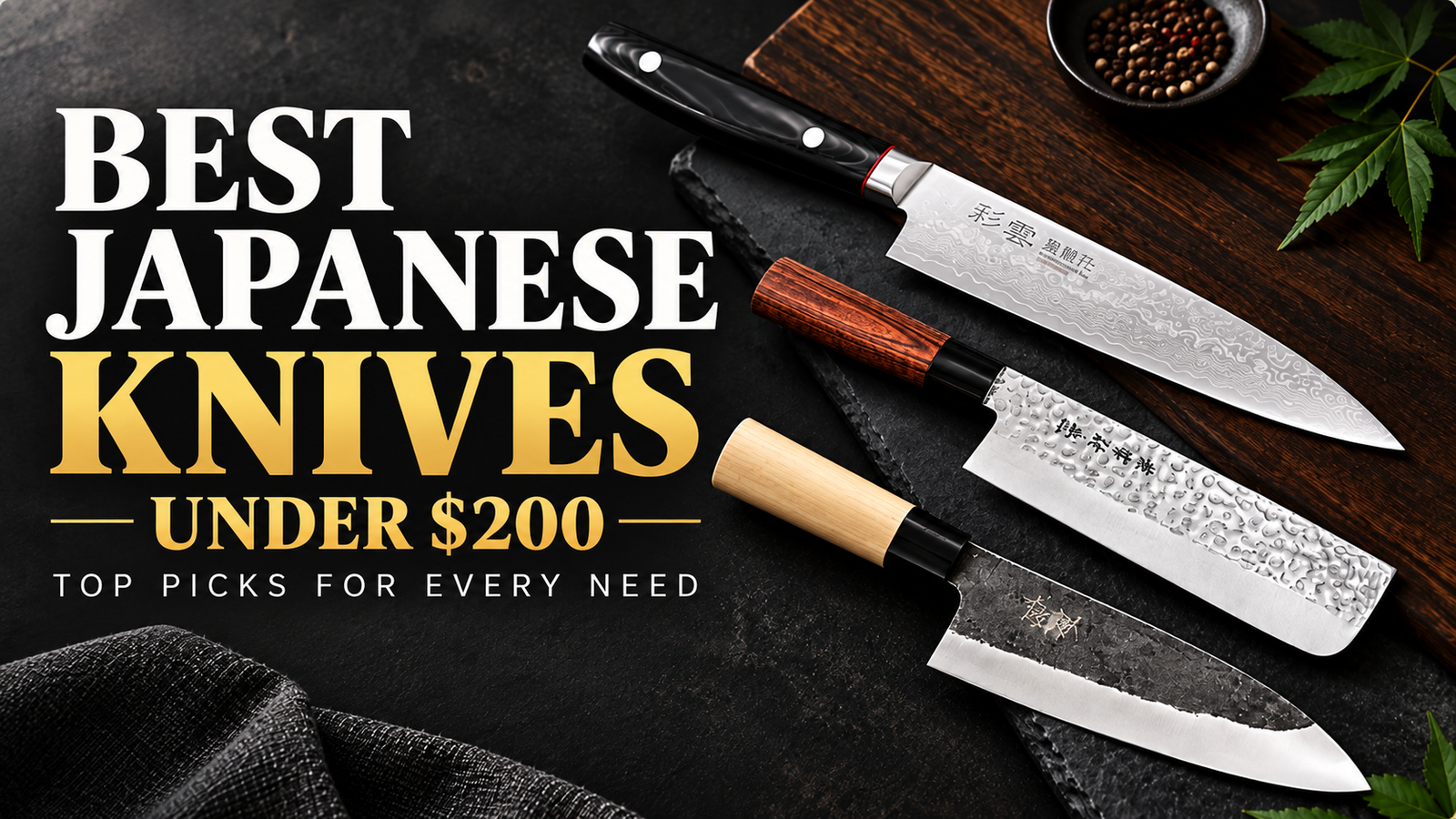
Japanese kitchen knives under $200 can offer a strong balance of cutting performance, quality steel, and refined construction without moving into premium price territory. At this budget, buyers can choose from versatile stainless options, traditional carbon steel, and powdered steels with stronger edge-retention potential.
In this guide, we compare seven Japanese knives under $200 across different needs, including our picks for the best overall, beginners, budget, carbon steel, edge retention, vegetables, and compact prep. Start with the comparison table below, then jump directly to the category that best matches how you cook.
Table of Contents
Affiliate Disclosure: Sourced Japan may earn a commission when you purchase through some links on this page, at no additional cost to you.
Best Japanese Knives Under $200 at a Glance
| Best For | Knife | Steel | Approx. Price |
|---|---|---|---|
| Best Overall | Sakai Takayuki 33-Layer VG10 Damascus Hammered Gyuto | VG-10 Damascus | ~$200 |
| Best for Beginners | Shikisai MIYAKO 33 Layer Damascus Santoku | AUS8 Damascus | ~$160 |
| Best Budget | Kanetsune KC-950 DSR-1K6 Stainless Hammered Gyuto | DSR-1K6 Stainless | ~$60 |
| Best Carbon Steel | Yoshimune Santoku Blue #2 | Aogami #2 | ~$146 |
| Best Edge Retention | Tamahagane Kyoto 63 Layer-Damascus Petty | VG-5 Damascus | ~$199 |
| Best for Vegetables | Sakai Takayuki 33-Layer VG10 Damascus Hammered WA Nakiri | VG-10 Damascus | ~$197 |
| Best Compact | Iseya I-Series 33 Layer VG-10 Damascus Hammered Santoku | VG-10 Damascus | ~$134 |
Prices are approximate and may change over time. Some knives may occasionally rise above $200, so check the current price and availability before purchasing.
If you want the simplest all-around choice, start with our Best Overall pick. If you have a specific priority such as beginner-friendly handling, carbon steel, edge retention, vegetables, or compact prep, use the categories below to find the option that best matches your needs.
Best Overall Japanese Knife
Sakai Takayuki 33-Layer VG10 Damascus Hammered Gyuto 210mm
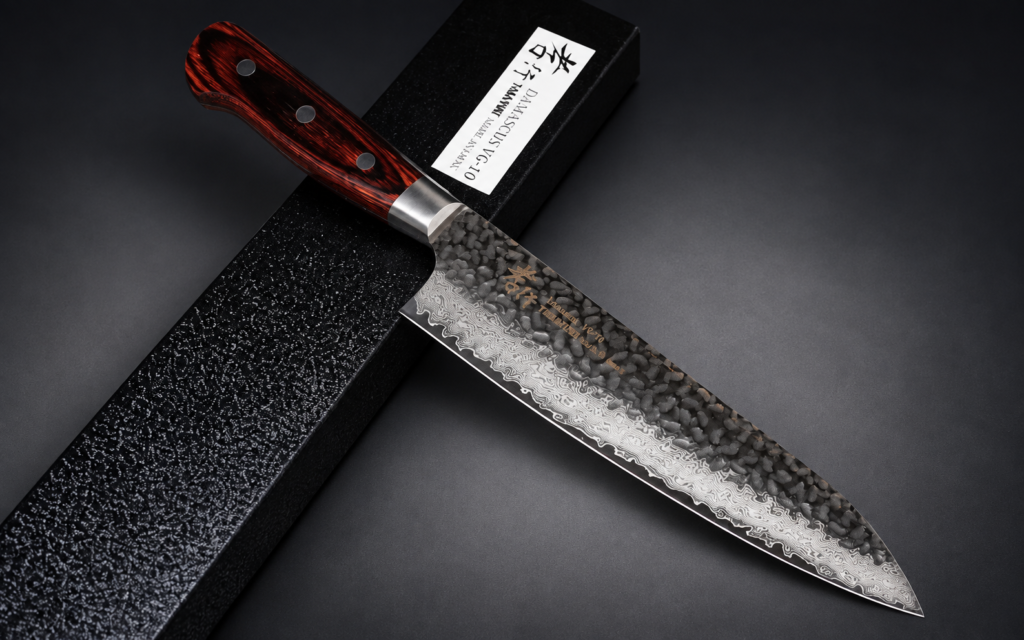
A versatile 210mm Gyuto with a VG-10 stainless steel core, 33-layer hammered Damascus construction, and balanced handling for everyday all-purpose prep.
Blade Length: 210mm
Steel: VG-10 Damascus
Best For: Everyday all-purpose cooking
The Sakai Takayuki 33-Layer VG10 Damascus Hammered Gyuto 210mm is our best overall pick under $200 for its combination of versatile blade geometry, easy-care stainless steel, and refined Japanese construction. Its 210mm Gyuto profile provides enough reach for meat, fish, vegetables, and general meal prep, while the VG-10 core offers strong corrosion resistance and dependable edge retention.
The blade is hardened to approximately 60 HRC and uses 33-layer hammered Damascus stainless construction. At 186g, it has enough presence for general kitchen work while remaining manageable for everyday use, and the double-edged design makes it suitable for both right- and left-handed cooks.
Best Japanese Knife for Beginners
Shikisai MIYAKO 33 Layer Damascus (AUS8) Santoku 180mm
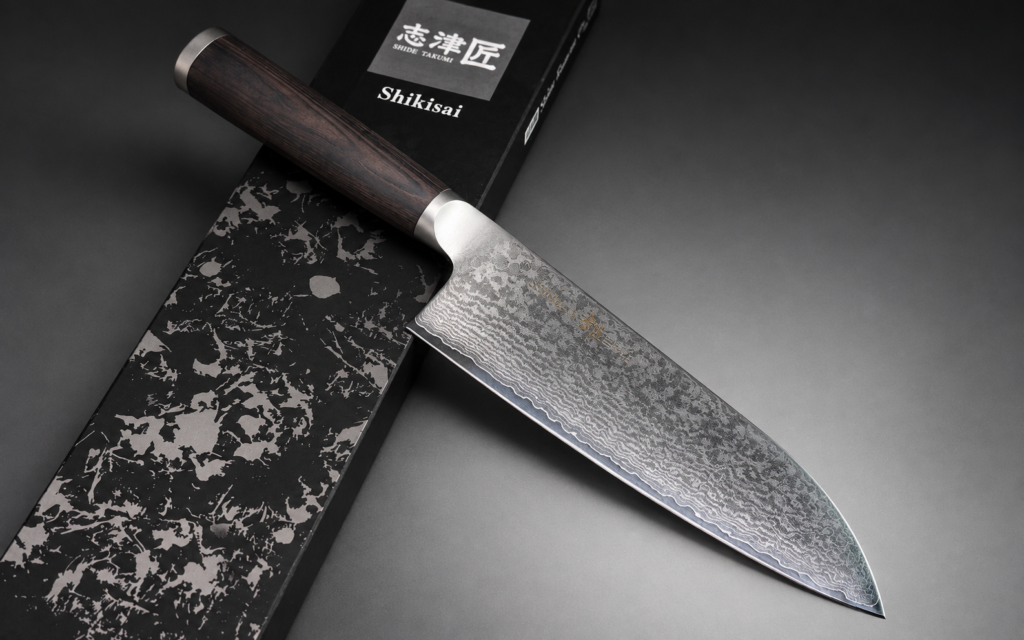
A beginner-friendly 180mm Santoku with an easy-care AUS8 stainless steel core, 33-layer Damascus construction, and comfortable all-purpose handling.
Blade Length: 180mm
Steel: AUS8 Damascus
Best For: Beginners and everyday cooking
The Shikisai MIYAKO 33 Layer Damascus Santoku 180mm is our beginner pick under $200 for its manageable all-purpose profile, corrosion-resistant AUS8 stainless steel, and practical everyday maintenance. Its 180mm Santoku blade works well for vegetables, meat, fish, and general meal prep without feeling as long as a typical 210mm Gyuto.
The 33-layer Damascus blade uses an AUS8 stainless-steel core and weighs approximately 168g, providing a balanced combination of control and durability. Its double-edged construction makes it suitable for both right- and left-handed cooks, while the laminated wood handle and stainless bolster give it a comfortable, familiar feel for first-time Japanese knife owners. The knife is made in Japan.
Best Budget Japanese Knife
Kanetsune KC-950 DSR-1K6 Stainless Hammered Gyuto 210mm
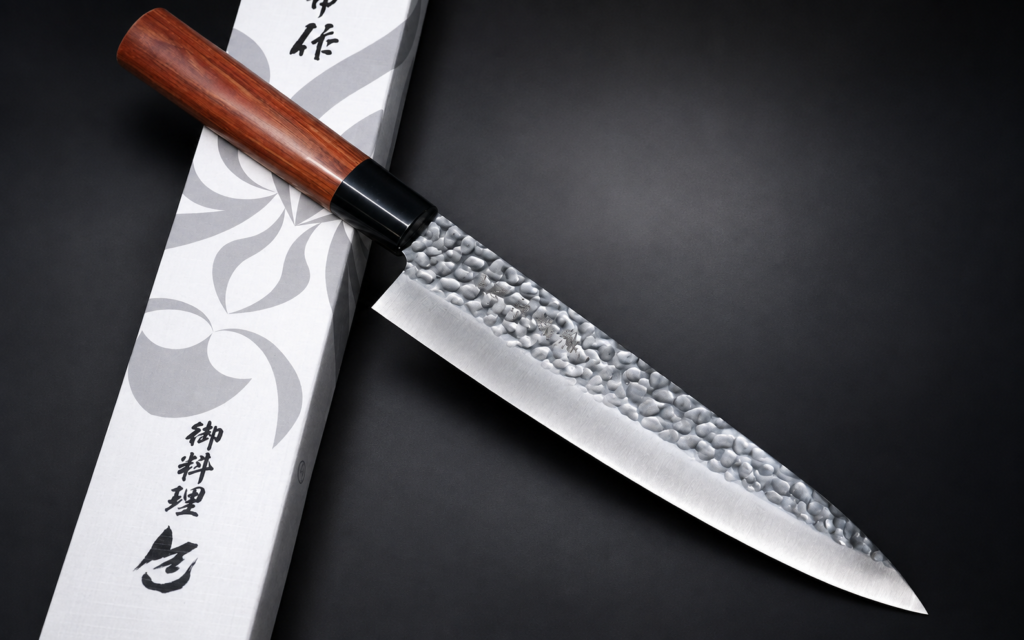
A budget-friendly 210mm Gyuto with DSR-1K6 high-carbon stainless steel, a hammered finish, and lightweight handling for versatile everyday cooking.
Blade Length: 210mm
Steel: DSR-1K6 Stainless
Best For: Affordable everyday cooking
The Kanetsune KC-950 DSR-1K6 Stainless Hammered Gyuto 210mm is our budget pick under $200 because it delivers a full-size all-purpose Japanese chef’s knife at a very accessible price. Its 210mm Gyuto profile is versatile enough for meat, fish, vegetables, and general meal prep, making it a practical primary knife for everyday use.
The DSR-1K6 high-carbon stainless steel core is hardened to around 58–59 HRC and is clad with softer stainless steel for durability and easier maintenance. At approximately 153g, the knife remains relatively light for a 210mm Gyuto, while the double-edged construction makes it suitable for both right- and left-handed cooks. It is made in Japan.
Best Carbon Steel Japanese Knife
Yoshimune Santoku 165mm Blue #2
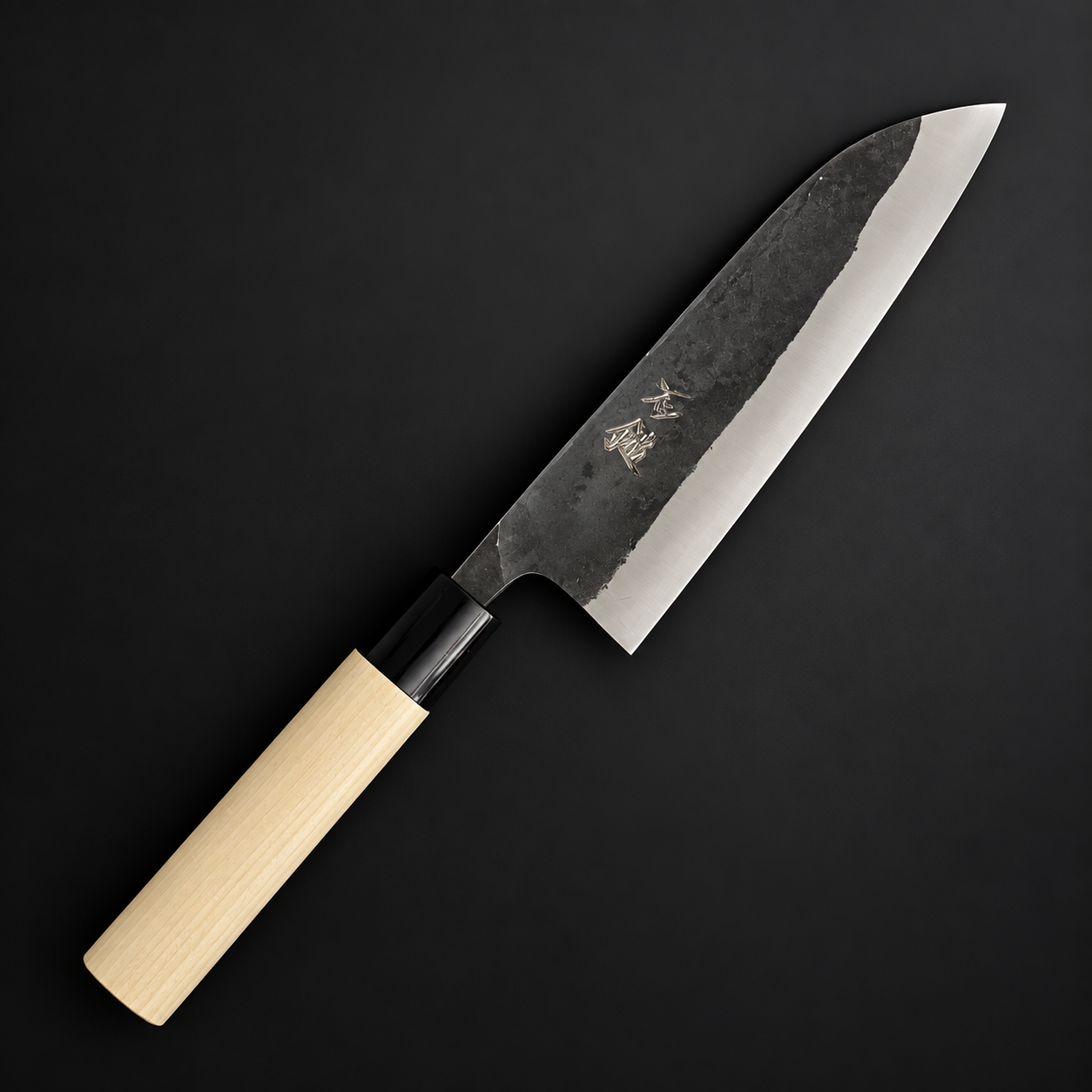
A traditional carbon-steel Santoku with a compact 165mm blade, combining Aogami #2 core steel, a kurouchi finish, and a lightweight magnolia handle for versatile everyday cooking.
Blade Length: 165mm
Steel: Aogami #2
Best For: Everyday cooking for carbon-steel enthusiasts
The Yoshimune Santoku 165mm Blue #2 is our carbon steel pick under $200 because it combines a compact, versatile Santoku profile with traditional Aogami #2 carbon steel.
Its 165mm blade works well for vegetables, meat, fish, and general everyday prep while remaining easy to control. The Aogami #2 core is valued for sharpness and edge retention, but it is reactive and should be cleaned and dried promptly after use to reduce the risk of rust and discoloration.
Choose the Yoshimune Santoku if you want to experience traditional Japanese carbon steel under $200 and are comfortable with the additional maintenance that comes with a reactive blade.
Best Japanese Knife for Edge Retention
Tamahagane Kyoto 63 Layer-Damascus Petty 150mm
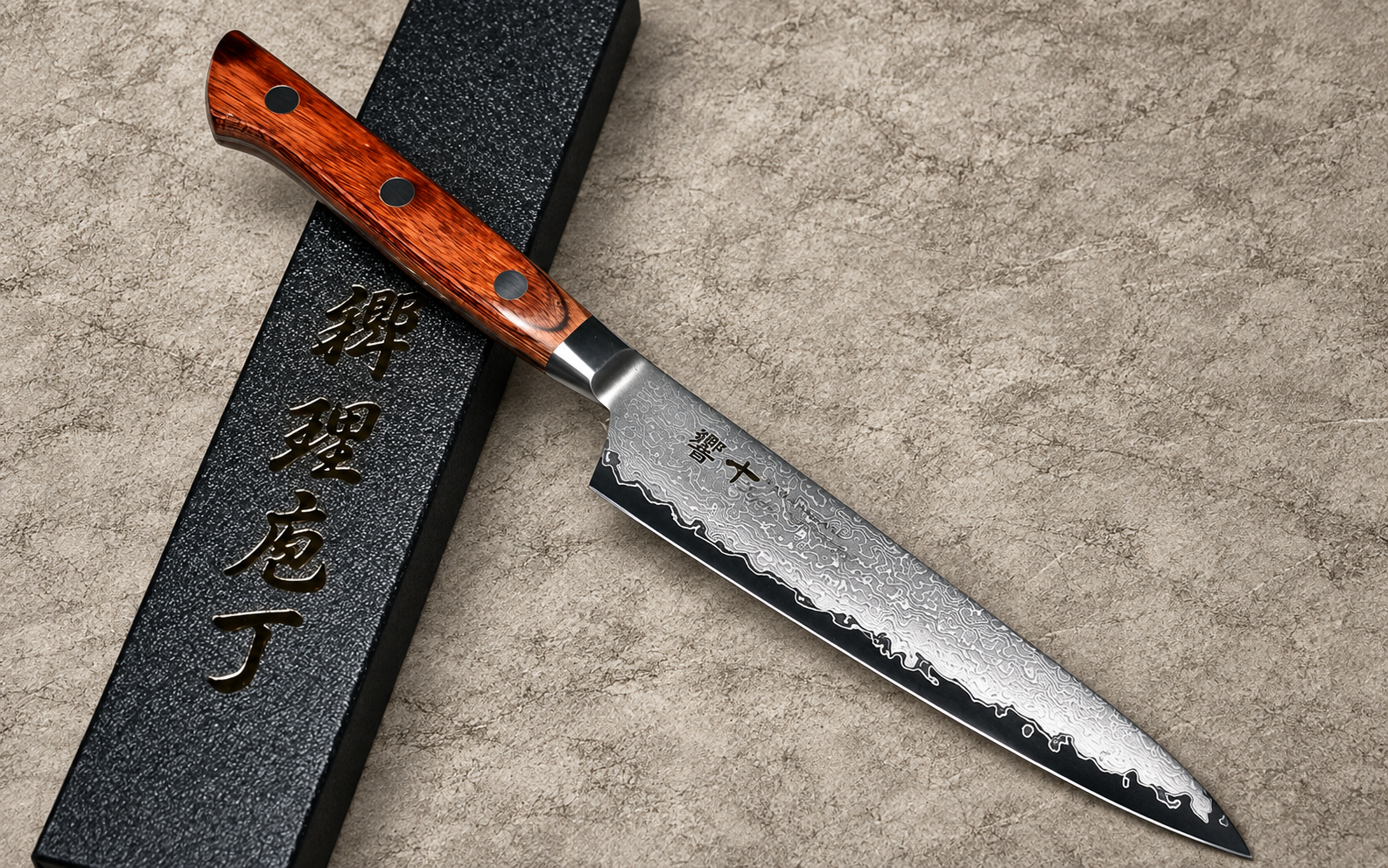
A premium 150mm Petty with a hard VG-5 core, 63-layer Damascus construction, and refined edge geometry for strong edge retention and precise everyday prep.
Blade Length: 150mm
Steel: VG-5 Damascus
Best For: Long-lasting sharpness
The Tamahagane Kyoto 63 Layer-Damascus Petty 150mm is our edge-retention pick under $200 for its hard VG-5 core, refined edge geometry, and durable Damascus construction. With a hardness of approximately 61 HRC, it is designed to hold a sharp edge well while remaining easier to maintain than more reactive carbon steels.
Its 150mm blade offers precise control for trimming, slicing fruit, preparing small vegetables, and other detailed prep tasks. The knife weighs approximately 115g and uses a double-edged profile suitable for both right- and left-handed cooks. The 63-layer stainless construction and laminated wood handle also give it a more premium finish while keeping the regular price just below the $200 limit.
Best Japanese Knife for Vegetables
Sakai Takayuki 33-Layer VG10 Damascus Hammered WA Nakiri 160mm
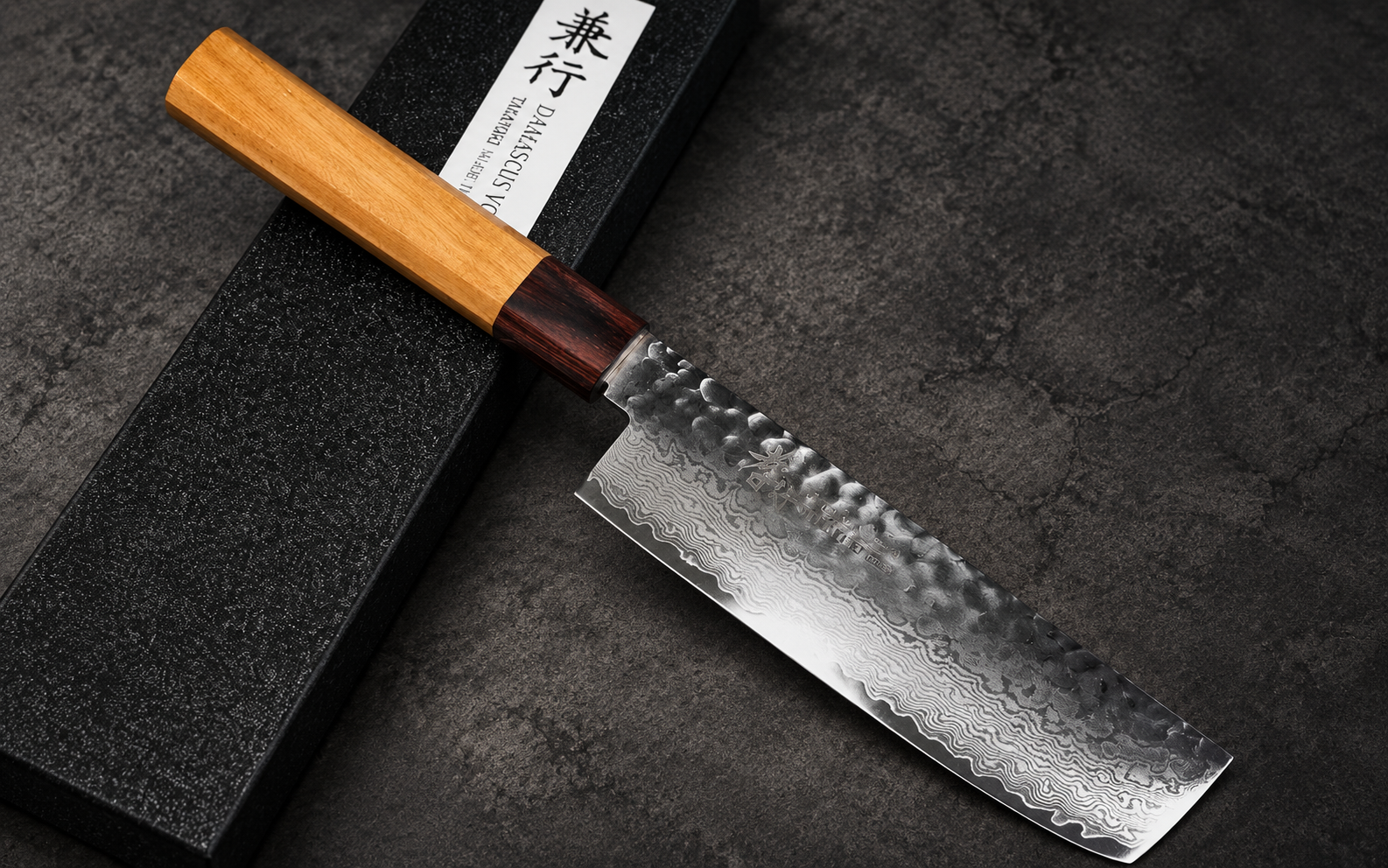
A refined 160mm Nakiri with a VG-10 stainless core, 33-layer hammered Damascus construction, and a traditional Japanese wood handle for efficient vegetable prep.
Blade Length: 160mm
Steel: VG-10 Damascus
Best For: Vegetable-focused prep
The Sakai Takayuki 33-Layer VG10 Damascus Hammered WA Nakiri 160mm is our vegetable pick under $200 for its tall rectangular blade, stainless VG-10 core, and lightweight Japanese-style construction. Its flat-edged Nakiri profile is well suited to chopping, slicing, and push-cutting vegetables with controlled contact against the cutting board.
The 33-layer hammered Damascus blade is hardened to approximately 60–61 HRC and weighs about 140g, giving it a good balance of cutting performance and maneuverability. The Japanese zelkova handle with mahogany bolster keeps the knife light in hand, while the double-edged construction makes it suitable for both right- and left-handed cooks. It is made in Japan.
Best Compact Japanese Knife
Iseya I-Series 33 Layer VG-10 Damascus Hammered Santoku 135mm
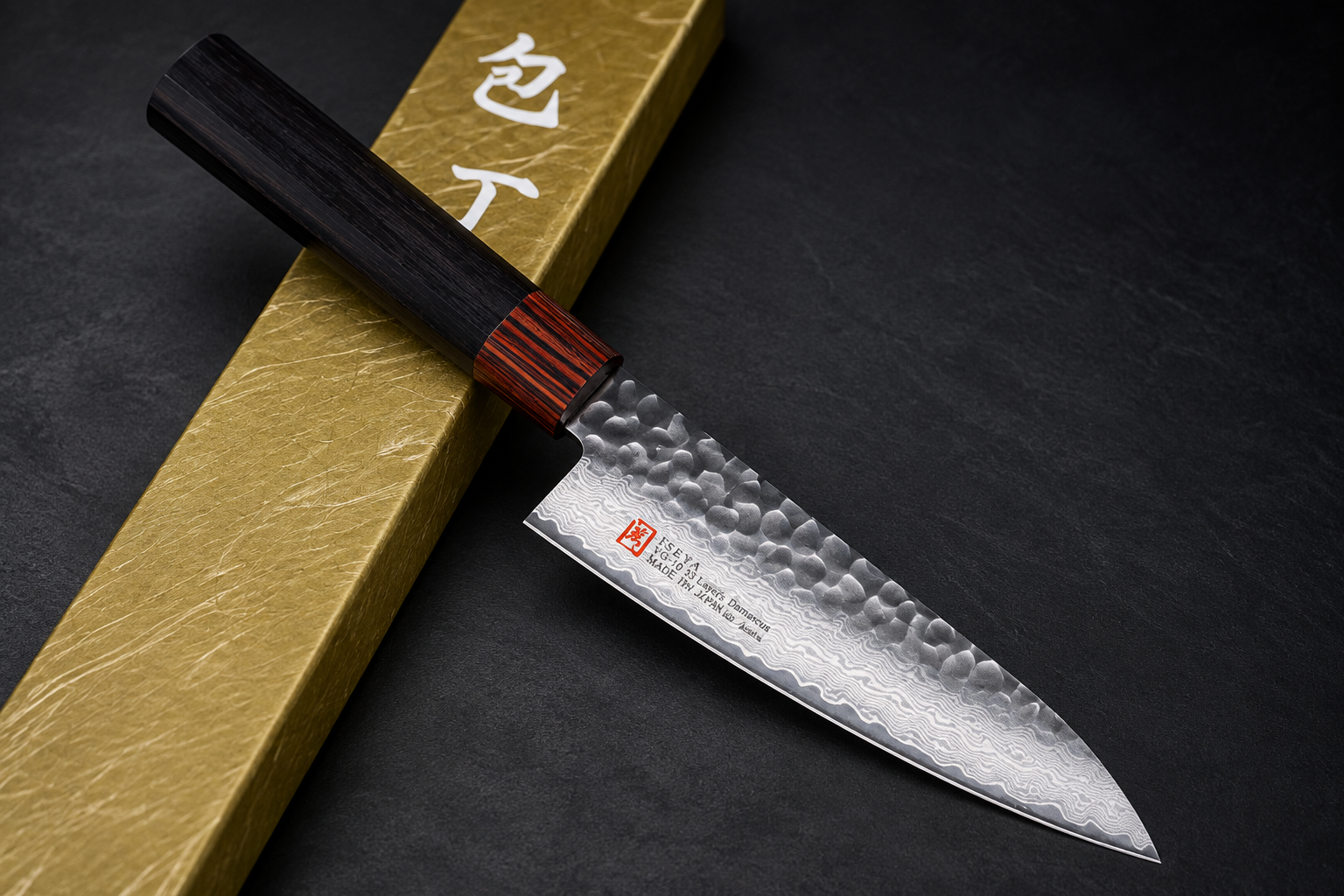
A compact 135mm Santoku with a VG-10 stainless steel core, 33-layer hammered Damascus construction, and lightweight handling for precise everyday prep.
Blade Length: 135mm
Steel: VG-10 Damascus
Best For: Compact everyday prep
The Iseya I-Series 33 Layer VG-10 Damascus Hammered Santoku 135mm is our compact pick under $200 for its short, versatile blade and lightweight handling. Its compact Santoku profile works well for fruit, small vegetables, trimming, and everyday prep when a full-size Gyuto feels unnecessary.
The 33-layer hammered Damascus blade uses a VG-10 stainless steel core hardened to approximately 60–61 HRC. At just 85g, it is light and easy to control, while the double-edged construction makes it suitable for both right- and left-handed cooks. The traditional laminated-wood handle and Japanese construction give it a more refined feel than a basic utility knife.
How We Chose the Best Japanese Knives Under $200
We selected these knives based on blade steel, versatility, maintenance requirements, edge retention, overall construction, and value for money within the under-$200 price range.
Because different cooks have different priorities, we included versatile Gyuto and Santoku knives, a carbon steel option, a powdered-steel knife focused on edge retention, a vegetable-focused Nakiri, and a compact Petty. Each knife was priced at or below $200 when researched, although current prices may change over time.
We also prioritize established Japanese makers and retailers that provide clear product information and international purchasing options. Affiliate relationships do not determine which knives are selected or how they are ranked.
How to Choose a Japanese Knife Under $200
When choosing a Japanese knife under $200, start with the role you need the knife to fill. For one primary everyday knife, a Gyuto or Santoku is usually the safest choice, while Nakiri and Petty knives make more sense for more specialized tasks.
At this price level, you can find better steels, stronger edge retention, and more refined construction than many entry-level knives, but those upgrades can also bring more demanding sharpening or maintenance. Prioritize blade shape, steel, comfort, and overall value before decorative finishes or premium-sounding features.
The best Japanese knife under $200 is the one that matches how you cook, how much maintenance you are comfortable with, and whether you want one versatile knife or a more specialized addition to your collection.
What Type of Japanese Knife Should You Buy Under $200?
For most buyers, the right knife type under $200 depends on whether you need one versatile primary knife or a more specialized second knife.
A Gyuto is the best all-around choice if you want maximum versatility for meat, fish, vegetables, and general meal prep. A Santoku is a strong alternative if you prefer a shorter, more compact blade that feels easier to control.
A Nakiri is best suited to vegetable-focused cooking, while a Petty works well for trimming, fruit, small vegetables, and other precise tasks. These specialized knives are usually better as companion blades than as your only kitchen knife.
If you are unsure where to start, choose a stainless Gyuto or Santoku. If you already own a versatile primary knife, a Nakiri or Petty can be a more useful way to spend your under-$200 budget.
Which Steel Is Best for a Japanese Knife Under $200?
There is no single best steel for every Japanese knife under $200. The right choice depends on whether you prioritize easy maintenance, sharpening response, or longer edge retention.
VG-10 stainless steel offers a practical balance of corrosion resistance, edge retention, and relatively straightforward ownership. AUS-8 stainless steel is generally easier to sharpen and more forgiving, making it a practical choice for buyers who value simple maintenance.
Aogami #2 (Blue #2) is a traditional carbon steel valued for sharpness, edge performance, and sharpening response, but it is reactive and requires careful cleaning and drying. R-2 powdered steel offers strong edge-retention potential and corrosion resistance, although it can require more effort to sharpen.
For most buyers under $200, VG-10 is one of the easiest all-around choices. Choose Aogami #2 if you specifically want traditional carbon steel, or R-2 if longer edge retention is a higher priority.
Frequently Asked Questions
Yes. Under $200, you can find well-made Japanese knives with stainless, carbon, and powdered steels, along with versatile Gyuto and Santoku options and more specialized Nakiri and Petty knives.
For most beginners, a stainless Santoku or Gyuto is the easiest place to start. In this guide, the Misono Molybdenum Steel Series Santoku 180mm is our beginner pick because it combines manageable size, versatile performance, and relatively easy maintenance.
Yes. A $200 budget is enough to access many well-made Japanese kitchen knives with good steels, reliable construction, and strong everyday cutting performance without moving into premium price tiers.
Choose a Gyuto if you want more blade length and maximum versatility. Choose a Santoku if you prefer a shorter, more compact all-purpose knife that can feel easier to control.
Yes, if you value sharpening response and traditional carbon-steel performance and are comfortable with extra maintenance. Carbon steel should be cleaned and dried promptly after use to reduce the risk of rust and discoloration.
VG-10 is a practical all-around stainless choice, while AUS-8 is approachable and relatively easy to maintain. Aogami #2 suits buyers who want traditional carbon steel, and R-2 is attractive for stronger edge-retention potential.
Most should be hand-washed, dried promptly, and kept out of the dishwasher. Stainless steels are generally easier to maintain, while reactive carbon steels require more careful cleaning and drying.
Where to Buy Japanese Knives Under $200
When buying a Japanese knife under $200, choose a retailer that clearly lists the maker, blade steel, dimensions, country of origin, shipping terms, and return policy. Transparent product information makes it easier to compare knives accurately.
Prices and availability can change, especially for knives close to the $200 limit, so always check the current product price before ordering.
Sourced Japan maintains a list of trusted retailers that sell Japanese kitchen knives and offer international purchasing options.
Continue Reading
If you are still comparing Japanese knives, these guides can help you choose the right knife type, understand blade steels, and compare options at different price points.
Japanese Knife Buying Guide →
Japanese Knife Steel Guide →
Best Japanese Knives Under $100 →