

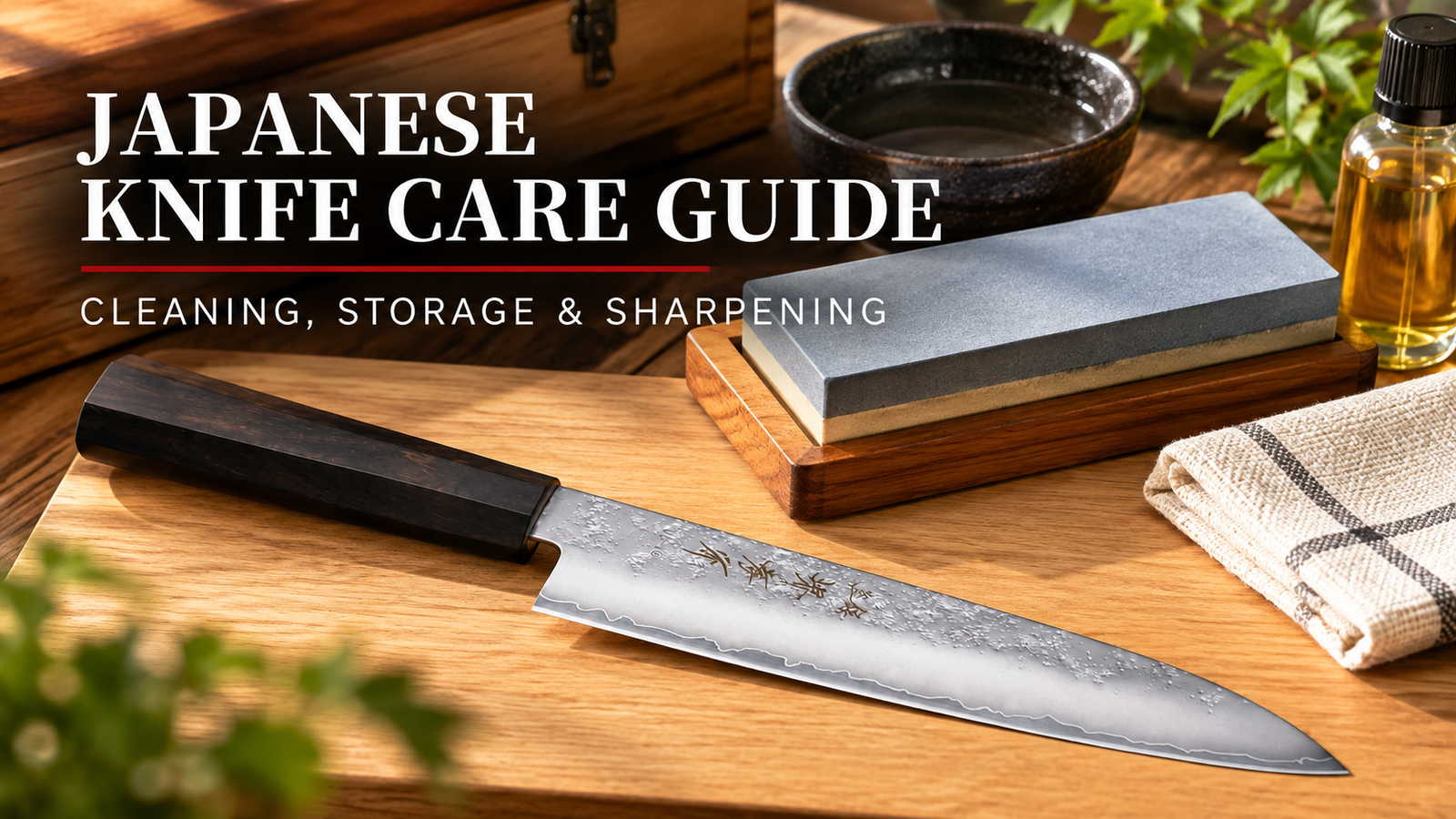
Japanese knives can deliver excellent cutting performance, but they also benefit from proper care. Hand washing, immediate drying, safe storage, regular sharpening, and rust prevention all help protect the edge and extend the life of the knife.
The right care routine depends partly on the steel and construction of the blade. Stainless steel is generally easier to maintain, while carbon steel needs more attention to moisture and corrosion. This guide explains the essential steps for cleaning, drying, storing, sharpening, and protecting a Japanese knife.
Table of Contents
Japanese Knife Care Guide: The Basics
| Care Area | What to Do | Why It Matters |
|---|---|---|
| Cleaning | Wash by hand after use | Removes food and reduces staining |
| Drying | Dry immediately with a clean towel | Helps prevent rust and corrosion |
| Storage | Use a saya, knife block, or magnetic strip | Protects the edge from damage |
| Sharpening | Sharpen when cutting performance declines | Restores edge sharpness |
| Rust Prevention | Keep the blade clean and dry | Especially important for carbon steel |
A good Japanese knife care routine is simple: wash the knife by hand, dry it immediately, store it so the edge is protected, sharpen only when performance declines, and keep the blade clean and dry to reduce the risk of corrosion.

How to Clean a Japanese Knife
Japanese knives should generally be washed by hand immediately after use. Use warm water, mild dish soap, and a soft sponge or cloth to remove food residue. Avoid soaking the knife in the sink, especially if it has a carbon steel blade, because prolonged moisture can increase the risk of staining, corrosion, and handle damage.
Clean both sides of the blade carefully, keeping your fingers away from the cutting edge and wiping from the spine toward the edge rather than along it. Rinse thoroughly, then dry the knife immediately with a clean towel instead of leaving it to air-dry.
Can Japanese Knives Go in the Dishwasher?
Japanese knives should generally not be washed in a dishwasher. High heat, strong detergents, and movement during the wash cycle can damage the blade, handle, and cutting edge. The knife may also strike other utensils or the dishwasher rack, which can dull or chip the edge.
Wooden handles can absorb moisture and swell or crack, while carbon steel blades are especially vulnerable to rust and discoloration. Hand washing with mild soap and warm water is the safest way to clean a Japanese knife and helps protect both the blade and handle.
How to Dry a Japanese Knife Properly
After washing, dry a Japanese knife immediately with a clean, soft towel. Pay particular attention to the blade, heel, spine, and the area where the blade meets the handle, since moisture can remain in small gaps and contribute to corrosion over time.
Do not leave the knife to air-dry on a rack or towel, especially if it is made from carbon steel. Once completely dry, store it in a knife block, sheath, drawer insert, or magnetic strip that protects the edge and keeps the blade from contacting other utensils.
How to Prevent Rust and Corrosion
To prevent rust and corrosion, keep the blade clean and dry and avoid leaving acidic or salty food residue on the knife for long periods. Ingredients such as citrus, tomatoes, onions, and vinegar can react with carbon steel, so rinse and dry the blade soon after use.
Carbon steel knives may also benefit from a very thin layer of food-safe mineral oil during long periods of storage or in humid environments. Stainless steel is more resistant to corrosion, but it is not completely rust-proof, so the same basic habits—hand washing, immediate drying, and dry storage—still apply.
How to Store Japanese Knives Safely
Store Japanese knives so the cutting edge does not contact other utensils or hard surfaces. A knife block, wooden sheath (saya), magnetic strip, or dedicated drawer insert can all work well as long as the blade is secure and protected.
Avoid storing a Japanese knife loose in a drawer, where the edge can become dull or chipped and the blade can be damaged by other tools. Before storage, make sure the knife is completely clean and dry, especially if it has a carbon steel blade or wooden handle.
How Often Should You Sharpen a Japanese Knife?
There is no fixed sharpening schedule for every Japanese knife. For many home cooks, sharpening every few months is enough, but the right timing depends on how often the knife is used, the cutting surface, the steel, and how thin the edge is.
Rather than sharpening by calendar alone, pay attention to performance. If the knife starts crushing tomatoes, slipping on onion skin, or requiring noticeably more pressure, the edge likely needs attention. A whetstone can restore the edge, while light maintenance between sharpenings may help extend the interval.
Whetstone vs Honing Rod: What Is the Difference?
A whetstone and a honing rod serve different purposes. A whetstone removes a small amount of metal to restore and reshape the cutting edge, while a honing rod is mainly used for light edge maintenance between sharpenings.
Because many Japanese knives use harder, thinner blades, aggressive honing with a traditional grooved steel rod is generally not ideal. A fine ceramic rod may be suitable for some knives, but once the edge is truly dull, a whetstone is usually the better tool for restoring sharpness.
How to Sharpen a Japanese Knife with a Whetstone
A whetstone is one of the most effective tools for restoring the edge of a Japanese knife. For a typical double-bevel knife, a medium-grit stone is a practical starting point for normal sharpening. Follow the stone manufacturer’s instructions, maintain the knife’s existing bevel angle, and use light, consistent pressure as you work from heel to tip.
Sharpen until a small burr forms, then repeat on the opposite side and finish with lighter strokes to refine the edge and remove the burr. Traditional single-bevel knives require a different technique, so follow the knife maker’s guidance rather than treating both sides equally.
How to Care for Carbon Steel Japanese Knives
Carbon steel Japanese knives require more attention than stainless steel because the blade can react quickly with moisture and acidic foods. Wash the knife soon after use, dry it immediately, and avoid leaving food residue on the blade for long periods. A natural patina may develop over time, but orange or rough spots indicate rust and should be addressed promptly.
For longer storage or humid environments, a very thin layer of food-safe mineral oil can provide additional protection. Keep the blade completely clean and dry before applying oil, and store the knife where the edge and surface are protected from moisture and contact with other utensils.
Common Japanese Knife Care Mistakes to Avoid
One of the most common mistakes is exposing a Japanese knife to unnecessary moisture. Avoid putting it in the dishwasher, leaving it soaking in water, or storing it while damp, since these habits can increase the risk of corrosion, handle damage, and edge deterioration.
Cutting on glass, stone, ceramic, or other very hard surfaces can also dull or chip a fine edge. Use a wood or plastic cutting board, and avoid twisting, prying, or forcing a thin Japanese knife through frozen food, bones, or other hard materials unless the knife is specifically designed for that purpose.
Finally, avoid aggressive sharpening or honing with unsuitable tools. Use controlled pressure, appropriate sharpening equipment, and a method that matches the knife’s blade geometry.
Frequently Asked Questions
Wash a Japanese knife by hand with warm water, mild dish soap, and a soft sponge or cloth. Rinse it thoroughly and dry it immediately with a clean towel.
Generally, no. Dishwasher heat, strong detergents, and contact with other utensils can damage the blade, edge, and handle. Hand washing is the safer option.
There is no fixed schedule. Many home cooks may only need to sharpen every few months, but cutting performance is the best indicator. If the knife starts requiring more pressure or struggles with foods it previously cut cleanly, the edge may need sharpening.
Use a knife block, wooden saya, magnetic strip, or dedicated drawer insert that protects the cutting edge. Avoid storing the knife loose with other utensils, and always make sure the blade is clean and dry first.
Wash and dry the blade promptly after use, especially after cutting acidic or salty foods. For longer storage or humid conditions, a very thin layer of food-safe mineral oil can provide additional protection.
Where to Buy Authentic Japanese Knives
Proper care starts with choosing a knife that clearly lists its steel, construction, handle material, and intended use. Reputable Japanese knife retailers usually provide these details along with shipping, return, and maintenance information that can help you choose a knife you can care for properly.
If you are ready to compare stores, visit our Trusted Retailers page for recommended Japanese knife retailers that specialize in authentic knives and serve international buyers.
Continue Reading
Looking for your next Japanese knife? Explore these guides to compare recommended knives and brands for different cooking styles, budgets, and experience levels.
Best Japanese Knives for Home Cooks →
Best Japanese Knives for Beginners →
Best Japanese Knife Brands: 10 Makers Worth Knowing →