

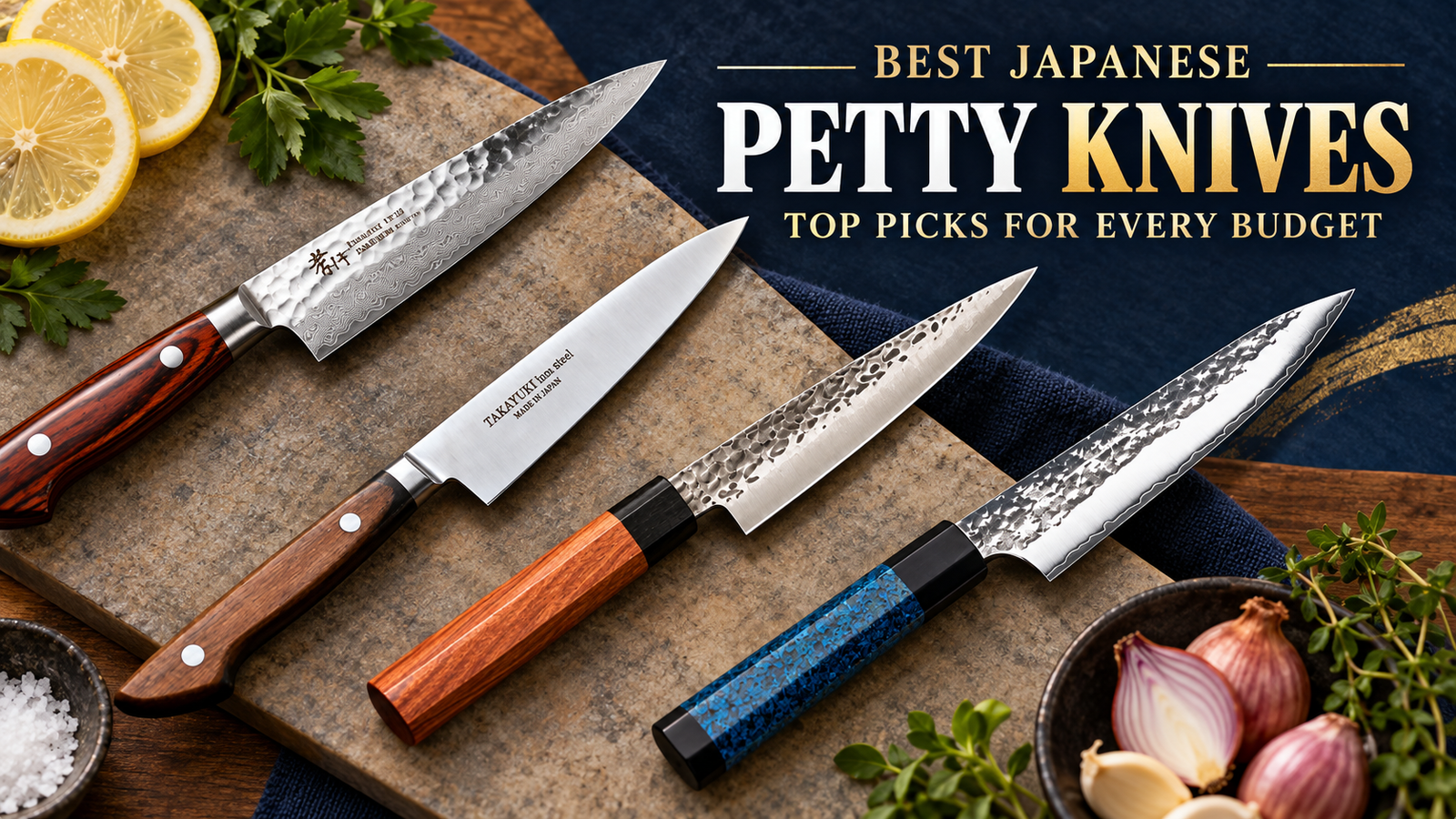
A Petty knife is a compact Japanese utility knife designed for precise everyday tasks such as trimming meat, preparing fruit, slicing small vegetables, and other jobs where a full-size Gyuto or Santoku can feel too large.
Table of Contents
Affiliate Disclosure: Sourced Japan may earn a commission when you purchase through links on this page, at no additional cost to you. Our recommendations are based on independent research and editorial evaluation.
Best Japanese Petty Knives at a Glance
| Best For | Knife | Steel | Approx. Price |
|---|---|---|---|
| Best Overall | Sakai Takayuki VG10 Damascus Petty | VG-10 Damascus | ~$156 |
| Best for Beginners | Kanetsune KC-950 Petty | DSR-1K6 Stainless | ~$53 |
| Best Budget | Sakai Takayuki TUS Steel Petty | TUS High-Carbon Stainless | ~$86 |
| Best Carbon Steel | Yu Kurosaki Aogami Super KOKUSEN-EI EB8N Petty | Aogami Super | ~$260 |
| Best Edge Retention | Kei Kobayashi R2 Special Finished CS Petty | R2 / SG2 | ~$384 |
| Best Compact | Yoshimune SC Petty | VG-10 Stainless | ~$160 |
| Best Premium | Yu Kurosaki R2(SG2) SENKO-EI WA INDIGO Petty | R2 / SG2 | ~$853 |
Best Overall Japanese Petty Knife
Sakai Takayuki VG10 Damascus Petty 150mm
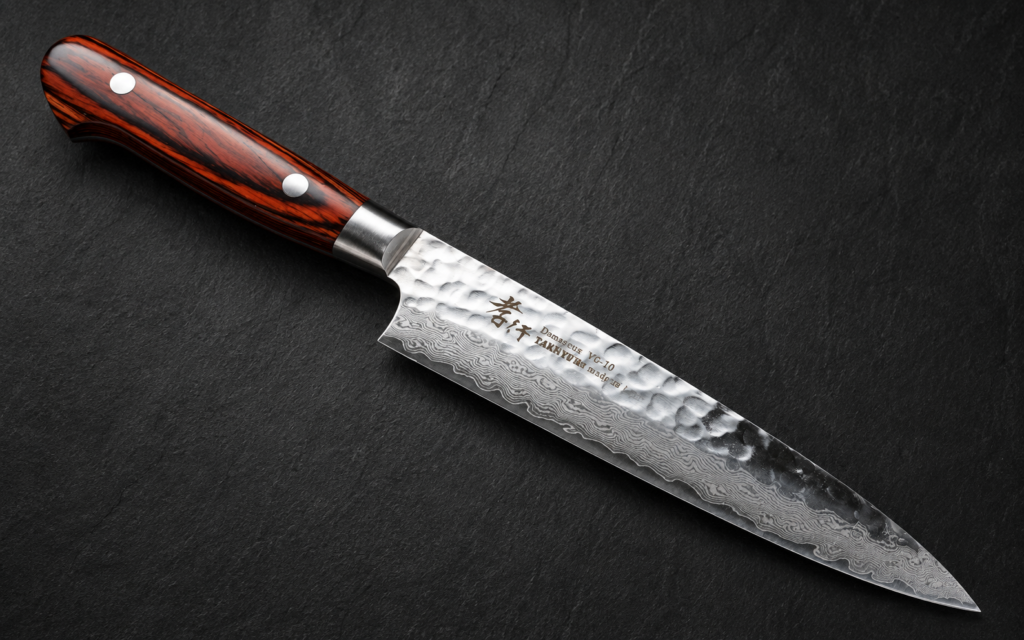
A versatile 150mm Petty with a VG-10 stainless steel core, 33-layer hammered Damascus construction, and a comfortable mahogany-style handle for precise everyday prep.
Blade Length: 150mm
Steel: VG-10 Damascus
Best For: Everyday precision prep
The Sakai Takayuki VG10 Damascus Petty 150mm is our best overall pick for its balance of precise control, stainless-steel maintenance, and everyday versatility. Its VG-10 stainless steel core provides good corrosion resistance and dependable edge retention, while the 33-layer hammered Damascus construction gives the blade a refined finish.
At 150mm and approximately 87g, it offers enough reach for trimming meat, slicing fruit, preparing small vegetables, and other detailed kitchen tasks while remaining light and easy to control. The double-edged blade also makes it suitable for both right- and left-handed cooks.
Best Japanese Petty for Beginners
Kanetsune KC-950 Petty 120mm
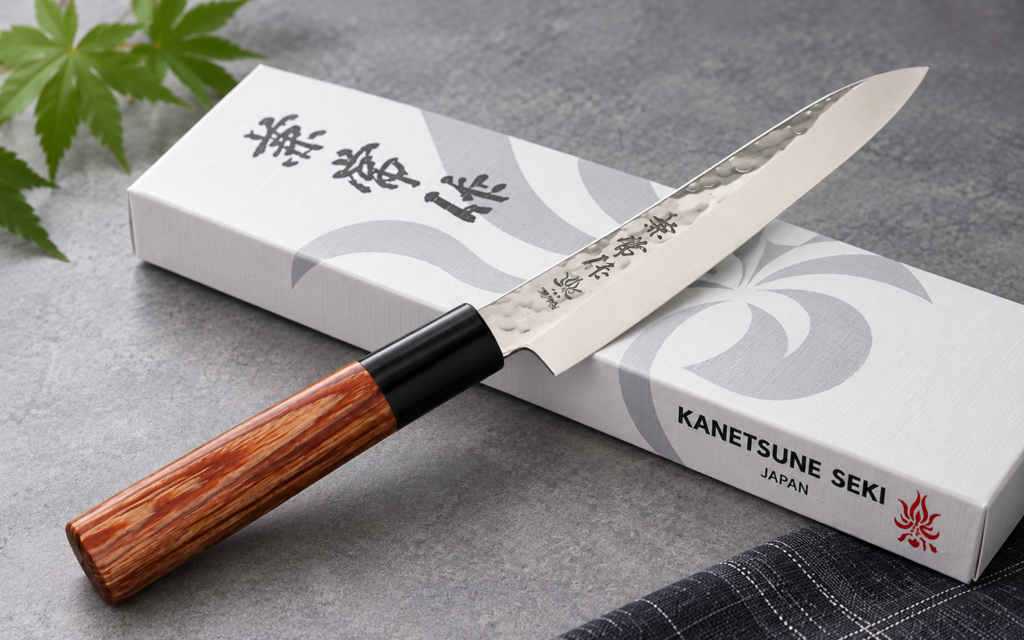
A lightweight 120mm Petty with easy-care DSR-1K6 stainless steel, a hammered finish, and compact handling for precise everyday prep.
Blade Length: 120mm
Steel: DSR-1K6 Stainless
Best For: Beginners and precise prep
The Kanetsune KC-950 Petty 120mm is our beginner pick for its compact size, lightweight handling, and easy-care stainless-steel construction. Its DSR-1K6 high-carbon stainless steel offers good corrosion resistance and practical edge retention, while the hammered finish gives the blade a traditional Japanese look.
At 120mm and approximately 55g, it is easy to control for trimming, fruit preparation, small vegetables, and other precise everyday tasks. The double-edged design also makes it suitable for both right- and left-handed cooks, making it an approachable first Petty knife for home use.
Best Budget Japanese Petty
Sakai Takayuki TUS Steel Petty 150mm
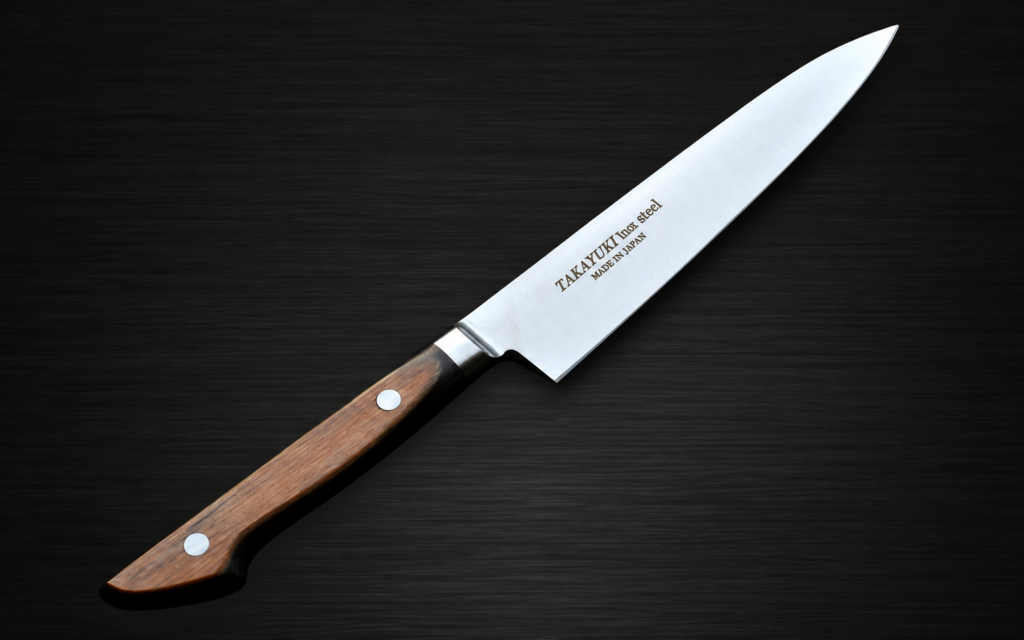
A lightweight 150mm Petty with rust-resistant TUS high-carbon stainless steel, balanced handling, and practical everyday versatility.
Blade Length: 150mm
Steel: TUS High-Carbon Stainless Steel
Best For: Affordable everyday prep
The Sakai Takayuki TUS Steel Petty 150mm is our budget pick for its balance of affordable pricing, easy maintenance, and practical everyday performance. Its TUS high-carbon stainless-steel blade offers good sharpness, durability, and rust resistance, making it a straightforward option for regular kitchen use.
At 150mm and approximately 80g, it is light and easy to control for trimming meat, slicing fruit, preparing small vegetables, and other detailed prep work. The double-edged blade also makes it suitable for both right- and left-handed cooks.
Best Carbon Steel Petty
Yu Kurosaki Aogami Super KOKUSEN-EI EB8N Petty 150mm
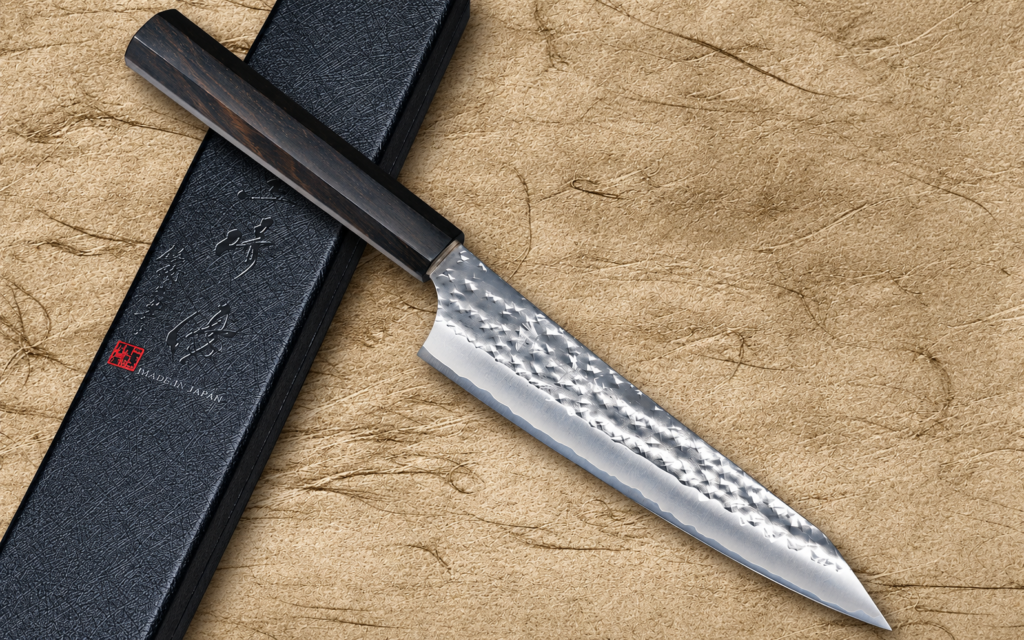
A lightweight 150mm Petty with an Aogami Super carbon-steel core, distinctive hammered kurouchi finish, and a full ebony handle.
Blade Length: 150mm
Steel: Aogami Super
Best For: Carbon steel performance
The Yu Kurosaki Aogami Super KOKUSEN-EI EB8N Petty 150mm is our carbon-steel pick for its combination of strong edge retention, lightweight handling, and distinctive handcrafted finish. Its Aogami Super core is hardened to approximately 65 HRC, while the light kurouchi and hammered texture give the blade a distinctive Yu Kurosaki look.
At 150mm and approximately 79g, it remains light and precise for trimming, fruit preparation, small vegetables, and other detailed kitchen work. The full ebony handle adds a refined traditional feel while keeping the knife balanced and comfortable in hand.
Best Petty for Edge Retention
Kei Kobayashi R2 Special Finished CS Petty 150mm
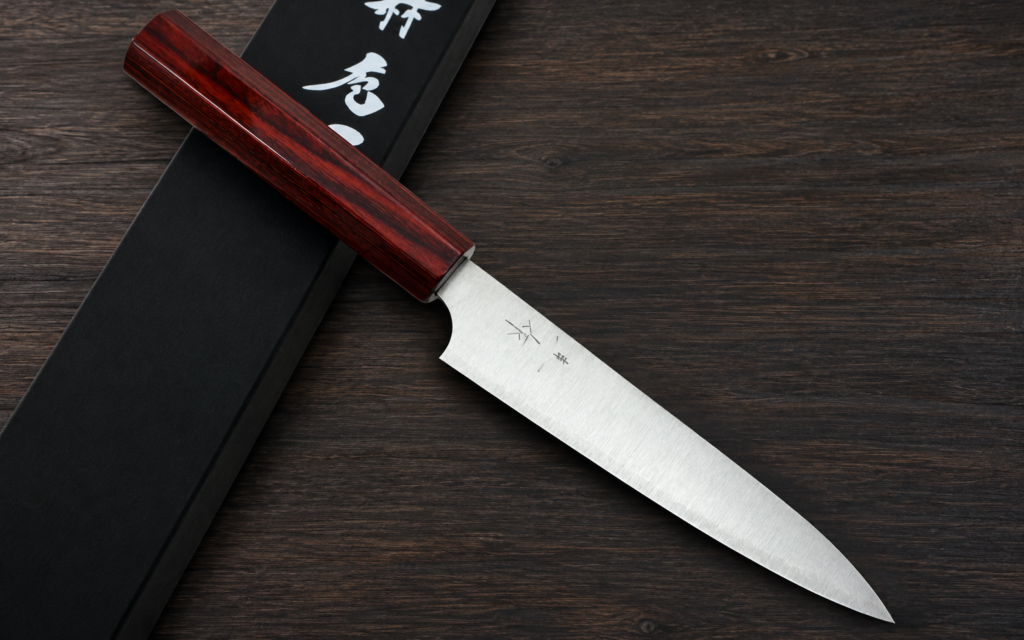
Built around hard R2/SG2 powder steel, this lightweight 150mm petty combines excellent edge retention with precise control and strong corrosion resistance.
Blade Length: 150mm
Steel: R2 / SG2
Best For: Long-lasting sharpness
Kei Kobayashi’s R2 Special Finished CS Petty is an excellent choice for cooks who want a fine edge that stays sharp through extended use. Its SG2 powder-steel core is hardened to around 63 HRC, giving it strong wear resistance and noticeably longer edge life than more conventional stainless steels.
At just 93g, the 150mm blade remains light and nimble for trimming, peeling, and other precision tasks. The stainless-clad construction also provides good rust resistance, while the double-edged profile makes it suitable for both right- and left-handed users.
Best Compact Japanese Petty
Yoshimune SC Petty 120mm VG10
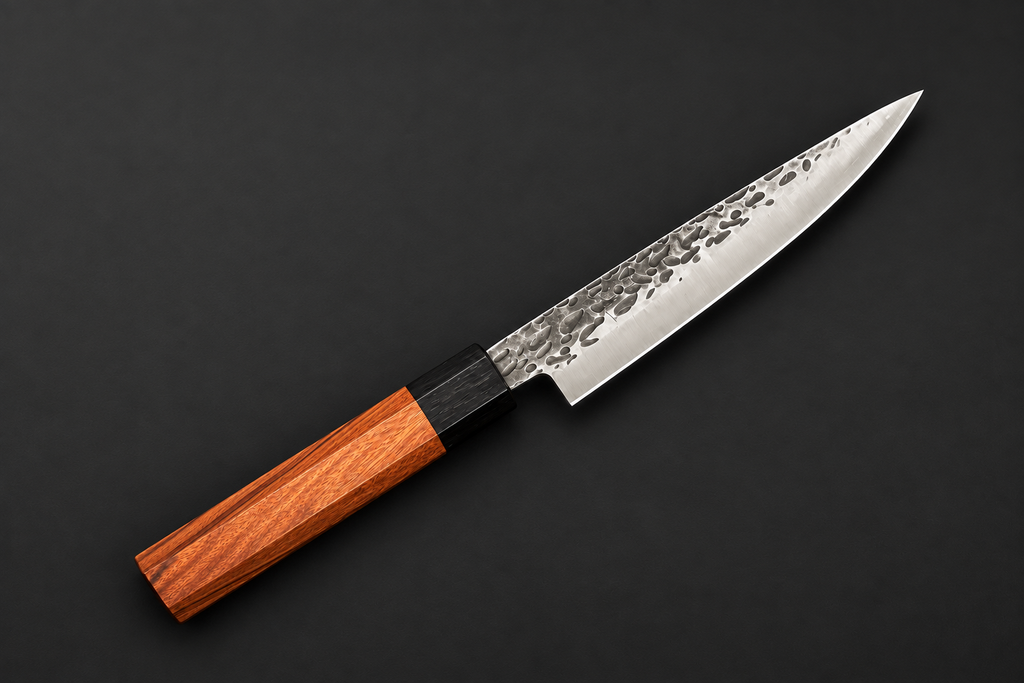
A compact 120mm Petty with a VG-10 stainless steel core, black hammered finish, and octagonal red-wood handle, designed for precise control on small everyday prep tasks.
Blade Length: 120mm
Steel: VG-10 Stainless
Best For: Compact precision prep and small ingredients
The Yoshimune SC Petty 120mm VG10 is our compact pick for cooks who want maximum control from a small Japanese utility knife. Its short 120mm blade is well suited to trimming, fruit preparation, small ingredients, and other detailed tasks where maneuverability matters most.
Its VG-10 stainless steel construction provides good corrosion resistance and relatively easy everyday maintenance, while the compact profile makes it a useful companion to a larger Gyuto or Santoku. For cooks who specifically want a small, precise Petty rather than a general-purpose chef’s knife, this Yoshimune is a practical compact option.
Best Premium Japanese Petty
Yu Kurosaki R2(SG2) SENKO-EI WA INDIGO Petty 150mm
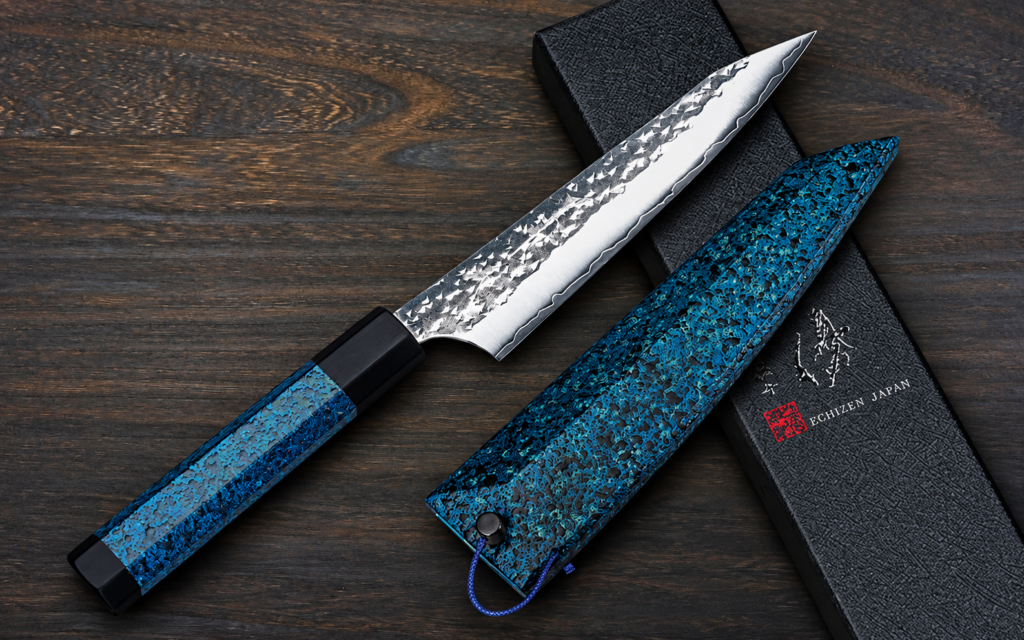
A premium 150mm Petty with SG2 powder stainless steel, Yu Kurosaki’s distinctive hammered finish, and an indigo-dyed Hiba handle with matching saya.
Blade Length: 150mm
Steel: R2 / SG2
Best For: Premium craftsmanship
The Yu Kurosaki R2(SG2) SENKO-EI WA INDIGO Petty 150mm is our premium pick for its exceptional materials, distinctive craftsmanship, and refined presentation. Its SG2 powder stainless-steel blade offers excellent edge retention and corrosion resistance, while the hammered SENKO-EI finish gives the knife a striking, handcrafted appearance.
At 150mm and approximately 80g, it remains light and precise for trimming, fruit preparation, small vegetables, and detailed kitchen work. The indigo-dyed Hiba wood handle and matching saya add a distinctive traditional Japanese finish, making this a premium Petty for buyers who want both cutting performance and craftsmanship.
How We Chose the Best Japanese Petty Knives
We evaluated each Petty based on blade length, steel, ease of maintenance, edge retention, price, and overall value. We also considered how well each knife suits different users, from first-time buyers to more experienced cooks who want harder steels or more specialized performance.
Availability also mattered, so we prioritized models sold by established retailers. Our goal is to highlight practical differences that help you choose the right Petty for precise everyday kitchen tasks—not simply rank knives by price, hardness, or appearance.
How to Choose a Japanese Petty Knife
Choosing the right Petty comes down to three main factors: blade length, steel, and how you plan to use the knife. For most home cooks, a 130–150mm Petty in stainless steel offers the easiest balance of versatility, control, and maintenance.
Blade Length: A 130–135mm Petty offers a practical balance of precision and reach for everyday tasks. Shorter 120mm models provide greater control for detailed work, while 150mm blades offer more reach for slicing, trimming, and slightly larger ingredients.
Steel: Stainless steels such as VG-10 and AUS-8 are easier to maintain and work well for everyday use. Carbon steels can take very sharp edges but require more careful cleaning and drying, while powdered steels such as R-2 offer stronger edge retention with less frequent sharpening.
Use & Handling: Petty knives work best for trimming, fruit preparation, small vegetables, and other precise tasks where a full-size Gyuto or Santoku feels too large. They are generally best used as a companion to a larger chef’s knife rather than as a complete replacement.
Related guides:
Petty Knife Buying Guide →
Japanese Knife Types Guide →
Japanese Knife Steel Guide →
Frequently Asked Questions
A Petty knife is used for small, precise kitchen tasks such as trimming meat, preparing fruit, slicing small vegetables, removing stems, and other detailed work where a larger Gyuto or Santoku can feel cumbersome.
For most home cooks, a Petty around 130–150mm offers the best balance of control and versatility. A 120mm blade is better for very detailed work, while a 150mm Petty provides more reach for slicing and trimming larger ingredients.
No. Both are designed for precise tasks, but a Petty knife is usually longer and more versatile than a typical paring knife. Petty knives are commonly used on a cutting board, while paring knives are often better suited to very small handheld tasks such as peeling.
Usually not. A Petty knife works best as a companion to a larger Gyuto or Santoku because its shorter blade is ideal for precise tasks but less efficient for large vegetables, heavy chopping, and high-volume preparation.
Stainless steel is the easiest choice for most users because it resists corrosion and requires less day-to-day maintenance. Carbon steel can take a very sharp edge and may be easier to sharpen, but it needs prompt cleaning and drying to reduce the risk of rust and discoloration.
Yes. A stainless-steel Petty around 130–150mm is a good choice for beginners because it is easy to control, relatively simple to maintain, and useful for many everyday precision tasks. It works especially well alongside a larger chef’s knife.
Where to Buy Japanese Petty Knives
When buying a Japanese Petty knife online, look for retailers that clearly list the maker, steel, blade length, origin, and shipping information. These details make it easier to compare knives and avoid choosing a model that does not match your needs.
Sourced Japan recommends established retailers that specialize in authentic Japanese knives. Prices and availability can change, so check the current product page before ordering.
Continue Reading
Explore these related guides to learn more about choosing, comparing, and caring for your Japanese kitchen knife.
Petty Knife Buying Guide →
Japanese Knife Types Guide →
Japanese Knife Care Guide →