

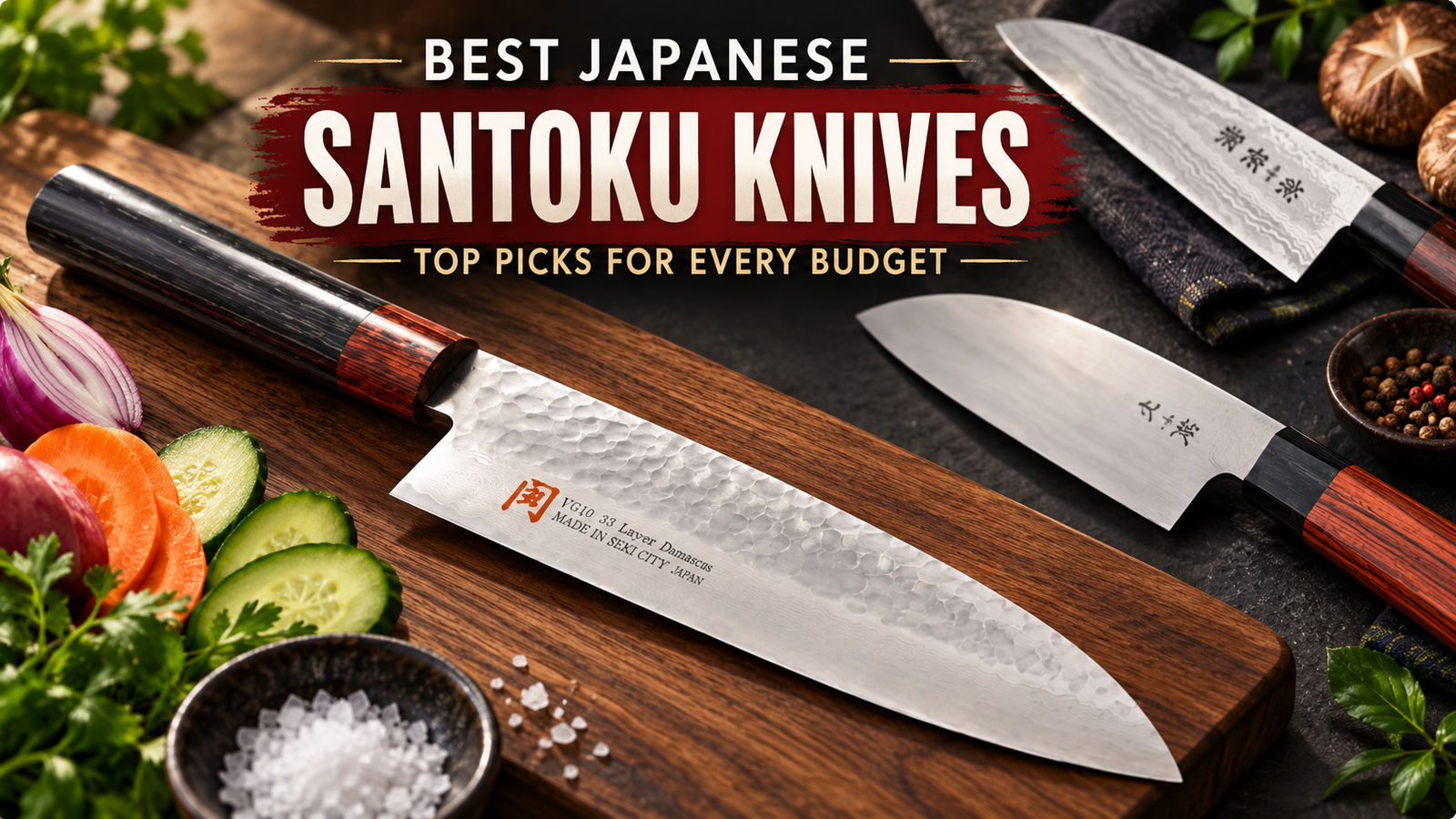
A Santoku is a versatile Japanese kitchen knife designed for everyday tasks such as slicing, chopping, and mincing. Its shorter blade and flatter edge profile make it especially popular with home cooks who want a compact, easy-to-control all-purpose knife.
Table of Contents
Affiliate Disclosure: Sourced Japan may earn a commission when you purchase through links on this page, at no additional cost to you.
Best Japanese Santoku Knives at a Glance
| Best For | Knife | Steel | Approx. Price |
|---|---|---|---|
| Best Overall | Iseya I-Series VG10 Damascus Santoku | VG-10 Damascus | ~$143 |
| Best for Beginners | Sakai Takayuki INOX PRO Santoku | AUS8A Stainless | ~$139 |
| Best Budget | Kanetsune KC-950 Santoku | DSR-1K6 Stainless | ~$53 |
| Best Carbon Steel | Kanetsune KC-460 Aogami No.2 Damascus Santoku | Aogami (Blue) #2 | ~$254 |
| Best Edge Retention | Kei Kobayashi R2 Santoku | R2 / SG2 | ~$373 |
| Best Compact | Yoshimune Santoku Blue #2 | Aogami (Blue) #2 | ~$138 |
| Best Premium | Yoshimune Santoku White #2 Kobuse Forging | White #2 | ~$448 |
Best Overall Japanese Santoku Knife
Iseya I-Series VG10 Damascus Santoku 180mm
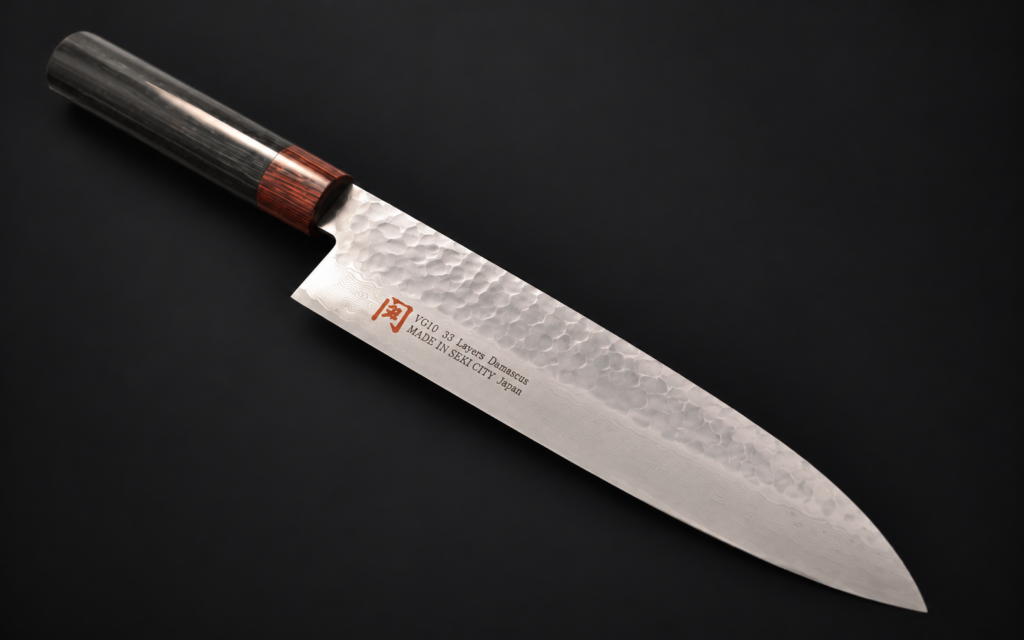
A versatile 180mm Santoku with a VG-10 stainless steel core, 33-layer hammered Damascus cladding, and a lightweight traditional Japanese handle for everyday all-purpose cooking.
Blade Length: 180mm
Steel: VG-10 Damascus
Best For: Versatile everyday cooking
The Iseya I-Series VG10 Damascus Santoku 180mm is our best overall pick for its strong balance of versatility, easy maintenance, manageable size, and everyday cutting performance. Its VG-10 stainless steel core provides good corrosion resistance and dependable edge retention, while the hammered Damascus construction adds character without requiring the extra care of carbon steel.
At 180mm and approximately 155g, it offers enough cutting surface for vegetables, meat, fish, and general meal prep while remaining easy to control. The double-edged design also makes it suitable for both right- and left-handed cooks, making this Iseya a practical all-around Santoku for regular home use.
Best Japanese Santoku for Beginners
Sakai Takayuki INOX PRO Santoku 180mm
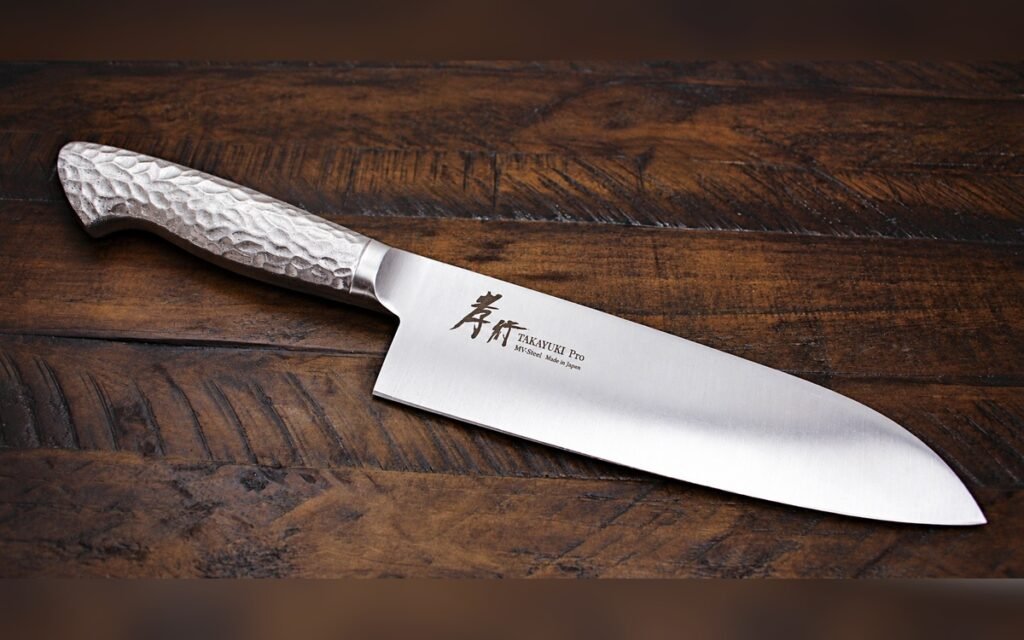
A beginner-friendly 180mm Santoku with rust-resistant AUS8A stainless steel, a double-bevel edge, and a balanced stainless steel handle for easy everyday cooking.
Blade Length: 180mm
Steel: AUS8A Stainless
Best For: Beginners and everyday all-purpose cooking
The Sakai Takayuki INOX PRO Santoku 180mm is our beginner pick for its easy-care stainless construction, manageable blade size, and balanced handling. Its AUS8A stainless steel offers good corrosion resistance and straightforward maintenance, making it more approachable for first-time Japanese knife owners.
At 180mm and approximately 160g, it provides enough blade length for vegetables, meat, fish, and general meal prep without feeling oversized. The double-edged blade works for both right- and left-handed cooks, while the stainless steel handle offers a clean, secure grip for everyday use.
Best Budget Japanese Santoku
Kanetsune KC-950 Santoku 165mm
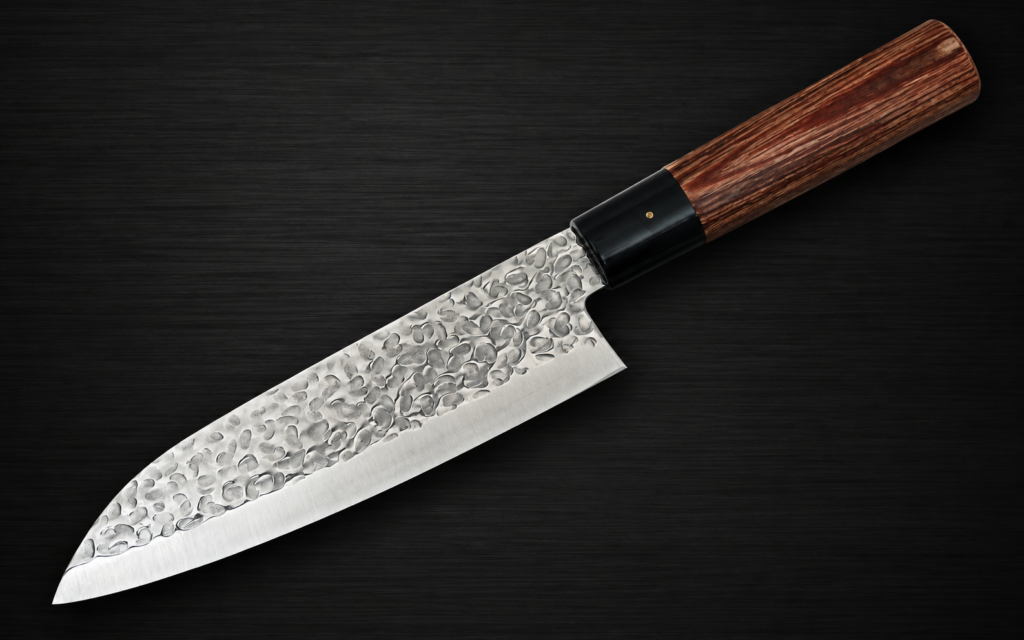
A lightweight 165mm Santoku with DSR-1K6 stainless steel, a hammered finish, and a double-bevel edge at an affordable price.
Blade Length: 165mm
Steel: DSR-1K6 Stainless
Best For: Budget-conscious home cooking
The Kanetsune KC-950 Santoku 165mm is our budget pick for its combination of affordable pricing, lightweight handling, and practical stainless-steel construction. Its DSR-1K6 high-carbon stainless steel core offers good edge retention, while the hammered finish gives the blade a traditional Japanese look and helps reduce food sticking during prep.
At 165mm and approximately 120g, it is compact and easy to control for vegetables, meat, fish, and everyday meal preparation. The double-edged design also makes it suitable for both right- and left-handed cooks, making this a practical choice for buyers who want an affordable Japanese all-purpose knife without moving into a higher price tier.
Best Carbon Steel Santoku
Kanetsune KC-460 Aogami No.2 Damascus Santoku 165mm
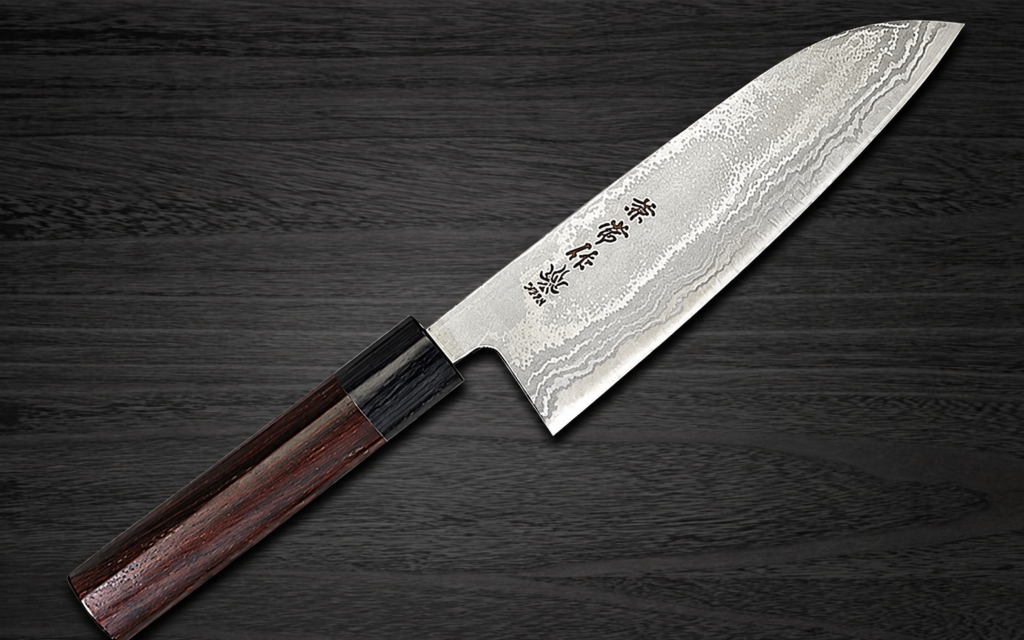
A 165mm Santoku with an Aogami No.2 carbon-steel core, 11-layer Damascus cladding, and a lightweight traditional wood handle.
Blade Length: 165mm
Steel: Aogami No.2 Damascus
Best For: Carbon steel enthusiasts
The Kanetsune KC-460 Aogami No.2 Damascus Santoku 165mm is our carbon-steel pick for its combination of sharp cutting performance, manageable size, and traditional Japanese construction. Its Blue Paper No.2 carbon-steel core is wrapped in 11 layers of Damascus steel, while the blade is hardened to approximately HRC 60–61.
At 165mm and around 120g, it remains light and easy to control for everyday prep. The double-edged blade works for both right- and left-handed cooks, while the D-shaped red sandalwood handle keeps the knife distinctly traditional in feel.
Best Santoku for Edge Retention
Kei Kobayashi R2 Santoku 170mm
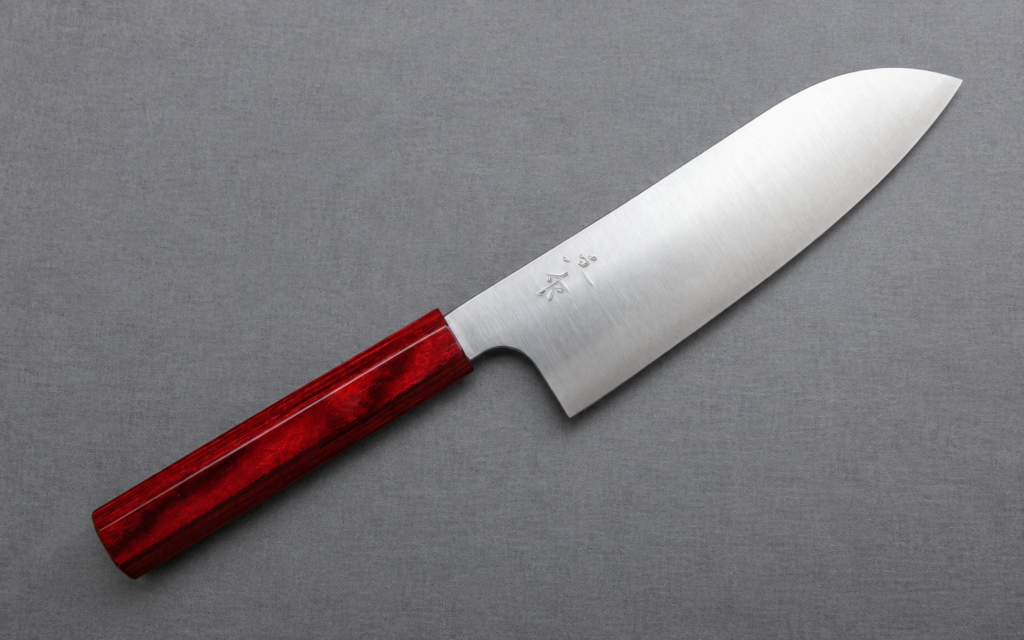
A lightweight 170mm knife with a hard SG2/R2 stainless steel core, excellent edge retention, and a distinctive red lacquered wood handle.
Blade Length: 170mm
Steel: R2 / SG2
Best For: Long-lasting sharpness
The Kei Kobayashi R2 Santoku 170mm is our pick for edge retention thanks to its SG2/R2 powder stainless steel core and approximately HRC 63 hardness. This combination allows the blade to hold a sharp edge for extended use while still providing excellent corrosion resistance and relatively straightforward maintenance.
At 170mm and approximately 144g, it remains light and precise for everyday prep. The thin, carefully finished blade is paired with a distinctive red lacquered wood handle, giving this knife a refined balance of cutting performance, edge retention, and traditional Japanese styling.
Best Compact Japanese Santoku
Yoshimune Santoku 150mm Blue #2
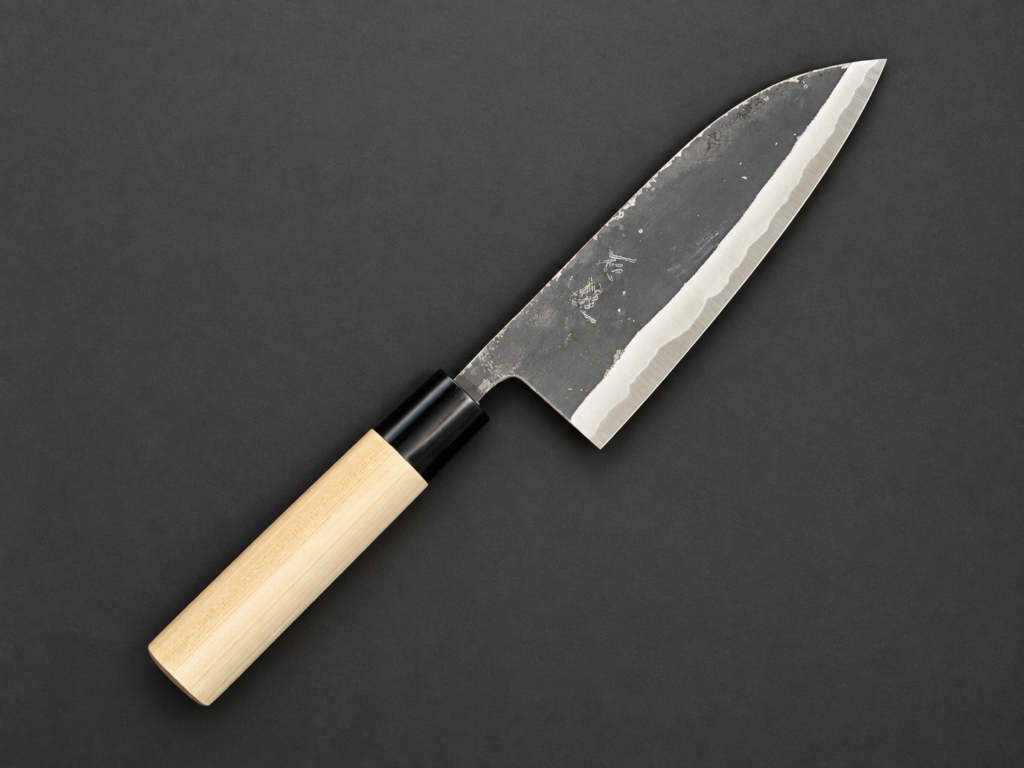
A compact 150mm Santoku with an Aogami Blue #2 carbon-steel core, traditional kurouchi finish, double-bevel edge, and lightweight magnolia handle, ideal for cooks who prefer a smaller, easy-to-control all-purpose knife.
Blade Length: 150mm
Steel: Aogami (Blue) #2
Best For: Cooks who want a compact Santoku for precise everyday prep
The Yoshimune Santoku 150mm Blue #2 is our compact pick for cooks who want a shorter, more maneuverable Santoku for smaller kitchens, smaller cutting boards, or more precise everyday prep.
Its 150mm blade is easier to control than a standard-size Santoku, while the Aogami (Blue) #2 carbon steel core offers strong edge performance. Because it is carbon steel, the blade should be cleaned and dried promptly after use. For cooks who prefer a lighter, more compact Japanese knife and do not mind the extra care, this Yoshimune is a distinctive option.
Best Premium Japanese Santoku
Yoshimune Santoku 165mm White #2 Kobuse Forging
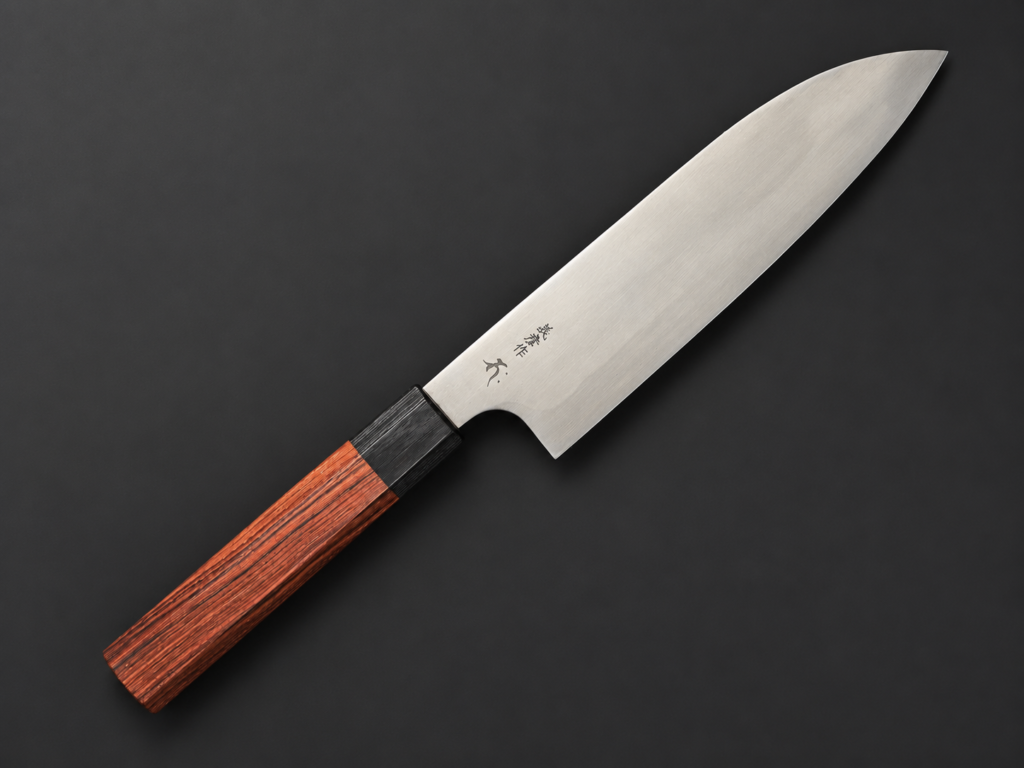
A premium 165mm Santoku hand-forged in Tosa using traditional Kobuse construction, with a White #2 high-carbon steel core, Kasumi finish, double-bevel edge, and rosewood octagonal handle for refined cutting performance.
Blade Length: 165mm
Steel: White #2
Best For: Cooks seeking a premium traditional Santoku with refined craftsmanship and sharp cutting performance
The Yoshimune Santoku 165mm White #2 Kobuse Forging is our premium pick for buyers who value traditional Japanese forging, craftsmanship, and the sharpening feel of high-carbon steel.
Its White #2 core can take a very fine edge, while the 165mm blade offers a classic Santoku size for controlled everyday prep. Because White #2 is reactive carbon steel, the blade should be cleaned and dried promptly after use. For experienced cooks who value traditional materials and handcrafted character, this Yoshimune stands out as the premium choice in our selection.
How We Chose the Best Japanese Santoku Knives
We evaluated each Santoku based on blade length, steel, ease of maintenance, edge retention, price, and overall value. We also considered how well each knife suits different users, from first-time buyers to more experienced cooks.
Availability also mattered, so we prioritized models sold by established retailers. Our goal is to highlight practical differences that help you choose the right Santoku—not simply rank knives by price, hardness, or appearance.
How to Choose a Japanese Santoku Knife
Choosing the right Santoku comes down to three main factors: blade length, steel, and how the knife feels in your hand. For most home cooks, a 165–180mm Santoku in stainless steel is the easiest place to start.
Blade Length: A 165–180mm Santoku offers the best balance of control and versatility for most kitchens. Shorter 150mm models are easier to maneuver, while 180–190mm knives provide more cutting surface for larger ingredients.
Steel: Stainless steels such as VG-10 and AUS-8 are easier to maintain and work well for everyday cooking. Carbon steels such as Blue #2 and White #2 can take very sharp edges but require more careful cleaning and drying, while powdered steels such as R-2 offer strong edge retention with less reactivity.
Handle, Weight & Balance: Western-style handles often feel more familiar and substantial, while Japanese wa-handles are usually lighter. Neither is inherently better—the right choice depends on your grip, preferred balance, and cutting style.
Related guides:
Santoku Buying Guide →
Gyuto vs Santoku →
Japanese Knife Steel Guide →
Frequently Asked Questions
A 165–180mm Santoku is the best starting point for most home cooks. It offers a good balance of control, cutting surface, and versatility for everyday kitchen tasks.
Yes. A Santoku is compact, versatile, and easy to control, making it a strong choice for first-time Japanese knife buyers. Stainless steel models are especially easy to maintain.
There is no single best steel for every user. Stainless steel is easier to maintain, while carbon and powdered steels can offer excellent edge performance but generally require more careful use.
A Santoku is usually shorter and has a flatter edge, making it compact and easy to control. A Gyuto is generally longer with more curve in the blade, offering extra reach and versatility for larger slicing tasks.
Good Japanese Santoku knives are available around $100, while premium models can cost several hundred dollars depending on the steel, maker, construction, and craftsmanship.
Where to Buy Japanese Santoku Knives
When buying a Japanese Santoku online, look for retailers that clearly list the maker, steel, blade length, hardness, origin, and shipping information. These details make it easier to compare knives and avoid buying a model that does not match your needs.
Sourced Japan recommends established retailers that specialize in authentic Japanese knives. Prices and availability can change, so check the current product page before ordering.
Continue Reading
Explore these related guides to learn more about choosing, comparing, and caring for your Japanese kitchen knife.
Santoku Buying Guide →
Gyuto vs Santoku →
Japanese Knife Care Guide →