

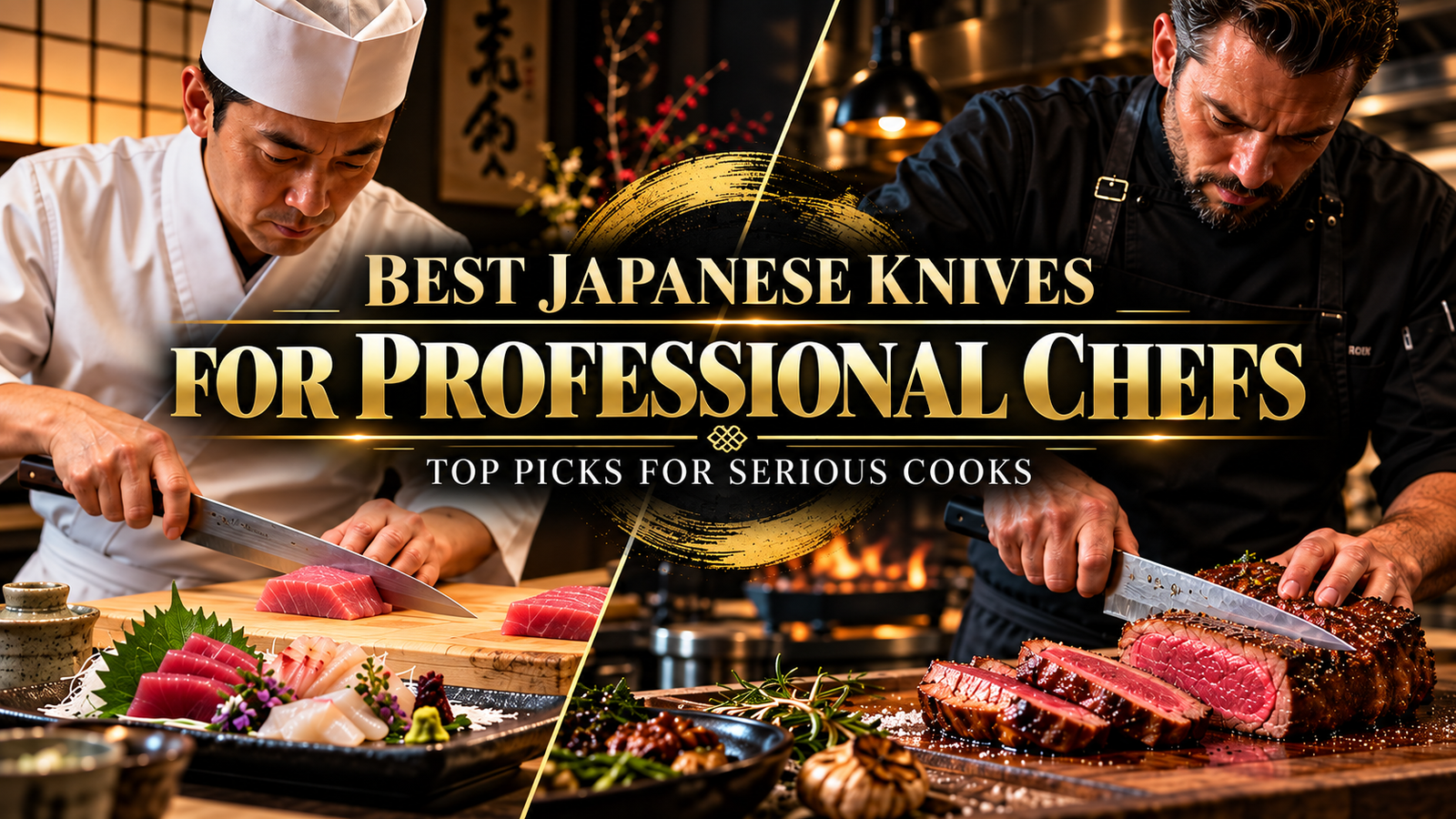
Best Japanese knives for professional chefs need to do more than simply feel sharp out of the box. In a demanding kitchen, a knife must deliver precise cutting performance, reliable edge retention, comfortable balance, and the durability to handle hours of daily prep.
Japanese knives are especially popular among professional cooks because of their thin blade geometry, high-quality steels, and exceptional cutting feel. But the best choice depends on how you work—whether you need an all-purpose gyuto, a compact petty knife for detail work, or a specialized blade for vegetables and other prep tasks.
In this guide, we’ve selected Japanese knives suited to professional kitchen use across different styles and price points, focusing on performance, construction, steel, balance, and long-term practicality.
Table of Contents
Affiliate Disclosure: Sourced Japan may earn a commission when you purchase through links on this page, at no additional cost to you.
Best Japanese Knives for Professional Chefs at a Glance
| Best For | Knife | Steel | Approx. Price |
|---|---|---|---|
| Best Overall | Sakai Takayuki SEIGAIHA Grand Chef Damascus | Böhler N685 Stainless | ~$322 |
| Best Value | Tamahagane Kyoto 63 Layer-Damascus Wood Handle | VG-5 Stainless | ~$353 |
| Best for Precision Work | Kei Kobayashi R2 Special Finished RS8R | R2 / SG2 | ~$435 |
| Best for Vegetables | Yu Kurosaki Aogami Super KOKUSEN-EI RS8R | Aogami Super | ~$305 |
| Best for Slicing | Sakai Takayuki 63-Layer Damascus Sujihiki | Damascus Stainless | ~$484 |
| Best for Sushi & Sashimi | Sakai Takayuki Shikisai INOX | AUS8A Stainless | ~$289 |
| Best Heavy-Duty | Sakai Takayuki Grand Chef Western Deba | High-Carbon Stainless | ~$304 |
Best Overall Knife for Professional Chefs
Sakai Takayuki SEIGAIHA Grand Chef Damascus Gyuto 240mm
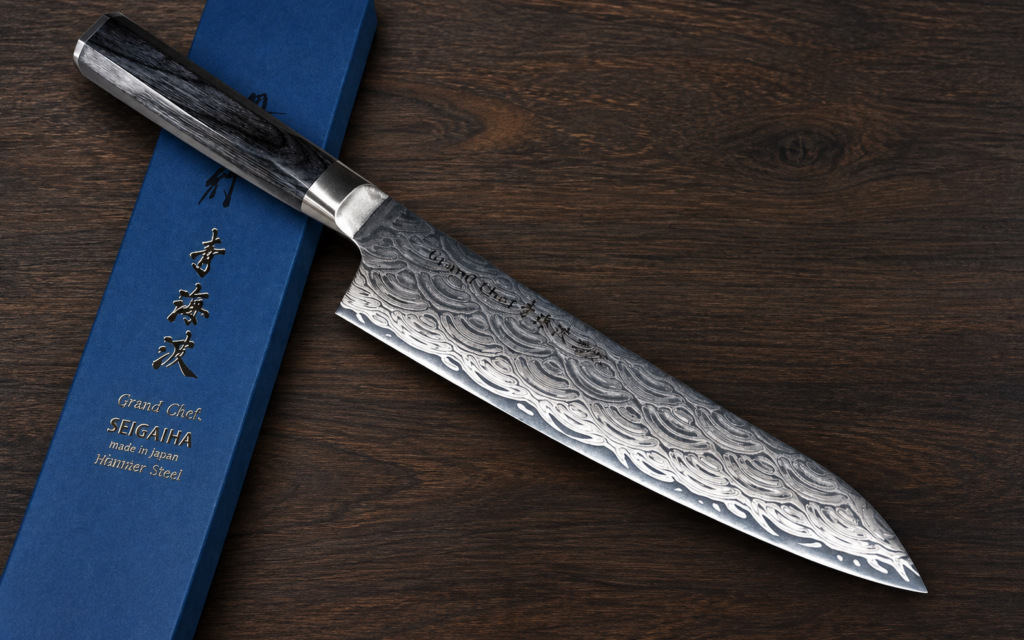
A refined 240mm gyuto with a Böhler N685 stainless steel core, 45-layer Damascus construction, and a thin blade geometry designed for smooth, precise cutting during demanding kitchen prep.
Blade Length: 240mm
Steel: Böhler N685 Stainless Steel
Best For: All-Purpose Professional Use
The Sakai Takayuki SEIGAIHA Grand Chef Damascus Gyuto combines the versatility of a 240mm chef’s knife with a thin, performance-focused blade suited to intensive prep work. Its Böhler N685 stainless steel core offers practical corrosion resistance, while the 45-layer Damascus construction gives the knife a more premium finish.
At 240mm, it provides enough blade length for larger ingredients and efficient board work without moving into specialized territory. The double-edged blade, approximately HRC 60 hardness, and 204g weight make it a strong all-purpose option for professional kitchens where control, cutting efficiency, and ease of maintenance all matter.
Best Value Knife for Professional Chefs
Tamahagane Kyoto 63 Layer-Damascus Gyuto 240mm
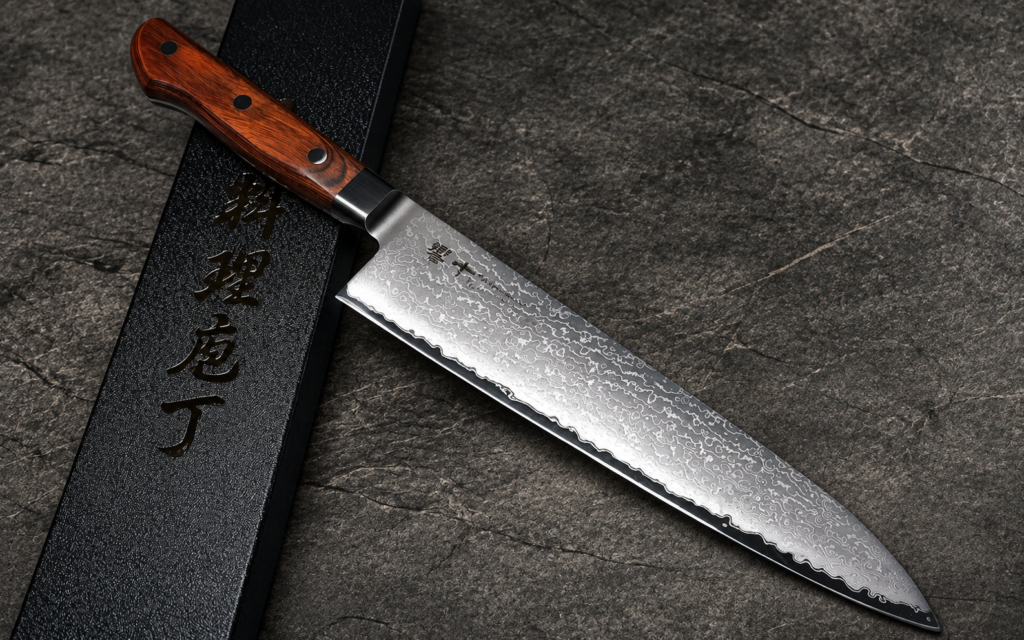
A professional-grade 240mm gyuto with a VG-5 core, 63-layer Damascus construction, and a balanced design built for sharp, reliable everyday performance in demanding kitchens.
Blade Length: 240mm
Steel: VG-5 Stainless Steel
Best For: Versatile Professional Use
The Tamahagane Kyoto 63 Layer-Damascus Gyuto combines a VG-5 high-carbon molybdenum-vanadium steel core with layered stainless steel construction, giving professional cooks a practical balance of sharpness, durability, and corrosion resistance. Its edge is hand-finished with waterstones, while the approximately HRC 61 hardness supports reliable edge retention for frequent prep work.
At 240mm and around 240g, it offers enough blade length for efficient board work while maintaining a balanced feel. The compressed laminated wood handle and sealed metal bolster also make it a practical option for professional kitchens where comfort, sanitation, and consistent performance matter during long prep sessions.
Best Knife for Precision Work
Kei Kobayashi R2 Special Finished RS8R Petty Knife 150mm
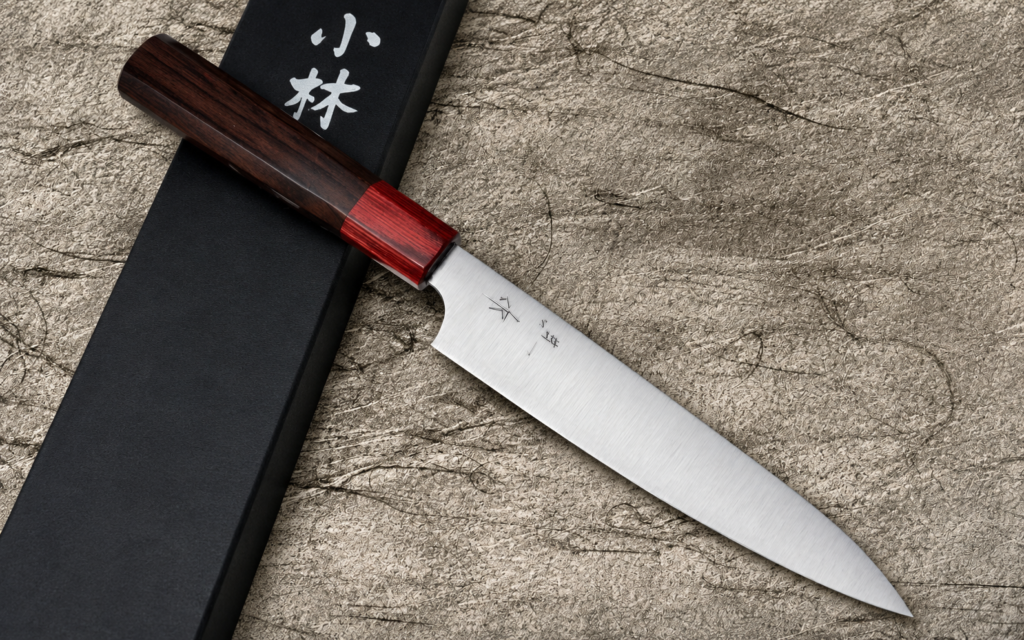
A lightweight 150mm petty knife with a thin SG2/R2 blade, excellent edge retention, and precise handling for detailed prep work in professional kitchens.
Blade Length: 150mm
Steel: R2 / SG2 Stainless Steel
Best For: Precision Work
The Kei Kobayashi R2 Special Finished Petty Knife is designed for precise, controlled cutting tasks where a full-size gyuto can feel too large. Its 150mm blade and lightweight 68g construction make it well suited to trimming, portioning, garnishing, and other detailed prep work.
The SG2/R2 stainless steel core is hardened to approximately HRC 63, providing strong edge retention while remaining corrosion resistant and relatively easy to maintain. The double-edged blade and octagonal rosewood handle also make it a practical choice for professional cooks who want a compact, highly responsive secondary knife.
Best Vegetable Knife for Professional Chefs
Yu Kurosaki Aogami Super KOKUSEN-EI Nakiri 165mm
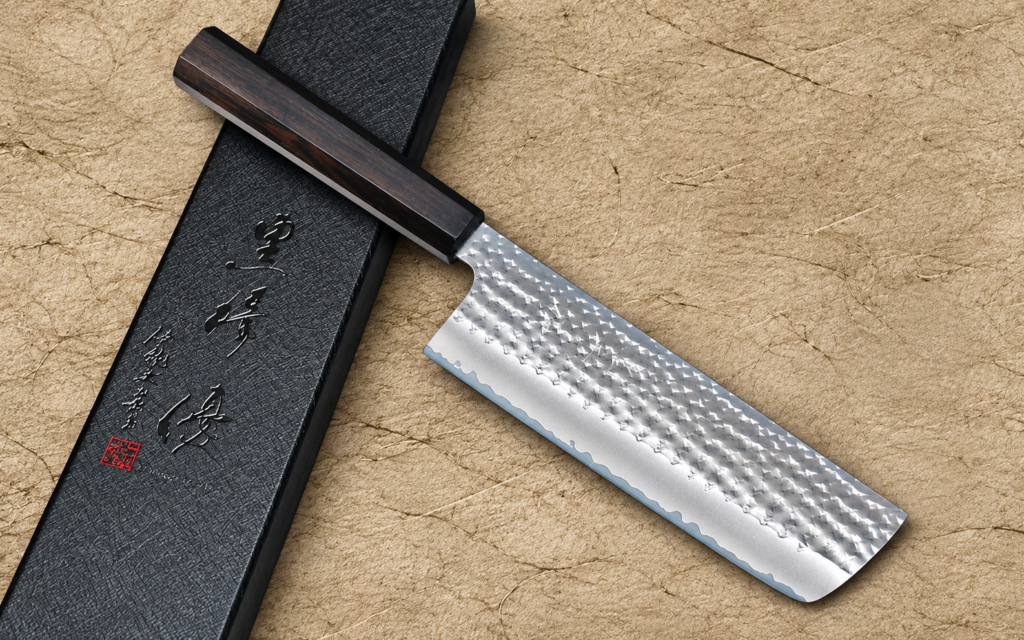
A high-performance 165mm nakiri with an Aogami Super core, distinctive hammered finish, and excellent edge retention for fast, precise vegetable prep.
Blade Length: 165mm
Steel: Aogami Super
Best For: Vegetable Prep
The Yu Kurosaki Aogami Super KOKUSEN-EI Nakiri is built for professional cooks who handle large amounts of vegetable prep and want a thin, highly responsive blade. Its 165mm nakiri profile gives a broad, flat cutting edge that works especially well for push cutting, chopping, and clean vegetable portioning.
The Aogami Super core is hardened to approximately HRC 65, giving the knife excellent edge retention, while the hammered KOKUSEN-EI finish adds both visual character and a distinctive handmade feel. The 165mm model weighs about 165g and uses a double-edged blade, making it a practical specialist knife for demanding professional prep.
Best Slicing Knife for Professional Chefs
Sakai Takayuki 63-Layer Damascus Sujihiki 270mm
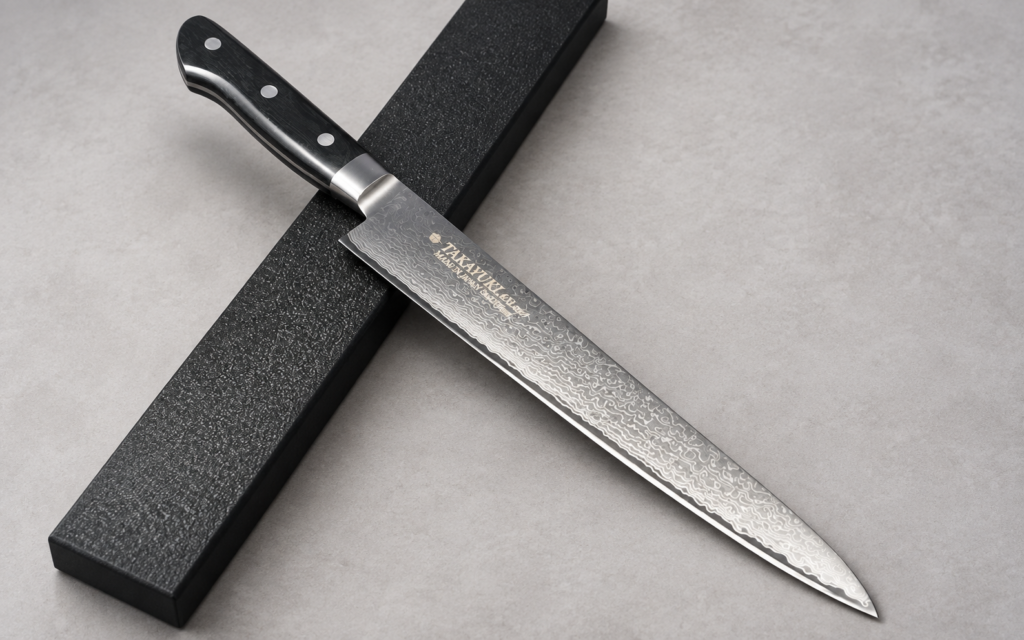
A 270mm professional sujihiki with a 63-layer Damascus blade, excellent edge retention, and a long profile designed for clean, efficient slicing of meat and fish.
Blade Length: 270mm
Steel: Damascus Stainless Steel
Best For: Meat & Fish Slicing
The Sakai Takayuki 63-Layer Damascus Sujihiki is designed for long, clean slicing strokes across meat and fish. Its 270mm blade provides the reach needed for portioning larger proteins while helping reduce repeated sawing motions during professional prep.
The blade uses 63-layer Damascus stainless construction with a special hard-alloy core and is hardened to approximately HRC 60–61. At about 210g, it offers a substantial but controlled feel, while the blue-black wooden handle is shaped for a secure professional grip.
Best Sushi & Sashimi Knife for Professional Chefs
Sakai Takayuki Shikisai INOX Yanagiba 270mm Akebono
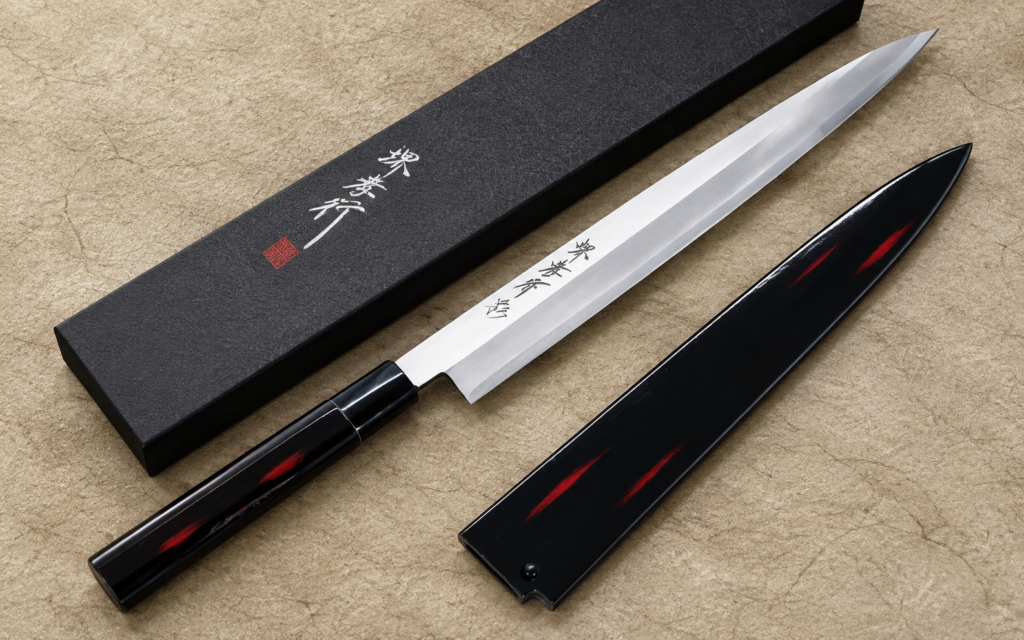
A traditional 270mm single-bevel yanagiba with AUS8A stainless steel, designed for clean, controlled slicing of sashimi and sushi ingredients.
Blade Length: 270mm
Steel: AUS8A Stainless Steel
Best For: Sushi & Sashimi
The Sakai Takayuki Shikisai INOX Yanagiba is designed for precise slicing of sashimi, sushi toppings, and other delicate fish preparations. Its long 270mm blade allows smooth single-stroke cuts that help preserve clean surfaces and presentation during professional service.
The knife uses AUS8A stainless steel and a traditional single-bevel edge for right-handed users. At approximately 180g, it combines a relatively lightweight feel with the reach expected from a professional yanagiba, while the D-shaped magnolia handle is designed for comfortable control during extended use.
Best Heavy-Duty Knife for Professional Chefs
Sakai Takayuki Grand Chef Western Deba 240mm
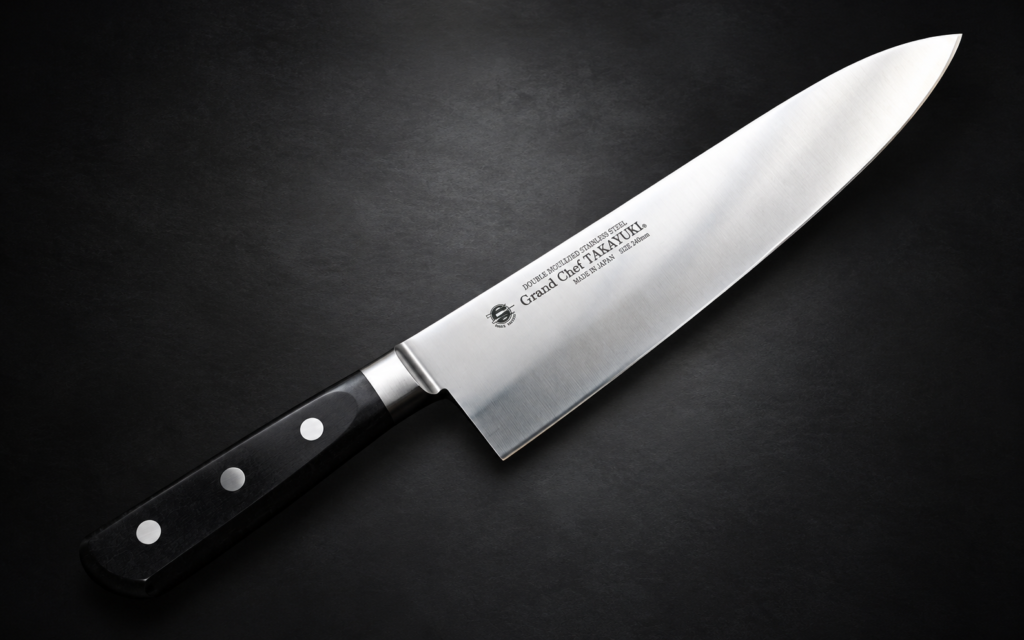
A substantial 240mm Western Deba with a durable stainless steel blade and heavier build designed for demanding professional prep.
Blade Length: 240mm
Steel: Böhler-Uddeholm Stainless Steel
Best For: Heavy-Duty Prep
The Sakai Takayuki Grand Chef Western Deba is a heavier-duty option for professional kitchens that need more substance than a standard gyuto. Its 240mm blade and approximately 340g weight give it a noticeably more robust feel, making it well suited to demanding fish and meat preparation.
The blade uses high-carbon stainless steel from Böhler-Uddeholm and is hardened to approximately HRC 61–62. It is also double-edged, so unlike a traditional single-bevel deba, it offers a more familiar cutting style for chefs accustomed to Western-profile knives.
How We Chose the Best Japanese Knives for Professional Chefs
Professional chefs need knives that can perform consistently through long prep sessions, not just feel sharp during occasional home use. For this guide, we focused on knives that combine cutting performance, edge retention, balance, durability, and practical maintenance for demanding kitchen environments.
We also looked at how each knife fits a specific professional task. Rather than choosing only all-purpose gyuto knives, our picks include specialized options for precision work, vegetable prep, slicing meat and fish, sushi and sashimi preparation, and heavier-duty tasks.
Steel quality, blade geometry, construction, handle comfort, and overall value were also considered. Because professional kitchens vary widely, we included both stainless and carbon-steel options across several Japanese knife styles and price points.
How to Choose a Japanese Knife for Professional Use
Choose the Right Knife Type
Start with the tasks you perform most often. A gyuto is the most versatile choice for general prep, while petty knives are better for detailed work, nakiri knives excel at vegetables, sujihiki knives are designed for slicing, and yanagiba knives are specialized for sushi and sashimi
Consider Steel and Edge Retention
Professional kitchens benefit from steels that can hold a sharp edge through frequent use. Stainless steels are easier to maintain in busy environments, while high-carbon steels can offer excellent cutting performance but require more careful cleaning and drying
Think About Blade Length and Balance
Longer blades can make large-volume prep more efficient, but they should still feel controlled and comfortable. For all-purpose professional work, 210–240mm gyuto knives are common, while specialized knives vary depending on the task.
Prioritize Comfort and Maintenance
A knife that performs well but becomes uncomfortable during long prep sessions is a poor fit for professional use. Look for a secure handle, balanced weight, and maintenance requirements that match your workflow.
Frequently Asked Questions
For most professional chefs, a 210–240mm gyuto is the most versatile choice because it can handle slicing, chopping, and general prep. Specialized knives such as petty, nakiri, sujihiki, and yanagiba are better for specific tasks.
A 240mm gyuto is a common choice for professional kitchens because it provides more cutting length and efficiency than a smaller knife while still offering good control for daily prep.
Stainless steel is easier to maintain in busy kitchens, while carbon steel can offer excellent sharpness and edge retention but requires more careful cleaning and drying. The better option depends on the chef’s workflow and maintenance habits.
Many professional chefs can handle most tasks with a good gyuto and petty knife. Additional knives such as a nakiri, sujihiki, yanagiba, or heavy-duty knife can be added depending on the type of prep work required.
They can be when the higher price reflects better steel, blade geometry, edge retention, balance, and construction. For professionals who use their knives for hours every day, those performance differences can be more noticeable over time.
Where to Buy Japanese Knives for Professional Chefs
Professional-grade Japanese knives are best purchased from established retailers that specialize in Japanese cutlery and provide clear information about steel, blade construction, and knife specifications.
Many of the knives featured in this guide are available from Hocho Knife. You can also compare trusted Japanese knife retailers in our Where to Buy guide before making a purchase.
Continue Reading
Want to learn more before choosing your next Japanese knife? Explore our guides to trusted Japanese knife brands, blade steels, and proper knife care.
Best Japanese Knife Brands →
Japanese Knife Steel Guide →
Japanese Knife Care Guide →